Reported Claude Fable 5 Access Extension: What Paid Users Need to Know
Reports say Anthropic extended Claude Fable 5 access for paid users until July 12. See eligibility, credit changes, and workflow steps.
Overview
Claude Fable 5 Access Extension breaks down when source systems are scattered, reviews stay manual, handoffs are unclear, and risk is hard to prove. This guide is for operators who need a practical map, workflow, dashboard signal, review gate, and implementation plan. At Van Data Team, we start by tracing source systems, ownership, automation boundaries, and escalation paths before turning the review into production work.
The New Stack reports that Anthropic extended included Claude Fable 5 access for paid users until July 12, 2026, giving Pro, Max, Team, and eligible Enterprise subscribers a short extra window before access shifts to usage credits. The Claude Fable 5 access extension matters because teams now have to answer a practical question fast: which workflows are worth running on Fable 5 while it is still inside subscription limits, and which ones need a credit budget or fallback model after the cutoff?
That is the buyer problem hiding inside the news. Founders, marketers, and operators are not just tracking model availability for curiosity. They are using Claude inside content pipelines, research workflows, coding loops, SEO production, and AI answer-engine experiments. When access rules move, publishing velocity and cost visibility move with them.
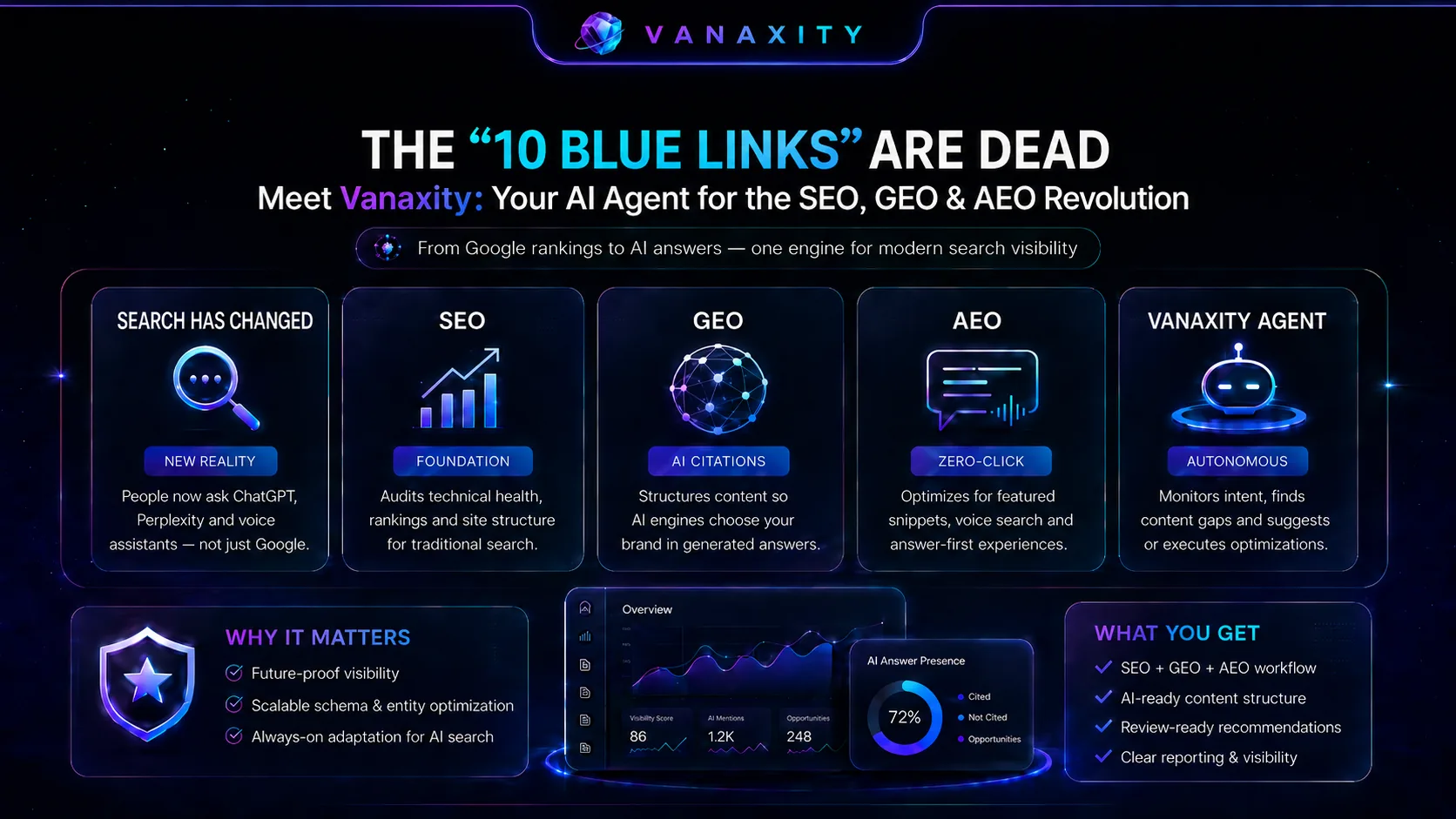
Vanaxity, Van Data Team's AI content agent for SEO, GEO, and AEO, treats moments like this as operational search infrastructure. Traditional search results are no longer the whole game; your content now has to be accurate enough for Google, structured enough for AI Overviews, and clear enough to be cited by answer engines. Through automated SEO/GEO/AEO workflows, Vanaxity turns fast-moving AI announcements into researched, source-backed content systems with review gates, dashboards, visuals, and syndication.
How Van Data Team Makes This Operational
At Van Data Team, we treat Claude Fable 5 access extension as an operating workflow, not a theory section. We start by mapping the current handoff, source systems, decisions, review gates, dashboards, and recovery paths. The useful output is a scoped delivery plan: which signals to collect, which workflow gaps to close, which automation belongs behind a human review gate, and which dashboard or runbook lets the team act next.
Map your SEO, GEO and AEO workflow before you build.

Key Takeaways
- The cited Anthropic redeployment post describes Fable 5 as included for Pro, Max, Team, and select Enterprise plans from July 1, 2026 through July 7, 2026 for up to 50% of weekly usage limits.
- The New Stack reports that Anthropic added five days to the included access window, moving the deadline to July 12, 2026.
- Softonic reports that included access ends at 11:59 p.m. PT on July 12, 2026, after which Fable 5 moves to usage credits.
- Softonic reports post-window pricing of $10 per million input tokens and $50 per million output tokens, so teams should separate high-value Fable 5 tasks from routine work.
- The best use of the reported extension is an audit: confirm eligibility, measure prompt volume, identify production dependencies, test fallbacks, and decide whether credits belong in the workflow.
What Changed in the Claude Fable 5 Access Extension?
The reported access change is simple: secondary coverage says paid Claude subscribers received a short extension that keeps Fable 5 available inside qualifying subscription limits until the new cutoff. The New Stack reports that Anthropic extended access by five days, moving the original deadline from July 7, 2026 to July 12, 2026.
The cited Anthropic redeployment post is the anchor for the underlying access policy. That post describes export controls on Fable 5 and Mythos 5 as lifted as of June 30, 2026, and Fable 5 as available globally starting July 1, 2026.
The cited Anthropic post describes Fable 5 as included for up to 50% of weekly usage limits.
That line is the operational core. Included access does not mean unlimited access. It means qualifying paid users can route part of their weekly usage to Fable 5 during the included window, then plan for a credit-based model after the reported deadline.
| Question | Current Answer | Source |
|---|---|---|
| Who gets included access? | Pro, Max, Team, and select or eligible Enterprise plans | Anthropic and Softonic |
| How much included usage applies? | Up to 50% of weekly usage limits | Anthropic |
| What changed? | The included access window was extended by five days | The New Stack |
| When does it end? | 11:59 p.m. PT on July 12, 2026 | Softonic |
| What happens next? | Usage-credit access begins on July 13, 2026 | Softonic |
Who Gets Included Claude Fable 5 Paid Access?
Included Claude Fable 5 paid access applies to qualifying paid Claude plans, not every possible account or seat. The cited Anthropic post names Pro, Max, Team, and select Enterprise plans in its redeployment information, and Softonic described the extended access as applying to Pro, Max, Team, and eligible seat-based Enterprise plans.
For individual operators on Pro or Max, the practical step is straightforward: check whether Fable 5 appears in the product and use the included window for the work where model quality matters most. That might mean complex content research, long document synthesis, code review, or high-stakes prompt testing.
For Team admins, the job is heavier. You need to know which team members are using Fable 5, which workflows are becoming dependent on it, and whether that usage is intentional. A reported short extension is useful only if the team treats it as a controlled test period.
Enterprise buyers need the most caution. Enterprise arrangements can differ, so admins should confirm plan eligibility inside their Anthropic account or through their account team before promising internal users that access will continue.
The mistake we see at Van Data Team is treating model access as a toggle instead of a workflow dependency. A model switch changes costs, review burden, latency expectations, and sometimes output style. In search content operations, that can affect everything from topic research to schema drafts to AI Overview targeting.
How the Weekly Usage Limit Works
The included Fable 5 allowance is capped, so teams should treat it like a scarce production resource. Anthropic states that qualifying plans include Fable 5 for up to 50% of weekly usage limits, which means the model can consume a meaningful share of a user's weekly subscription allowance but does not replace usage planning.
That matters because many content and engineering workflows expand naturally. A founder asks for a single market scan. A marketer turns it into several article briefs. An operator reruns prompts with extra sources. A developer adds coding tasks. By the end of the week, the model budget has drifted from intentional testing into default usage.
A practical prioritization rule is simple: reserve Fable 5 for work where it changes the output, not where it merely completes the task. Use it for ambiguous research synthesis, high-value technical drafting, competitive analysis, complex code reasoning, and final-stage content refinement. Use cheaper or existing workflows for formatting, routine rewriting, metadata drafts, and low-risk internal summaries.
Consider a hypothetical content lead, Maya, running an AI search sprint for a SaaS launch. On Monday morning, she has several jobs: competitor SERP mapping, prompt testing for AI Overviews, schema recommendations, and a batch of social captions. The wrong move is to send everything through Fable 5 because access is temporarily included. The sharper move is to use Fable 5 for the competitive synthesis and answer-engine prompt tests, then route captions and formatting to a cheaper workflow.
That is how the Vanaxity content agent is designed to work: research, write, illustrate, publish, and syndicate through a controlled pipeline, with heavier model use reserved for tasks where reasoning quality affects search visibility.
What Happens After July 12?
Softonic reports that after the reported extension window closes, Fable 5 access moves from included paid-plan usage to usage credits. Softonic reports that the included period runs until 11:59 p.m. PT on July 12, 2026, and that starting July 13, 2026, access is available through paid credits.
The reported credit pricing is specific enough to affect planning. According to Softonic, usage credits cost $10 per million input tokens and $50 per million output tokens. That makes output-heavy work especially important to monitor.
For teams, the transition creates several operating questions:
- Cost: Which prompts create long outputs, multiple drafts, or repeated retries?
- Latency: Which workflows become slower if users wait for approval before spending credits?
- Observability: Can you see who used Fable 5, for what task, and with what result?
- Review burden: Does higher model quality reduce human editing, or does it create more review work because more content is produced?
This is where a credit model can expose weak process design. If your team has no prompt logs, no output scoring, no review gate, and no fallback model, you cannot tell whether the spend is buying quality or just volume.
For content teams, the core metric should not be tokens alone. Track tokens beside acceptance rate. If Fable 5 produces drafts that pass review faster, rank better, or get cited more often in answer engines, usage credits may be defensible. If it is being used for low-impact rewriting, the cost is noise.
A Practical Workflow Before the Deadline
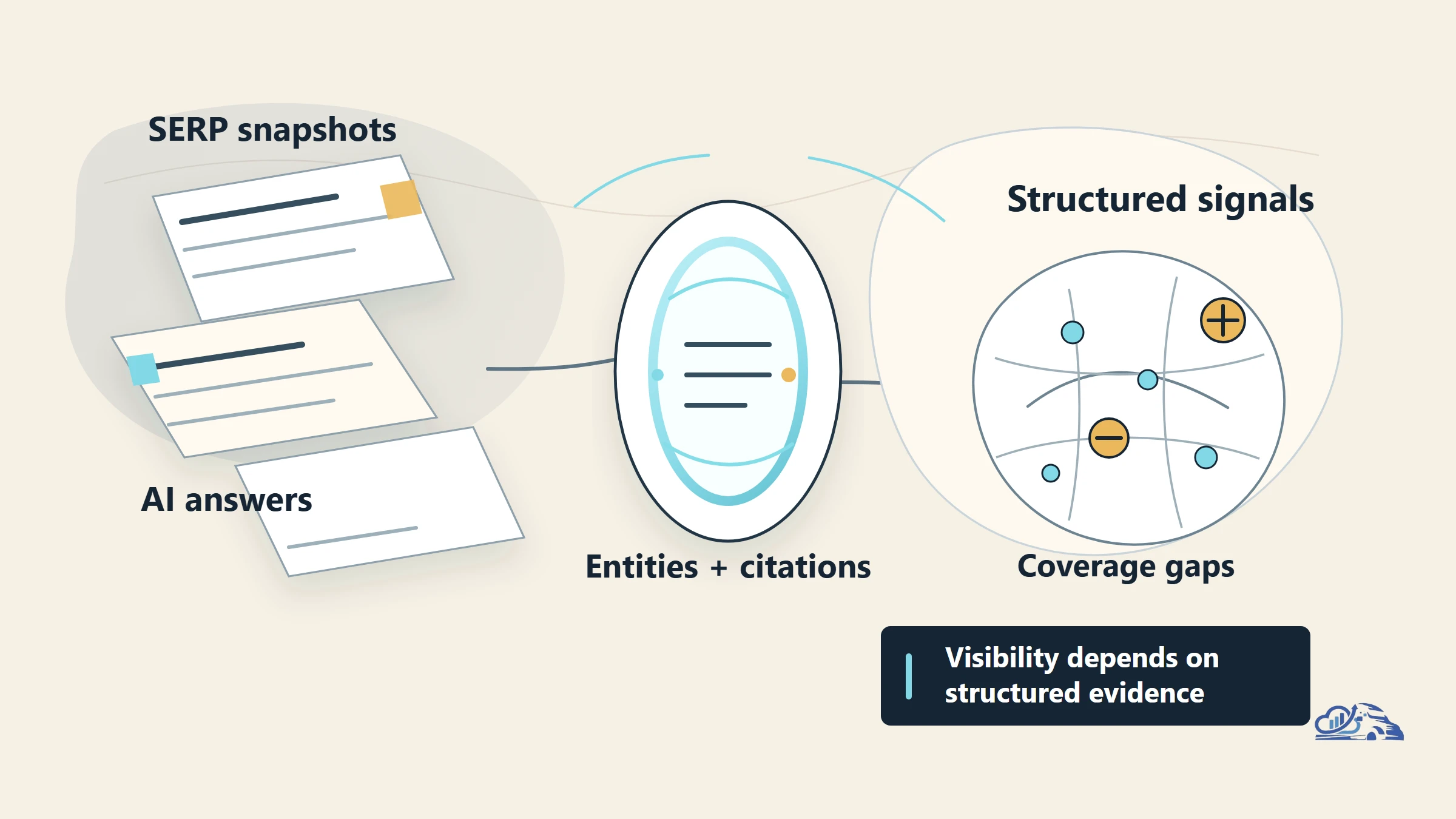
The following illustration summarizes fable 5 deadline audit:
<img src="images/claude-fable-5-access-extension-agentic-visual-1.svg" alt="Workflow diagram showing a Fable 5 access audit before the July 12 deadline." width="1200" height="675" loading="lazy" decoding="async" role="img"> Figure 1. A short extension is most useful when teams use it to separate high-value Fable 5 work from routine tasks before usage credits begin.
Paid users should use the reported extension window to run a fast dependency audit, not a vague model test. The reported deadline gives teams enough time to find where Fable 5 matters, where it does not, and what should happen when included access ends.
Use this runbook:
| Step | What to Check | Output |
|---|---|---|
| Confirm eligibility | Verify plan type, seat type, and whether usage credits are enabled | Access decision by user group |
| Map workflows | List every recurring task using Fable 5 | Dependency register |
| Measure prompt shape | Identify long inputs, long outputs, retries, and chained prompts | Token-risk map |
| Score output value | Compare review pass rate and business impact by task | Keep, limit, or remove decision |
| Test fallback | Run the same task on another approved model or workflow | Fallback notes and quality gaps |
| Set approval rules | Decide who can spend credits after the cutoff | Credit governance policy |
Here is a simple workflow diagram the visual layer should create: start with "Paid Claude user or team admin," branch into "eligible plan confirmed" and "credits required," then flow through "usage audit," "workflow classification," "fallback test," "credit approval," and "post-deadline monitoring." The image should make the reported deadline and decision path obvious at a glance.
At Van Data Team, we start by separating model access from business value. A team may love Fable 5 for complex reasoning, but that does not mean every workflow deserves it. The review gate should ask: did this model improve rank potential, citation quality, factual density, or production speed enough to justify continued use?
If you want a concrete review, Van Data Team can provide a scoped AI workflow scan: a dependency map, prompt and token-risk review, reporting gap analysis, fallback model plan, and implementation scope for AI search content operations. That is more useful than a generic strategy call because it gives the team something to execute.
Best Practices for Content, SEO, GEO, and AEO Teams
Teams using Fable 5 for search workflows should optimize for cited, answer-ready output, not just longer drafts. AI search has changed the job. Google rankings still matter, but so do AI Overviews, ChatGPT answers, Gemini responses, and Perplexity-style source selection.
The best Fable 5 use cases during the reported extension window are tasks with ambiguity and synthesis:
- Turning a research brief into a structured article plan
- Comparing contradictory source claims
- Drafting answer-first sections for AI extraction
- Building FAQ responses from verified source material
- Finding missing review gates in an AI publishing workflow
- Creating schema recommendations from page intent
The weaker use cases are routine. Do not burn scarce access on generic meta descriptions, social snippets, basic rewrites, or mechanical formatting unless those tasks are part of a measured production pipeline.
For SEO, GEO, and AEO, the key is source discipline. Every statistic, date, price, and claim needs a source path. That is not just editorial hygiene; it is how answer engines decide whether a page is worth citing. A clear article with named sources, comparison tables, direct answers, and FAQ blocks gives AI systems cleaner extraction targets.
Vanaxity operationalizes this through research, validation, review, improvement, visual production, and publishing. The point is not to replace editorial judgment. The point is to make source-backed content repeatable across channels before competitors turn the same announcement into thin recap posts.
A good workflow after the reported Fable 5 transition should include:
- Prompt logging by task type
- Cost tagging for input-heavy and output-heavy prompts
- Human review for factual and brand-sensitive sections
- Fallback model tests for each production workflow
- Dashboarding for usage, acceptance rate, and publish outcomes
- Recovery steps if credits run out or access changes again
Common Mistakes to Avoid
The first mistake is assuming every paid user gets the same access. Plan names, seat types, and Enterprise eligibility matter. Before you build internal guidance, confirm which users are actually covered.
Another mistake is confusing included access with permanent pricing. The reported extension is a short bridge, not a durable procurement policy. Softonic reports the post-window shift to usage credits beginning July 13, 2026, so teams should treat the deadline as a budget and workflow event.
Another mistake is measuring only cost. A cheaper workflow that creates more editing, more hallucination checks, or weaker AI citation structure can be more expensive operationally. Measure total production load, not just token spend.
Another mistake is failing to test fallback behavior before the cutoff. If a content pipeline depends on Fable 5 for research synthesis, the team should know what changes when another model handles the same brief. Does the outline become thinner? Are sources handled less carefully? Does the FAQ repeat the intro? These are production issues, not model preferences.
Another mistake is letting users self-allocate credits without governance. For solo operators, that may be fine. For teams, it creates invisible spend and inconsistent output quality. Put a small approval rule in place before the deadline.
Frequently asked questions
What is the Claude Fable 5 access extension?
The reported extension is described by The New Stack as a move to keep included Fable 5 access available to qualifying paid users until July 12, 2026, after the original deadline had been July 7, 2026. For operators, the important point is that this is a short planning window before usage-credit access becomes the path forward.
Which Claude plans include Fable 5 during the extension?
The cited Anthropic redeployment post names Pro, Max, Team, and select Enterprise plans, and Softonic reports that the extension applies to Pro, Max, Team, and eligible seat-based Enterprise plans. Enterprise admins should verify seat eligibility and credit settings before rolling out guidance to users.
Is Fable 5 free for paid subscribers during the extension?
It is better to describe it as included access for qualifying paid subscribers, not generally free access. Anthropic says Fable 5 is included for up to 50% of weekly usage limits, so usage remains bounded by plan limits during the extension window.
What happens after the deadline?
Softonic reports that after 11:59 p.m. PT on July 12, 2026, Fable 5 access moves to usage credits. That means teams should decide before the cutoff whether to enable credits, restrict usage, or route certain tasks to fallback workflows.
How much do Fable 5 usage credits cost?
Softonic reports pricing of $10 per million input tokens and $50 per million output tokens. Because output tokens are the more expensive side of that reported structure, teams should pay close attention to long-form generation, retries, and multi-draft workflows.
What should teams do before the cutoff?
Teams should confirm eligibility, audit current Fable 5 usage, classify workflows by business value, estimate credit exposure, test fallback models, and create approval rules for post-window usage. Content and SEO teams should also measure whether Fable 5 improves source handling, review pass rate, answer-engine readiness, and publication speed.