



“Van exceeded all expectations with exceptional professionalism and expertise. The work landed ahead of schedule and the quality was consistently high.”
AI AgentContent SEO · GEO · AEO
A custom AI content engine for Google, ChatGPT and AI answers
Built for B2B teams that need publish-ready search content without managing writers, prompts, tools or handoffs.
Vanaxity researches buyer questions, creates review-ready articles, ships through your CMS and reports what passed quality gates.
Trusted across startups, healthcare, finance and data teams
Van Data Team clients, across its AI, data and cloud work










How a run works
From buyer question to published, cited page
Every Vanaxity run follows the same five stages, and nothing moves to the next one until it passes.
- quality gates before anything ships
- 3
- content score every article must reach
- 90+
- review passes for every visual
- 7
- answer engines mapped in every run
- 5
Vanaxity reads search results, People Also Ask, communities and AI answers for your market, then groups the questions by intent and by how close they sit to a purchase.
- Buyer questions by intent
- Search results and competitors
- Brand voice notes
For each question it checks which pages Google and AI assistants cite today, where competitors win and where nobody answers well. That gap becomes the brief.
- Citation gaps per engine
- Competitor coverage
- A prioritised brief
Each brief becomes a complete package: a sourced article that answers first, an FAQ block, schema markup, visuals and internal links into the pages that sell.
- Article with sources
- FAQ and schema
- Visuals and internal links
Research ready, review gate, delivery ready. Content must score 90 or more, exact-match keyword density stays at or below 2.2%, every visual clears 95 across seven review passes, and a person reviews before anything ships.
- Research ready
- Review gate
- Delivery ready
Approved packages go into the CMS and approval flow you already run, from WordPress and Webflow to Sanity, Contentful or Ghost, with a run report on what passed and what shipped.
- CMS-ready blocks
- Your approval flow
- A run report
Process reel
Watch the production loop
A 43-second reel of one Vanaxity run: the five stages, the three quality gates and the hand-off to your CMS.
The Vanaxity agents
One content engine, two channels
Vanaxity is Van Data Team's family of done-for-you content marketing agents. Search content and outbound email run on the same research-first loop, and a person signs off what goes out.
SEO · GEO · AEO Agent
You are hereResearched articles that rank in search and get cited by AI answer engines.
- Buyer-question research
- Review-ready articles
- Schema and CMS-ready export
Email Marketing Agent
NewSee the agentOne researched, fact-checked email per person, sent only after a person signs off.
- Company research first
- Every claim checked
- Batch sign-off
More channels
The same loop for other content channels, built when a client needs one.
- Research before writing
- Checks before anything ships
- Fits your review flow
Verified reviews
What clients say about working with Van
Vanaxity is built and run by the same founder-led team behind Van Data Team's AI, data and automation work. These reviews are public on Upwork.
Verified on Upwork
“One of the best contractor experiences I have had on Upwork. The task was challenging and everything was delivered perfectly ahead of schedule.”
“Tran demonstrated a deep understanding of our requirements and made a meaningful difference in the final outcome from day one.”
“Van is excellent to work with. Complex requirements never became blockers and communication stayed strong the entire time.”
“Van's expertise in data engineering is remarkable. He optimized our pipelines and saved us months of development time.”
“Fast, responsive, professional. Really appreciated the thorough documentation too.”
Why teams choose it
Vanaxity vs retainers, tools and generic SEO delivery
| Criteria | Vanaxity | Traditional providers |
|---|---|---|
| Approach | Custom production engine for SEO, GEO and AEO | Generic tools, retainers or advice decks |
| Process | Research, generation, QA, CMS prep and reporting in one loop | Split writers, consultants and developers |
| Search philosophy | Designed for Google rankings, ChatGPT citations and AI answer extraction | Blue-link SEO first, answer engines later |
| AI stack | OpenAI, LangGraph, Playwright and custom QA gates | Prompt chains or static content workflows |
| Deliverables | Publish-ready content packages, schema, visuals and run reports | Drafts, calendars or strategy documents |
| Support | Founder-led build and operating cadence | One-and-done projects or ticket queues |
How to start
Start with a free fit check
No self-serve plans and no price list: every engagement is scoped to your market, CMS and review process.
A free 30-minute call
With Van, the founder, before anything is scoped or quoted.
Scope and quote
Content volume, your CMS, your review process and any security or procurement needs, agreed in writing before any paid work.
First runs through your review
The first packages pass the three quality gates, then your reviewer approves every article before it ships.

VanFounder, Van Data Team
In 30 minutes, you leave with
- A go or no-go
- Where you show up on Google and in AI answers today
- The three pages worth publishing first
Enterprise rollout or procurement questions? Email us

Founder-led
The Founder's Desk
Hi, I’m Van. I’ve been building data pipelines and AI systems for more than 5 years, working with startups, agencies, and enterprises to turn messy content operations into measurable, repeatable engines.
I started Van Data Team to help businesses own their search presence, not just on Google but across ChatGPT, Perplexity, Gemini and every AI engine that now decides what gets cited. Each build is custom, founder-led, and quality-gated by numbers, not vibes.
Tran Tien VanFounder, Van Data Team · Ho Chi Minh City
Insights
Latest thinking on SEO, GEO and AEO
Field notes from Van Data Team on AI search strategy: how SEO, GEO and AEO work across Google, ChatGPT, Perplexity, Gemini and Claude, and what changes for content teams shipping into answer engines.
Anthropic S-1
Governance & ROIAnthropic S-1Anthropic IPO
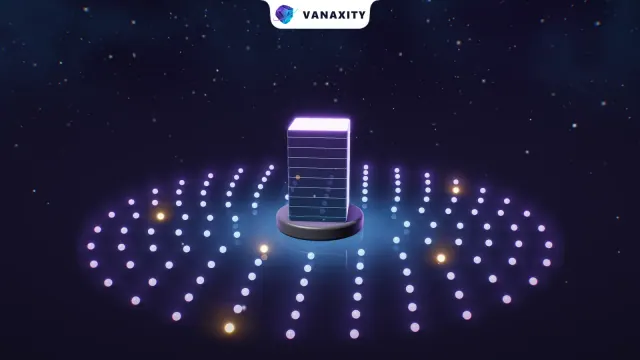
Anthropic S-1: What the IPO Filing Says About AI Spending
Anthropic's IPO is about six times oversubscribed, Bloomberg reported on November 12, 2026, citing people familiar with the deal. Its amended S-1 filing of November 10 offers 825 million Class A shares at $70 to $78 each, to list on Nasdaq as ANT. Seven companies, including Microsoft, Nvidia, Google and AMD, agreed to buy $26.0 billion more in a private placement at the IPO price, and up to 20% of the IPO shares are expected to go to retail investors. At the top of the range, the IPO would raise about $64.4 billion, or about $90.4 billion with the placement, which reports say would be the largest listing ever. The filing also shows how fast companies are spending on AI: revenue was $33.2 billion in the first nine months of 2026, up from $2.5 billion a year earlier, and more than 11,900 customers spent $100,000 or more over the past year, up from more than 950. Yet Anthropic says its Fortune 500 customers spend on average less than 0.1% of their total expenses with it. For marketing teams, that means AI vendors will push hard to grow those budgets, so benchmark your spend, negotiate on volume and keep a second model ready.
Ring Drone Cam
Governance & ROIRing Drone CamRing Rover Cam
Ring Drone Cam: How to Market AI Products People Fear
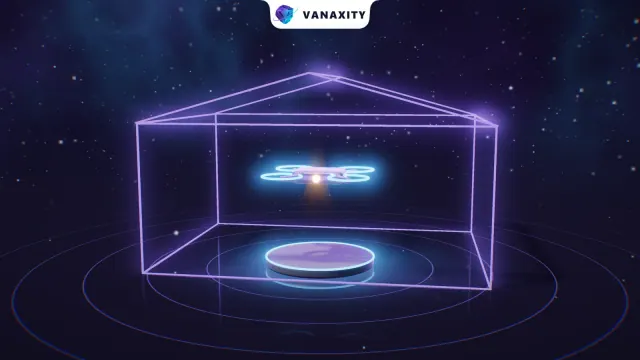
On November 10, 2026, Amazon's Ring launched Ring Robotics with two products. The Ring Drone Cam is a $249.99 indoor flying camera that records 2K video, flies for up to eight minutes per charge by Ring's own test and ships in the US on January 27, 2027, if the FCC approves it first. The Ring Rover Cam is a $999.99 wheeled security robot built on Amazon's Astro, records up to 4K video, maps up to 5,000 square feet and ships December 16, 2026. Both map a space with AI and need a Ring Protect plan for scheduled patrols. The launch comes nine months after Ring's Super Bowl ad for its AI Search Party feature drew a privacy backlash, and Ring canceled a planned Flock Safety integration four days later. So Ring leads with privacy: the drone records only while flying, has no microphone and goes dark in its dock. Coverage of the specs also conflicts, from flight time to weight, which shows why brands need one clear spec page that AI answers can quote. For marketers, the lesson is to answer the fear before the feature, publish facts in one place and capture demand honestly when a product can't be sold yet.
Core update
AI Search StrategyNovember 2026 core updateGoogle core update
November 2026 Core Update: What to Do Before Black Friday
Google started rolling out the November 2026 core update on November 10, 2026, at 10:06 a.m. Pacific time. It applies globally and to all languages, and Google says it may take up to two weeks. It's the third core update of 2026, after March and May, and the eighth ranking update on Google's Search Status Dashboard this year. A full two-week rollout would end around November 24, three days before Black Friday on November 27, so many stores and publishers will see rankings move in their busiest stretch. The March 2026 core update gives a sense of scale: SE Ranking data showed 79.5% of top-three URLs changed position, up from 66.8% after the December 2025 update, and about 24.1% of top-ten pages fell out of the top 100. Google advises waiting until the rollout ends, then at least a week more, before judging the impact in Search Console. For marketers, the best plan is to freeze big site changes, watch revenue rather than rank trackers, line up paid and email backups for key products and save the deep analysis for early December.
Frequently Asked Questions
Doubts? Reach out to us at trantienvan@vandatateam.com
Need to know if Vanaxity fits your workflow?
Van Data Team builds and operates the engine around your CMS, buyer questions, voice and review process. Book the free consultation, or use the email above for procurement or rollout questions.
Book a consultationWhat is GEO (Generative Engine Optimization)?
GEO (Generative Engine Optimization) is structuring, sourcing and citing content so generative AI engines like ChatGPT, Perplexity, Gemini and Google AI Overviews surface and cite it in their answers. Vanaxity prepares content for GEO in the same loop as traditional SEO.
What is AEO (Answer Engine Optimization)?
AEO (Answer Engine Optimization) is formatting content so answer engines, voice assistants and featured snippets can pull a direct, accurate answer to a question, using clear questions, concise answers and structured data.
How are SEO, GEO and AEO different?
SEO ranks content in traditional results like Google and Bing. AEO formats it so answer engines and featured snippets can extract a direct answer. GEO structures and cites it so generative AI engines like ChatGPT and Perplexity reference it. Vanaxity prepares content for all three in one loop.
How much does Vanaxity cost?
It starts with a free 30-minute consultation and fit check. Because every build is custom and founder-led, scope and price are agreed per engagement after that call, based on your CMS, content volume and review process. There's no self-serve subscription.
Is this a SaaS tool I log into?
No. This is a founder-led, custom-engineered service. There's no self-serve dashboard. We build the engine around your CMS, buyer questions, voice and workflow, run it, and deliver publish-ready output with a human review gate.
How is Vanaxity related to Van Data Team?
Vanaxity is Van Data Team's own product, its family of content marketing agents. The same founder-led team that builds AI agents, data pipelines and cloud systems for clients builds and runs Vanaxity, and every engagement is with Van Data Team.
Will it work with our CMS?
We wrap around what you already run, including WordPress, Webflow, Sanity, Contentful, Ghost and others, rather than forcing a migration. CMS integration is scoped per engagement on the call.
How do you keep quality consistent?
Quality is gated by numbers, not vibes. Content must score ≥ 90, exact-match keyword density stays ≤ 2.2%, every visual must clear ≥ 95 across 7 review passes, and a human review gate is the final checkpoint. Nothing advances until it passes.
Can you guarantee rankings or traffic?
No honest partner can. Rankings depend on domain authority, competition and how search and AI engines behave, all outside our control. We apply measurable quality controls that raise the probability of strong results; we don't promise specific numbers.
What should we publish first if we want faster AI search visibility?
Start with assets that answer high-intent buyer questions clearly: comparison pages, alternative pages, pricing or cost explainers, problem-to-solution guides, category definition pages and evidence-backed case studies. In the fit check, we pick the first three assets that are most likely to be quoted, shared and reused across Google, ChatGPT, Perplexity and sales conversations.
Do I get the source code?
No, and that's by design. You own the content, articles and reports produced for you. Van Data Team builds and operates the engine; the underlying tools and systems stay with us, so they keep improving across every engagement.
What happens on the free consultation?
It's a 30-minute call with Van, the founder. You leave with a clear go or no-go, a view of where you show up on Google and in AI answers today, and the three pages worth publishing first. Each build is custom and founder-led, so we take a limited number of new engagements each month.