The 10 Blue Links Are Dead: Meet Vanaxity, the AI Agent for SEO, GEO and AEO
Vanaxity is Van Data Team's debut flagship product: an AI search agent system built for the era of Google rankings, AI citations and answer-first discovery.

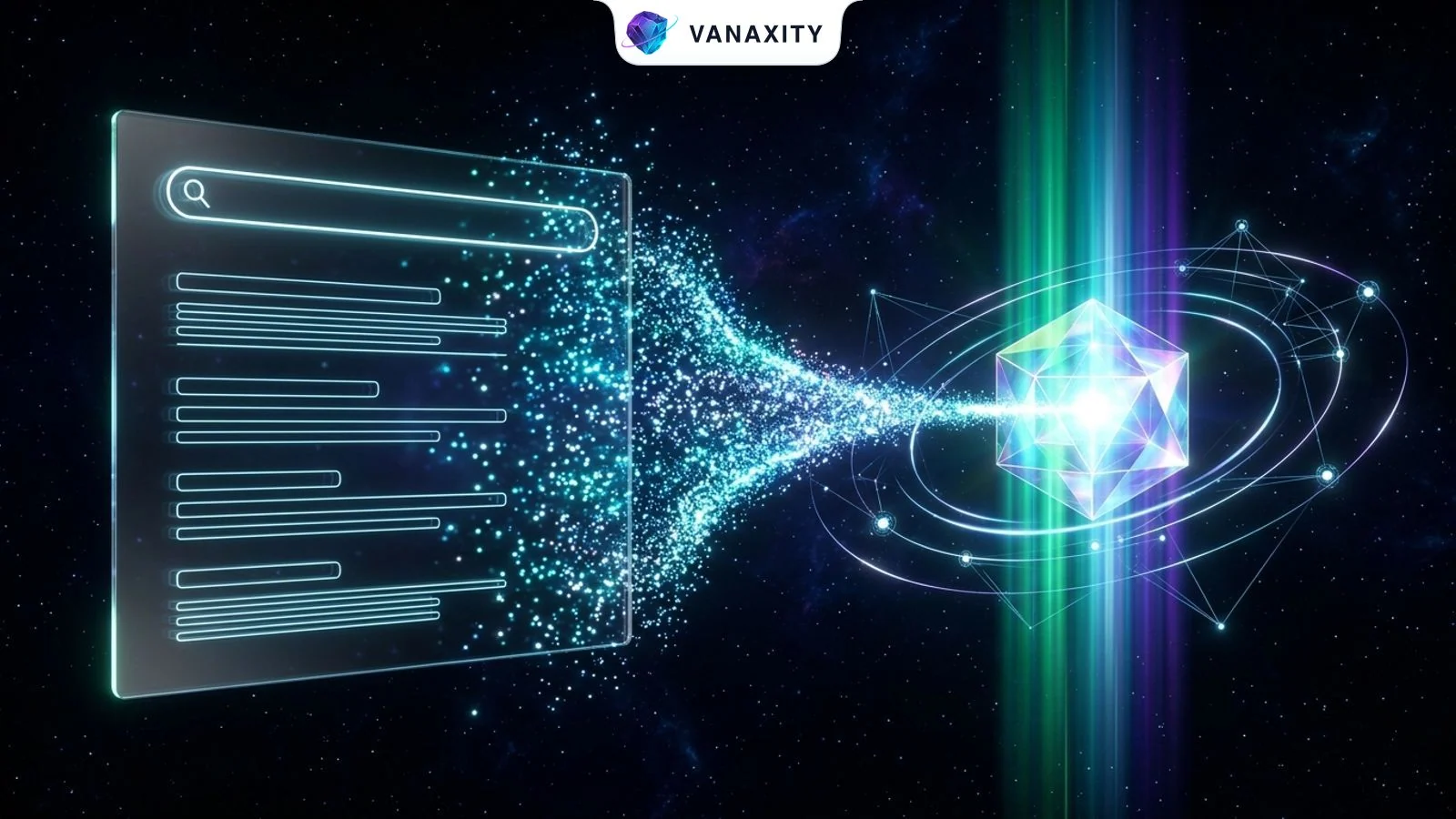
In short: Vanaxity exists because modern visibility is no longer only about ranking pages. It is about becoming the answer across search engines, AI engines and human review workflows.
On this page8
Search has changed
Let us be direct: if a 2026 marketing strategy relies only on traditional SEO, it is already under pressure. Buyers still use Google, but they also ask ChatGPT for recommendations, use Perplexity for research, scan Google's AI Overviews and expect voice assistants to answer without sending them through a list of links.
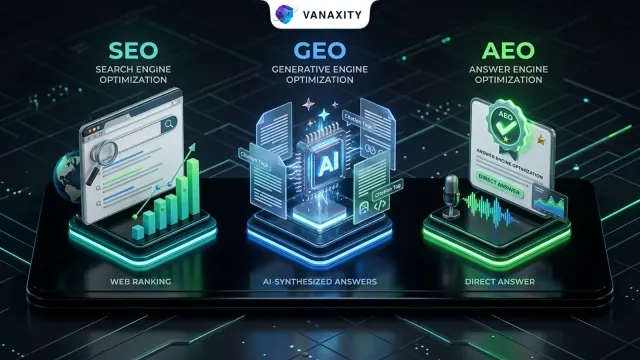
The battlefield has evolved from one channel into three connected layers: SEO for search rankings, GEO for generative engine visibility and AEO for answer-first experiences. Managing those layers manually is difficult because each layer asks for a different kind of structure, evidence and publishing discipline.
The goal is no longer just to win a click. The goal is to become the clearest, most credible answer when a buyer or an AI system asks the question.
- Modern search spans three surfaces: traditional engines (SEO), answer engines and snippets (AEO), and generative AI engines (GEO).
- Buyers increasingly start in ChatGPT, Perplexity and Google AI Overviews, not only the classic search bar.
- The same content asset now has to serve human readers, search crawlers and AI summarizers at the same time.
Who is Van Data Team?
Van Data Team is the engineering team behind Vanaxity. The team works at the intersection of data pipelines, automation, AI systems and digital strategy, building tools for how the internet is being searched now rather than how it worked a decade ago.
Vanaxity is one of Van Data Team's first flagship products. It was created after seeing a clear market gap: teams did not need another generic keyword dashboard. They needed an intelligent content operating system that understands how search engines, answer engines and AI models read, cite and summarize information.
Book a free fit checkMap your SEO, GEO and AEO workflow before you build.
Book a consultationMeet Vanaxity: the omnichannel search agent
Vanaxity is an AI SEO agent system for teams that need their brand to show up across traditional search bars and AI answer surfaces. It is designed to monitor intent, find content gaps, structure answers, prepare SEO/GEO/AEO recommendations and support publish-ready workflows with human review.
The important distinction: Vanaxity is not positioned as a magic button. It is a system. It combines automation, content structure, quality gates and human judgment so teams can move from scattered drafts to a repeatable search visibility workflow.
SEO, GEO and AEO in one operating model
| Layer | What it means | What Vanaxity helps with |
|---|---|---|
| SEO | Search Engine Optimization for traditional rankings, technical health and indexable pages. | Audits site structure, maps search intent and supports content that can still compete in Google. |
| GEO | Generative Engine Optimization for AI systems that summarize, cite and recommend sources. | Structures content with semantic clarity, source notes and entity context so AI engines can understand the brand. |
| AEO | Answer Engine Optimization for zero-click answers, snippets, voice search and conversational queries. | Formats answers around buyer questions so content can serve direct-answer experiences, not only article pages. |
A strong modern search strategy does not treat these as separate departments. The same content asset should be useful to a human reader, understandable to Google and clear enough for AI systems to summarize without losing the point.
The pros: where Vanaxity is strongest
- Future-ready visibility: it helps teams plan for Google rankings, AI citations and answer-first discovery at the same time.
- Scalable content structure: it supports schema, entity clarity, page structure and repeatable answer formatting without turning every page into a manual rebuild.
- Zero-click thinking: it shifts the team from only measuring traffic to also considering mentions, citations, answer presence and brand authority.
- Always-on adaptation: it gives teams a way to keep monitoring search intent and content gaps as AI search behavior changes.
- Engineering-led workflow: it connects research, production, QA, CMS preparation and reporting instead of leaving marketing with disconnected documents.
The cons: where expectations need to be honest
- The ROI model changes: GEO and AEO are often about visibility inside zero-click environments, so teams must report more than sessions and clicks.
- AI search is still volatile: generative engines change how they source, summarize and cite information, so no serious platform should promise permanent dominance.
- Human nuance still matters: an agent can structure, audit and prepare content, but brand voice, original thinking and final claim safety still need human judgment.
- Inputs matter: the quality of source material, CMS access, approval flow and internal expertise will shape the quality of the final system.
The honest promise is not instant domination. The honest promise is a better operating system for becoming the answer.
Common questions about Vanaxity, SEO, GEO and AEO
What is the difference between SEO, GEO and AEO?
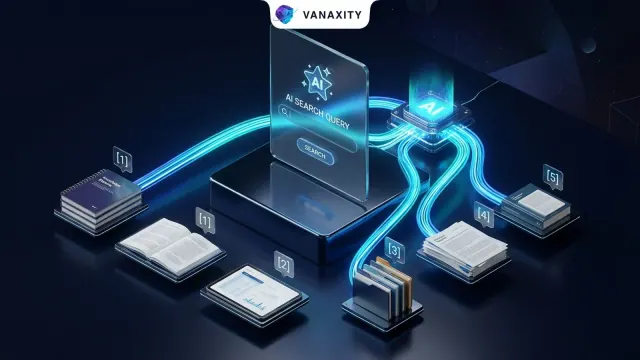
SEO optimizes content to rank in traditional search results like Google and Bing. AEO (Answer Engine Optimization) formats content so answer engines and featured snippets can extract a direct answer. GEO (Generative Engine Optimization) structures and cites content so generative AI engines like ChatGPT and Perplexity reference it. Vanaxity prepares content for all three in one workflow.
Is Vanaxity a SaaS tool or a service?
Vanaxity is a founder-led, custom-engineered service from Van Data Team, not a self-serve dashboard. The engine is built around your CMS, buyer questions and review workflow, run for you, and delivered as publish-ready output with a human review gate.
Can Vanaxity guarantee top Google rankings?
No. Rankings and AI citations depend on domain authority, competition and how search and AI engines behave, which no honest partner can control. Vanaxity applies measurable quality gates that raise the probability of strong results without promising specific numbers.
Who is Vanaxity built for?
Vanaxity is built for B2B marketing teams, founders and operators who need publish-ready SEO, GEO and AEO content for Google, ChatGPT and AI answer engines without managing writers, prompt chains or disconnected tools.
The verdict
The era of keyword stuffing is long gone. The next stage of search rewards brands that provide clear, authoritative, machine-readable answers backed by useful structure and human credibility.
Vanaxity is built for marketing teams, founders and operators who want to stop guessing at disconnected algorithms and start building a search presence that works across Google, AI chatbots, voice assistants and answer engines.