On-Device AI Agents and Privacy-First Brand Discovery
On-device AI agents can surface the next step before search. Explore how structured facts, first-party data, GEO, and AEO could support earlier brand discovery.
Overview
Your brand could be invisible when on-device AI agents surface “what comes next” before a customer searches, while the private context driving that suggestion remains unavailable for targeting or attribution. This article gives marketing, brand, and growth leaders our analysis of what Samsung’s July 17, 2026 AI Appreciation Day thought-leadership piece means for discovery, agent-legible facts, permissioned first-party relationships, GEO/AEO, measurement, and unresolved brand interfaces—through Van Data Team’s privacy-first approach to making public brand information answer-ready.
Van Data Team's analysis is that on-device AI agents could become proactive discovery surfaces that anticipate a likely next step before a person types a query. For marketing, brand, and growth leaders, the implication of that analysis is sharp: the published evidence shows no way for you to target the private context inside the phone, but you can make your brand accurate, structured, current, and trustworthy enough to improve its retrieval readiness.
Samsung Newsroom Australia's July 17, 2026 AI Appreciation Day thought-leadership piece, written by CU Kim, President & CEO of Samsung Electronics Southeast Asia & Oceania, provides the news hook. It was an opinion piece, not a product announcement, and it gave no instructions to marketers. The brand implications in this article are Van Data Team's analysis.
Vanaxity is Van Data Team's AI content agent for SEO, GEO, and AEO. It researches, structures, writes, illustrates, publishes, and syndicates answer-ready content. Vanaxity does not integrate with Samsung, Galaxy AI, or another device agent, and it does not process personal device data. Its role is to make public brand information more consistent and machine-legible through controlled data pipelines, review gates, publishing workflows, and reporting.
Key Takeaways
Brands should prepare for proactive discovery by improving information quality outside the device's private boundary.
- In Van Data Team's analytical model, a proactive assistant could surface a likely next step before the user opens a search box, website, or brand app.
- Published evidence shows no marketer access to private device context. In this analysis, privacy is part of the proposed channel's architecture.
- Agent-legible brands publish consistent entity, offer, availability, and policy facts in extractable formats.
- GEO and AEO improve answer readiness, but neither guarantees inclusion in a device-level suggestion.
- No public Samsung brand-agent interface or device-agent attribution system appears in Samsung's published material.
Want the operational version? See how Vanaxity structures and publishes answer-ready content.
Map your SEO, GEO and AEO workflow before you build.

What Samsung Actually Said, and What It Did Not
Samsung's AI Appreciation Day piece described a direction for proactive, protected consumer AI; it did not launch a marketer-facing capability.
CU Kim summarizes the proactive model in the linked Samsung piece:
"Instead of asking users to manage every task manually, it surfaces suggestions for what comes next."
The piece also describes Knox Matrix as a unified protection layer spanning home appliances, mobile devices, and televisions. Its focus is intelligent living, connected experiences, and consumer security. It says nothing about advertising inventory, brand eligibility, structured data, marketer access, or commercial placement.
Broader context comes from separate reporting on TM Roh and Galaxy AI. That reporting describes AI moving beyond chatbot-style exchanges toward an agentic model that can act on context and take real-world actions on a user's behalf. It also frames Galaxy AI as a more ambient layer that can respond before the user explicitly asks.
| Evidence layer | What it establishes | What it does not establish |
|---|---|---|
| CU Kim's opinion piece | Proactive suggestions and cross-device protection are central to Samsung's consumer AI framing | A new product launch or instructions for marketers |
| Separate Samsung security material | Personalized AI is supported by on-device and cross-device safeguards | A public endpoint through which brands can reach Galaxy AI |
| Independent reporting | Samsung sees AI becoming more contextual and action-oriented | Documented brand selection, ranking, or attribution rules |
| Van Data Team analysis | Brands should improve public facts and permissioned relationships | A guarantee that any device agent will surface a brand |
Our read is that discovery may increasingly begin inside the device. That conclusion is directional analysis, not a Samsung marketing recommendation.
How On-Device AI Agents Could Shift Discovery Before the Query
In Van Data Team's analysis, on-device AI agents could shift discovery by using private context to identify a likely next step before the user formulates a conventional search.
The familiar journey begins with intent expressed as a query. In this analytical model, the emerging journey may begin with context interpreted by the device.
| Discovery dimension | Query-led search | Proactive device discovery |
|---|---|---|
| Trigger | The user formulates a query | The device infers a likely next step |
| Brand objective | Rank, earn attention, and win a click | Be a trustworthy candidate when information is retrieved |
| Useful brand inputs | Pages, listings, feeds, and authority signals | Public facts and permissioned relationship data |
| Private context | Often recreated through audience and behavioral signals | Remains inside the protected device boundary |
| Measurement | Search impressions, referrals, and conversions | Potentially limited or unrecognizable referral evidence |
Consider a clearly hypothetical scenario. Maya arrives in an unfamiliar city, and her device has private context suggesting that transport may be useful. A proactive assistant could surface a next-step suggestion before she searches for a provider. This is an explanatory model, not a claim about a documented Galaxy AI function.
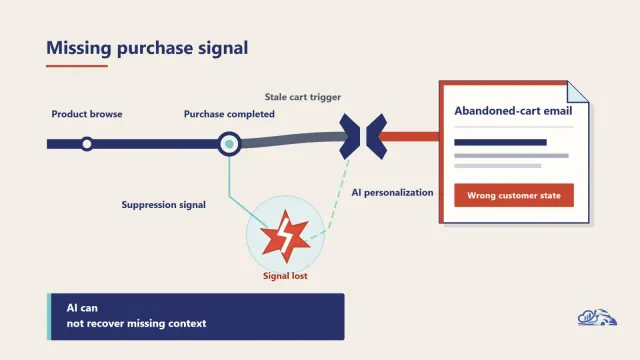
The transport brand cannot see Maya's private context. It can, however, publish accurate service areas, operating conditions, pickup rules, availability, accessibility details, and cancellation policies. If those facts are stale or contradictory, the brand would be a weaker candidate in this model for any system trying to produce a reliable answer.
The user may never enter the keyword the marketing team tracks. They may never visit the homepage or open the app. In this model, discovery becomes less about intercepting a declared query and more about being eligible when an agent resolves a need.
Privacy Is the Proposed Channel Architecture
In Van Data Team's analytical model, on-device privacy makes proactive assistance possible while placing the most valuable personal context beyond a brand's legitimate reach.
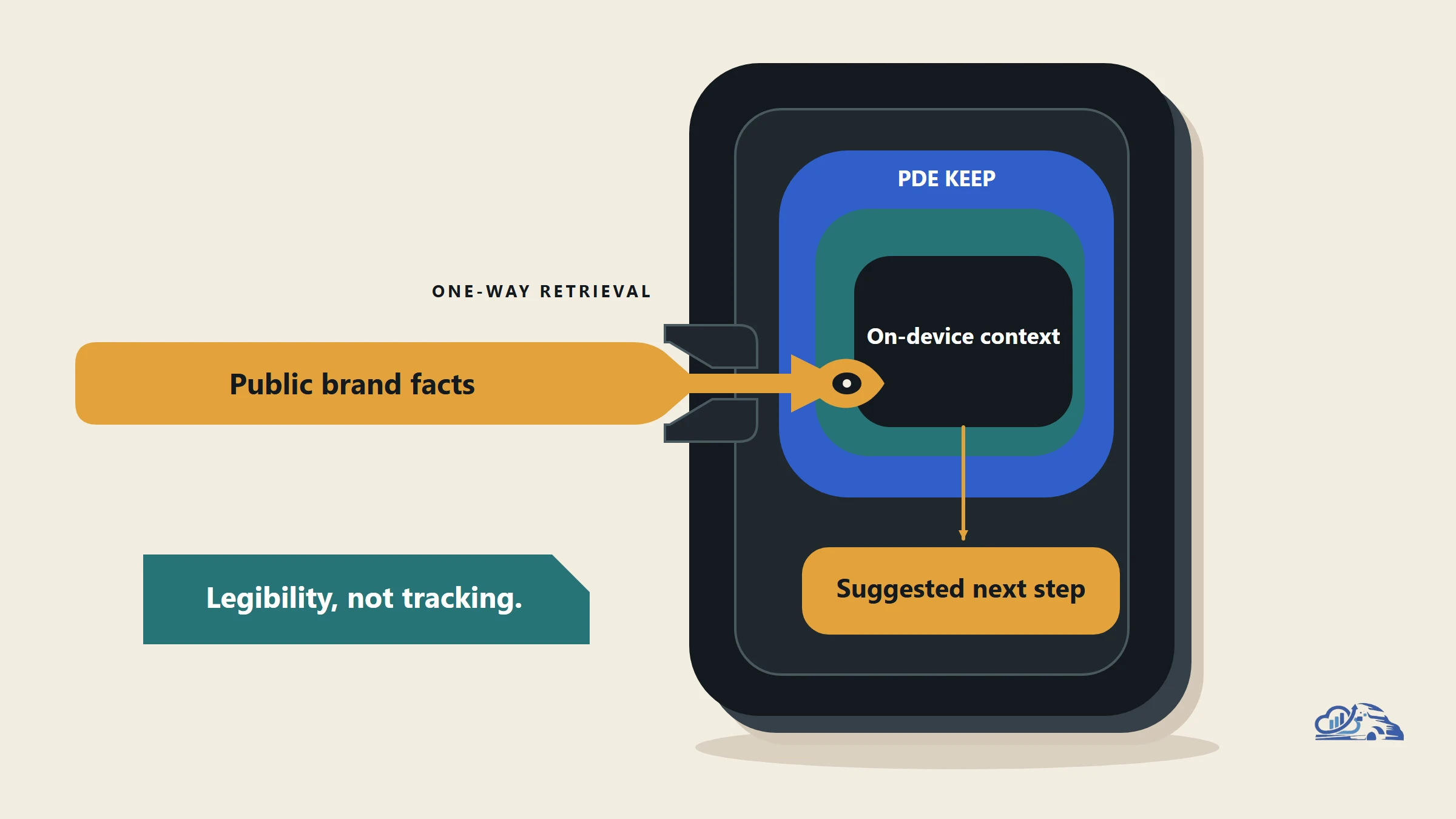
According to Samsung's One UI 8 mobile security material, the Personal Data Engine supports on-device personalization, KEEP provides encrypted app-specific storage environments, and Knox Vault protects sensitive information in hardware physically separated from the main system. Knox Matrix extends protection across connected Galaxy devices. The same material describes automatic sign-out after a serious risk and post-quantum-cryptography-enabled protection for Secure Wi-Fi.
In this model, these components define a practical boundary for marketers:
| Data class | Legitimate location | Brand responsibility |
|---|---|---|
| Private device context | Inside the device's protected environment | Do not treat it as an audience dataset |
| Public brand facts | Brand-controlled sites, listings, feeds, and content | Keep facts accurate, structured, and current |
| Permissioned first-party data | A direct brand-user relationship | Use it only for the accepted purpose and controls |
| Derived marketing signals | Analytics and reporting systems | Separate observation from inference |
Privacy-first marketing does not mean recreating the device's context through more tracking. That would conflict with the premise that makes an ambient assistant acceptable in the first place.
The better model is asymmetric. The device knows the person privately. The brand publishes what it can truthfully provide. A legitimate retrieval or permission layer, if available, connects the need to the offer without exposing the underlying personal context.
The Agent-Legibility Operating Playbook
An agent-legible brand maintains a controlled factual layer that machines can extract, reconcile, and trust without access to private user data.
At Van Data Team, we start with the source of truth, not the content calendar. The mistake we see is treating structured data as a one-time markup task while prices, policies, locations, and offers continue to conflict across channels.
A production-ready foundation includes:
- Canonical entity facts: Use consistent names, categories, locations, contact details, and organizational relationships.
- Current commercial facts: Maintain offers, eligibility rules, service areas, availability, fulfillment conditions, and important exclusions.
- Clear policies: Publish readable returns, cancellations, privacy, accessibility, support, and escalation terms.
- Machine-readable delivery: Use suitable structured data, feeds, APIs, listings, and consistent page markup.
- Answer-ready content: Lead with direct definitions, explicit comparisons, short factual summaries, and visible qualifications.
- Provenance and freshness: Record who owns each fact, where it originated, when it changed, and where it is published.
- Permissioned relationships: Collect first-party data for an explained purpose and give users meaningful control.
- Cross-channel consistency: Prevent the website, support content, product feeds, listings, and campaign pages from contradicting one another.
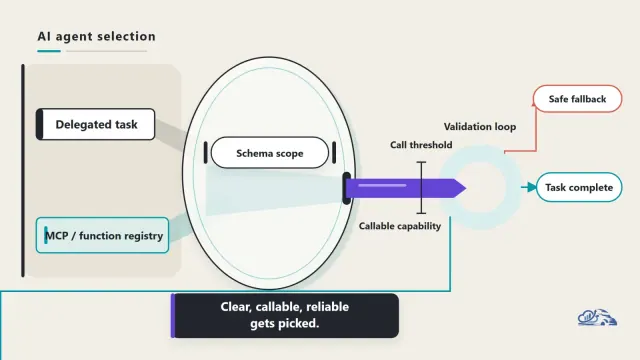
Structured data can improve general machine readability. Samsung's published material does not show that a Samsung device agent consumes a particular schema, feed, API, or brand endpoint. Schema is preparation, not access.
A practical source-of-truth register
| Fact class | Canonical owner | Public representation | Evaluation test | Failure recovery |
|---|---|---|---|---|
| Entity identity | Brand operations | Core pages, profiles, and entity markup | Can systems resolve the same organization everywhere? | Correct the source and republish dependent surfaces |
| Offer and eligibility | Commercial owner | Offer pages, feeds, and direct-answer copy | Are conditions preserved when the answer is extracted? | Expire or withdraw outdated claims |
| Availability | Operations | Location pages, inventory systems, and listings | Do controlled surfaces agree on what is available? | Fall back to a verified availability statement |
| Policies | Legal and service teams | Policy pages and concise summaries | Does extraction retain limitations and exceptions? | Roll back, correct, and log the change |
| Permission state | Privacy owner | Consent and preference systems | Is each use tied to an accepted purpose? | Stop processing and honor withdrawal controls |
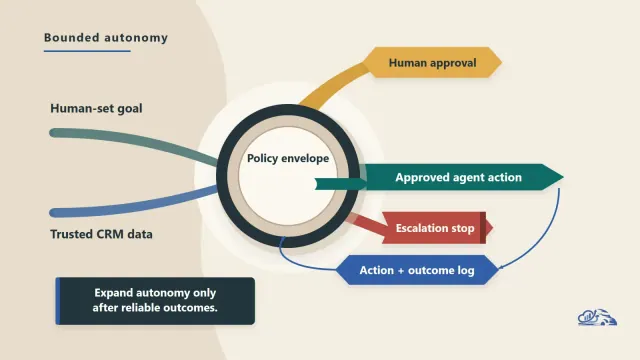
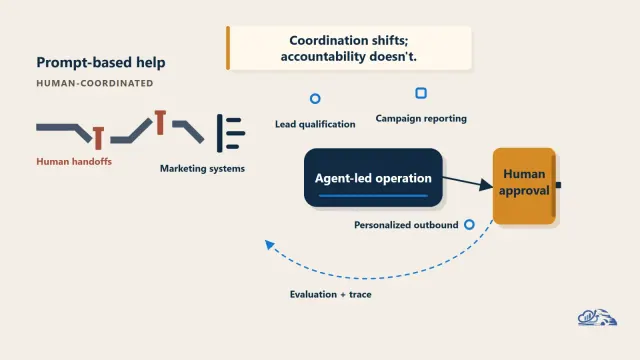
The implementation architecture should connect these sources to validation, publishing, extraction testing, monitoring, and correction. Human review belongs at claims with legal, commercial, or customer-impact risk.
Production decisions also require operational discipline. Cost includes data maintenance, engineering, and editorial review. Latency is the delay between a changed fact and its correction across every surface. Token budget favors concise answer blocks, but qualifications must survive compression. Observability comes from conflict scans and extraction tests. Evaluation should measure factual accuracy, source agreement, and qualification retention. Failure recovery needs expiry rules, rollback paths, and named owners.
Teams deciding where automation helps can compare Vanaxity with manual SEO workflows. A useful audit should return a source-of-truth map, contradiction report, extraction review, freshness risks, and prioritized implementation scope.
GEO and AEO Improve Readiness, but Measurement Stays Imperfect
GEO and AEO make brand facts easier for machines to retrieve and quote, while honest measurement prevents teams from claiming device-agent influence they cannot observe.
SEO improves discoverability in conventional search. GEO improves the visibility and credibility of content inside generative responses. AEO makes information easier to extract into direct answers, featured results, and answer-oriented interfaces.
All three disciplines share a useful operating principle: publish clear, attributable facts that different systems can reconcile. That makes the brand better prepared for many AI surfaces. It does not create a secret path into a proactive mobile assistant.
Vanaxity applies this principle across research, content structure, publishing, and syndication. Teams can see the content agent workflow in action, but that workflow should never be confused with access to Samsung or private device context.
Measurement requires an evidence hierarchy:
| Signal class | Examples | Honest interpretation |
|---|---|---|
| Observable | Consented conversions, content engagement, direct demand, extraction accuracy, and entity consistency | These events occurred on systems the brand can measure |
| Proxy | Branded discovery, assisted journeys, citation presence, and changes after a fact cleanup | These may indicate improved discoverability but do not prove device-agent exposure |
| Unavailable | Private device signals, candidate scoring, agent impressions, and device-level referral paths | Do not estimate or assign conversion value without platform evidence |
In another hypothetical scenario, Ravi's growth team corrects conflicting location and policy information. Direct visits and branded discovery later improve. Ravi can report the content changes, extraction quality, and observed demand. He cannot honestly claim that a device agent caused the change.
This distinction matters. A plausible narrative is not attribution.
Failure Modes and Honest Unknowns
The main strategic risk is turning a useful direction into an unsupported platform claim.
Avoid these mistakes:
- Calling CU Kim's opinion piece a launch or product announcement.
- Writing that Samsung told brands or marketers how to reach device agents.
- Assuming schema creates direct access to Galaxy AI.
- Reconstructing private context through excessive tracking.
- Publishing conflicting availability, offer, or policy facts.
- Hiding critical qualifications inside images or hard-to-render scripts.
- Assigning precise value to device-agent discovery without reporting.
- Presenting Vanaxity as a Samsung or Galaxy AI integration.
- Forecasting adoption or marketing impact without sourced evidence.
Important unknowns remain. Samsung's published sources identify no public brand-to-device-agent interface. They do not document candidate-selection rules, ranking mechanisms, referral reporting, supported brand formats, adoption levels, or marketing effectiveness. Samsung's framing is primarily about consumer usefulness and security.
The practical response is not to wait for perfect clarity. It is to improve facts and permissions in ways that already help search, answer engines, generative systems, customers, and internal operations.
How Van Data Team Makes This Operational
At Van Data Team, we treat readiness for on-device AI agents as an operating workflow, not a speculative strategy. We begin by mapping the current handoff across the CMS, product or offer database, knowledge base, consented first-party systems, approval owners, publishing gates, dashboards, and recovery paths. This reveals where facts become stale, inconsistent, inaccessible, or difficult for an agent to verify.
The result is a scoped delivery plan defining which signals to collect, which workflow gaps to close, and where automation requires human review. Stable facts can flow from an approved source into structured, machine-readable content. Policy claims, regulated language, permission changes, and conflicting availability data remain behind explicit review gates.
Vanaxity supports this workflow by researching, structuring, writing, and publishing answer-ready content for SEO, GEO, and AEO. It does not integrate with Samsung, Galaxy AI, or any device agent, and it never processes personal device data.
Because no public brand-to-device-agent interface or reliable attribution path is identified today, measurement stays honest: dashboards track fact freshness, structured-data coverage, conflicts, publishing failures, and observable answer-surface visibility. A runbook then assigns the next action, owner, escalation route, and recovery step.
Frequently asked questions
What are on-device AI agents?
They are AI systems that use context and processing within a device's protected environment to assist, recommend, or act with less dependence on an explicit prompt.
How can they change brand discovery?
In Van Data Team's analysis, they could move the discovery trigger before a conventional query, making trustworthy public facts and permissioned relationships more important than keyword interception alone.
Does Samsung provide an interface for marketers?
No public marketer or brand interface appears in the published evidence. The AI Appreciation Day thought-leadership piece does not discuss marketers or advertisers.
Can brands access the private context used by a device agent?
Brands should treat private device context as inaccessible. They can work with public facts and first-party information the user knowingly shared for an accepted purpose.
What does agent-legible brand data include?
It includes canonical entity details, offers, eligibility, availability, locations, policies, provenance, freshness controls, and direct answers that retain important qualifications.
Does structured data guarantee that an agent will surface a brand?
No. Structured data improves machine readability, but it does not guarantee retrieval, ranking, citation, recommendation, or support from a specific device agent.