Agentic AI in Marketing: Lessons From HSP GRUPPE
Learn how HSP GRUPPE turned enterprise AI into an operating model, then apply its adoption, measurement, and governance lessons to marketing agents safely.
Overview
Marketing, growth, RevOps, and sales-ops leaders can buy ChatGPT and count prompts yet still can’t tell whether agent-led lead qualification, campaign reporting, or personalized outbound saves time, improves quality, or creates unacceptable risk. This article translates OpenAI’s HSP GRUPPE case study into an adoption, governance, and measurement framework for agentic AI in marketing, with a practical scorecard—following the workflow-first, review-gated approach Van Data Team uses in its own AI operations.
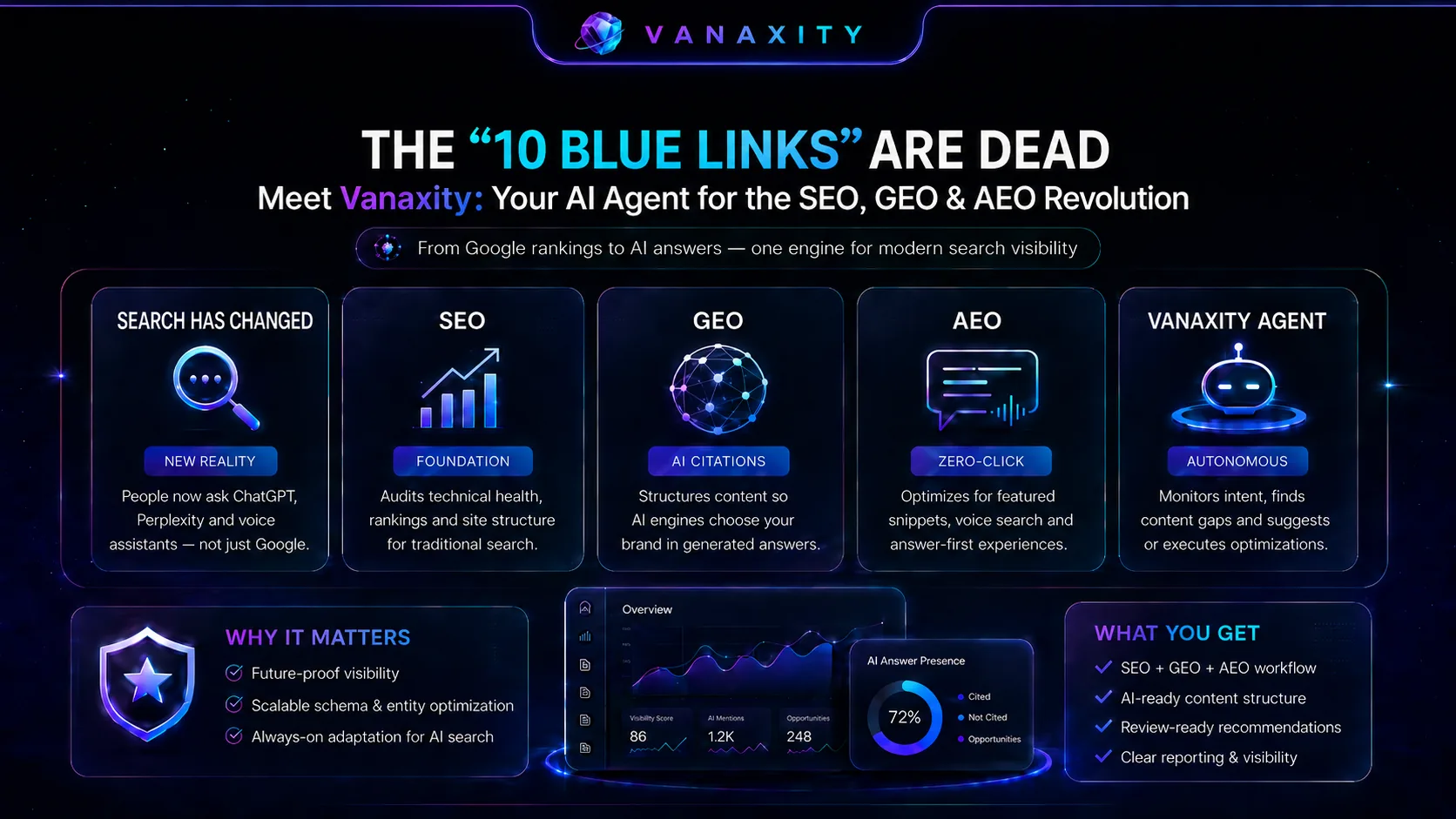
Agentic AI in marketing works when marketing, growth, RevOps, and sales-ops leaders treat it as an operating-model change, not a software rollout. Buying an AI tool and hoping for results won't create governed value. This guide turns OpenAI's HSP GRUPPE case study into an adoption and governance framework. Explore Vanaxity, Van Data Team's content agent, to see that discipline applied through research, data pipelines, review gates, publishing, and syndication. It produces content for keyword rankings, AI Overviews, LLM citations, answer-engine extraction, and structured data across SEO, GEO, and AEO.
Key Takeaways
HSP GRUPPE's case supports a clear rule: agents earn operating scope through adoption, measured outcomes, and working controls.
- Embed AI in named workflows with owners, training, champions, baselines, and review gates.
- Measure active use alongside time saved, quality, customer outcomes, cost, latency, and control.
- Start marketing agents with reporting, qualification recommendations, and outbound drafts, not irreversible actions.
- Expand autonomy only after held-out evaluations, production traces, and incident handling meet pre-approved standards.
Map your SEO, GEO and AEO workflow before you build.

What HSP GRUPPE Teaches Agentic AI in Marketing
HSP GRUPPE shows that enterprise AI creates capacity when leaders redesign daily work around the technology.
On August 7, 2026, OpenAI published "How HSP GRUPPE builds AI capabilities for tax advisory." The OpenAI case study describes HSP GRUPPE as a professional-services network of legally independent tax-advisory, auditing, and law firms. It embedded ChatGPT Enterprise into its operating model with an emphasis on adoption, governance, continuous learning, and measurement to improve productivity, quality, and capacity. Access to software was a starting condition, not the goal.
Across roughly February 1 through July 14, 2026, OpenAI reports about 84% weekly active usage in the shared ChatGPT Enterprise workspace used by HSP GRUPPE and Kanzleipakt. That represented around 755 weekly active users and 913 unique users over six months. Users exchanged more than 500,000 messages. Message volume shows reach, but it doesn't prove business value alone.
The outcome signals are stronger, with an important caveat. HSP says about 98.6% of surveyed employees reported higher productivity and about 84.6% reported better work quality. It also reports that about 95.9% saved time each week. Within that group, about 63.5% saved at least two hours per week and about 25.7% saved at least five hours per week. Finally, about 79.7% reported better client service and about 78.1% reported higher job satisfaction.
These are self-reported employee survey results as presented by OpenAI. They aren't independent measurements or expected marketing returns. The supplied evidence doesn't include the survey sample size, response rate, questionnaire, or independent validation method.
OpenAI also reports that HSP is exploring ChatGPT Work for process orchestration. The example could continuously review bookkeeping and proactively request missing documents from clients. The case study's operating idea can be captured as a short paraphrase:
Move from AI that assists people to AI that orchestrates work across processes.
That line isn't a verbatim executive quotation; it condenses the direction OpenAI reports. ChatGPT Work is an emerging exploration or pilot in this evidence. Teams should verify its current availability, terms, and scope with OpenAI.
The case study reports tax-advisory outcomes. The marketing applications below are Vanaxity analysis, not claims by OpenAI or HSP.
| Operating question | Prompt-based assistant | Agent-led operation |
|---|---|---|
| Trigger | A person writes a prompt | An approved event or goal starts work |
| Coordination | A person manages each handoff | The agent manages permitted steps |
| Tool use | Usually manual or ad hoc | Approved systems and functions |
| Result | An answer or draft | A traced workflow outcome |
| Control | The user reviews a response | Policies, evaluations, budgets, and approvals |
Vanaxity's agent workflow in action provides a concrete content example from research through publishing.
Adoption Before Automation
AI agent adoption begins with a workflow, an accountable owner, and a baseline, not a platform shortlist.
Map the current trigger, inputs, decisions, outputs, handoffs, and failure paths. Mark every consequential action, including customer contact, spend changes, and CRM updates. Then define what the agent may recommend, draft, execute, or never touch.
At Van Data Team, we start by asking where work stalls and what evidence would prove improvement. We don't begin with a prompt library. Training should use live role-specific work, while internal champions collect exceptions and improve the process. Usage logs must identify the workflow, not merely show that someone opened the tool.
Consider a hypothetical RevOps leader named Lena. Her team receives an AI license and shares useful prompts, yet lead routing still happens through scattered spreadsheets. She restarts by naming a routing owner, documenting criteria, capturing baseline review time, and adding an approval queue. The tool becomes part of an operating model only when intended users follow that governed path and outcomes improve without unacceptable risk.
This is the promotion rule: installation becomes adoption when the workflow is used, measured, and controlled.
From Prompt-Based Help to Agent-Led Operations
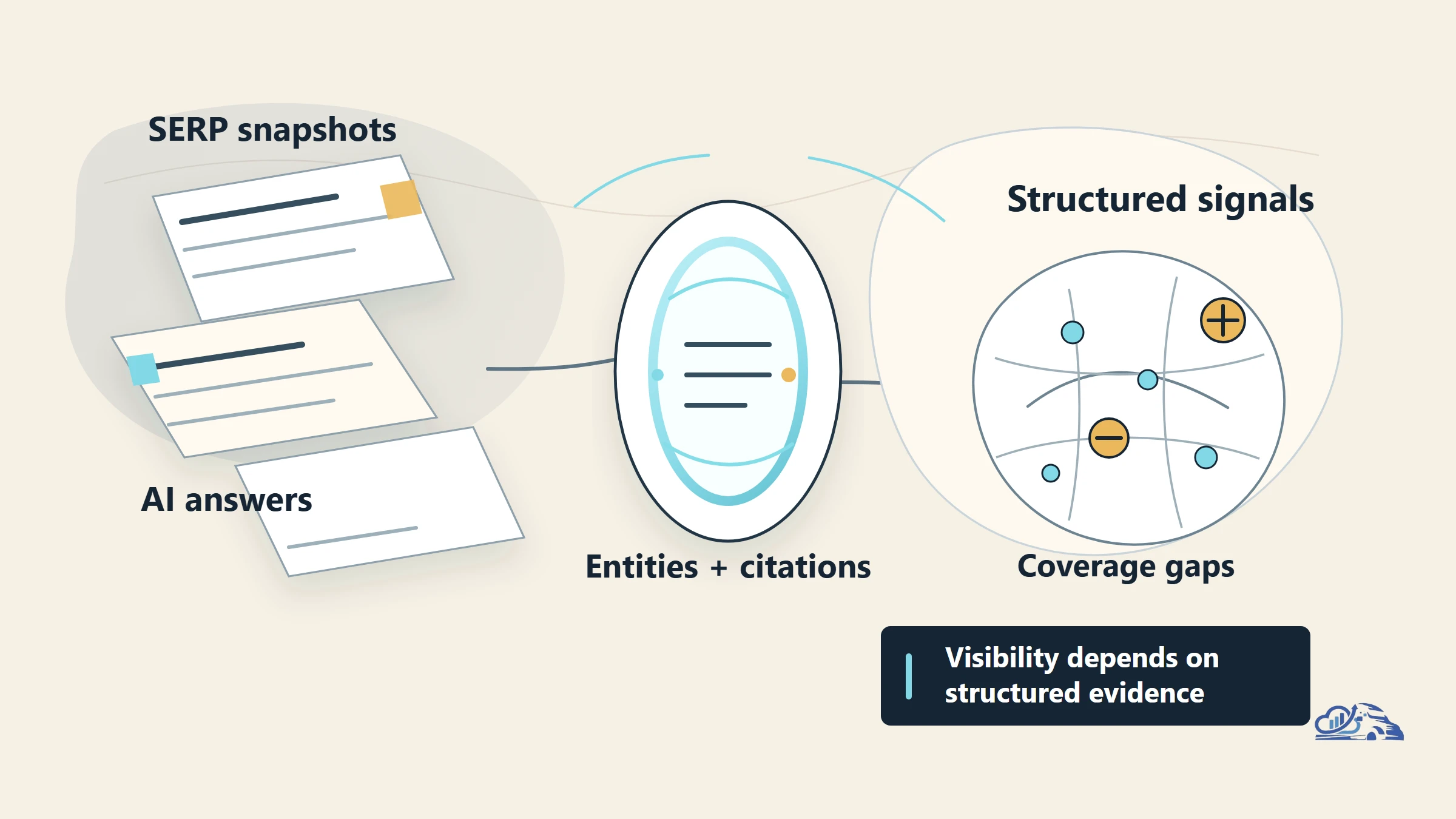
The following illustration summarizes who coordinates the work?:
Figure 1. Agent-led operations shift routine coordination to a traced, evaluated workflow while people retain approval over consequential marketing actions.
Agent-led operations coordinate approved steps across a process; they don't merely return a response to a human prompt.
A prompt-based assistant waits for a request, generates an answer, and hands coordination back to the user. An agent can plan the next permitted step, call approved tools, inspect results, and continue within defined limits. A person still owns the objective, permissions, escalation rules, and consequential decisions.
OpenAI's broader enterprise AI framing describes this transition from assistants toward systems that orchestrate processes. HSP's ChatGPT Work exploration is one reported example. It shouldn't be read as proof that unattended operation is safe or that one product fits every workflow.
The useful buying question is therefore not, "Which chatbot writes best?" It is, "Which controlled system can complete this workflow with acceptable quality, cost, latency, and risk?" That distinction explains why an agent beats a checklist: it coordinates state and action, while a checklist still depends on a person for every handoff.
Marketing Workflows to Start With
Vanaxity analysis: Marketing teams should begin with workflows whose outputs can be inspected before they change customer, budget, or business data.
Lead qualification automation
Lead qualification automation should gather approved account and engagement data, apply documented criteria, explain the recommendation, and queue it for review. A person should approve lead rejection, ownership changes, and consequential CRM fields.
In a hypothetical example, Maya manages demand operations. Her agent assembles the source evidence and flags a missing firmographic field instead of guessing. Maya reviews the exception before routing. She measures cycle time, reviewer agreement, exceptions, and downstream lead quality against her own baseline.
Real-time campaign reporting
A reporting agent can retrieve approved campaign data, reconcile field names, flag anomalies, and draft a plain-language briefing. Budget changes and campaign edits stay outside its initial authority.
Each reporting run should show traceable source fields and clearly marked data gaps. An analyst approves the narrative and investigates anomalies. This shortens coordination without turning an uncertain signal into an automatic spend decision.
Personalized outbound
Personalized outbound should start with research and draft generation, not autonomous sending. Each personalization claim needs source evidence. A person checks brand voice, relevance, privacy, and factual accuracy before any message leaves the system.
In a hypothetical sales-ops workflow, Priya's agent drafts an account note and explains which approved signals shaped it. A weak claim fails the evidence check and returns for research. Priya approves the corrected draft. Autonomy expands only after brand-safety tests, source checks, and approval logs show reliable performance.
The Agent Stack Behind the Workflow
The right agent stack follows the workflow's boundaries, risk, and integrations rather than dictating them.
LangGraph, LangChain, CrewAI, native function calling, Model Context Protocol (MCP), and Plan-and-Execute are adjacent options or patterns. They can help structure state, tool access, collaboration, or planning. This article doesn't rank them because the supplied research contains no comparative product evidence.
A production path is straightforward to describe: intake, policy check, planning, approved tool calls, result inspection, evaluation, human approval, action, and trace storage. The implementation can be simple or multi-agent. The control requirements don't change.
Evaluate each design across cost, latency, token budget, observability, and evaluation. Capture the goal, model decisions, retrieved evidence, tool calls, errors, approvals, and final action. Set stop conditions, spending caps, retry rules, and escalation paths. Failure recovery should let operators pause work, correct state, rerun safely, or roll back a consequential change.
How to Measure Agentic AI Value
Agent value is proven only when adoption, outcomes, operating efficiency, and control improve together.
Use HSP-inspired categories: weekly active use, time saved, quality, and customer-service outcomes. Treat message volume as activity context, not proof of value. Separate employee estimates from observed completion time, including review and rework.
Add the measures an agent workflow creates: cost, latency, token use, exceptions, review burden, trace completeness, evaluation performance, and incidents. A held-out evaluation uses cases the system wasn't tuned against. It tests likely failures before new permissions reach production.
Use this metric-plus-governance scorecard. Set local baselines and approval thresholds before launch; there is no universal pass mark.
| Dimension | Evidence to capture | Required control | Expand autonomy when |
|---|---|---|---|
| Adoption | Workflow-specific weekly active use by intended roles | Privacy-aware usage logs | Intended roles consistently use the governed workflow |
| Time saved | Baseline and post-launch completion time, including review and rework | Like-for-like tasks; survey and observed data stay separate | Savings persist without extra rework |
| Quality | Held-out evaluations and sampled human reviews | A documented rubric and critical-failure rules | The pre-approved quality threshold is met |
| Customer outcome | A locally selected service or quality measure | Human review for customer-facing consequences | Service improves or holds without unacceptable incidents |
| Cost | Model, tool, infrastructure, and review cost per completed workflow | Spending limits and exception alerts | Cost stays inside the operating envelope |
| Latency | End-to-end duration, timeouts, and retries | Workflow-specific service expectations | Performance remains useful for the task |
| Token budget | Token use per completed workflow and budget exceptions | Per-run or workflow caps | Usage remains inside the approved budget |
| Observability | Traces for decisions, tools, approvals, errors, and actions | Consequential actions must be reconstructable | Operators can detect, explain, and recover from failures |
| Evaluation | Held-out pass results and regression findings | Re-test after model, prompt, tool, or policy changes | Critical cases pass without material regression |
| Governance | Permissions, overrides, incidents, approvals, and rollback tests | Least privilege and approval gates | Controls work under realistic failure tests |
A free Vanaxity content and workflow scan can map data signals, dashboard gaps, review gates, and automation risk. You receive a scoped workflow, measurement plan, risk-review path, and implementation sequence. Review the site's results and proof before deciding what to test.
Governance for Agentic AI Operations
Governance makes useful autonomy possible by limiting what an agent can access, change, and send.
Give each workflow the least data and tool access it needs. Keep human approval for external sends, media-spend changes, destructive actions, and consequential customer-record updates. Separate read permissions from write permissions. Time-bound credentials where the platform allows it.
Brand-safety rules should cover tone, prohibited claims, evidence, privacy, legal review, and audience exclusions. Test them with normal cases, edge cases, malicious inputs, stale data, and unavailable tools. Re-run held-out evaluations after changing a model, prompt, connector, tool, or policy.
Log every consequential action and its approval. Preserve the source evidence, policy result, actor, system state, and correction path. An operator must be able to reconstruct what happened and recover safely.
Sequence autonomy by reversibility. Start with reporting drafts and qualification recommendations. Add outbound research and drafting after those controls work. Consider wider execution only when quality, customer outcomes, cost, latency, and incident evidence meet pre-approved thresholds. Autonomous agents should mean controlled systems with earned permissions, not unattended authority.
Common Failure Modes
The main failure modes come from weak operating design, measurement, and control.
- Treating license access as adoption.
- Choosing a framework before defining the workflow.
- Counting messages without measuring value.
- Granting send, spend, or record-changing rights too early.
- Testing only clean, happy-path examples.
- Running opaque workflows without usable traces or recovery.
- Presenting HSP's self-reported results as independent marketing benchmarks.
- Describing ChatGPT Work as generally available without current verification.
Each failure has the same remedy: narrow the workflow, restore evidence, and make autonomy conditional.
How Van Data Team Makes This Operational
At Van Data Team, we treat agentic AI in marketing as an operating workflow, not a theory exercise. We begin by mapping how work moves today: trigger, owner, source system, decision, handoff, review gate, dashboard, exception, and recovery path. This shows where an agent can help and where automation would only hide a broken process.
Next, we define the signals each step needs and the actions it may take. A reporting agent might read approved campaign data and flag anomalies. A qualification agent might recommend a lead tier. An outbound agent might prepare a personalized draft. Spending budget, changing CRM records, or sending messages stays behind a human approval gate until evaluations and production traces justify more autonomy.
The output is a scoped delivery plan, not a vague AI roadmap. It identifies systems to connect, workflow gaps to close, permissions to limit, reviews to retain, and measures to watch. It also specifies the dashboard or runbook that tells the team what happened, what failed, and what to do next.
This is the same discipline Van Data Team applies to its content agents across SEO, GEO, and AEO: bounded work, visible controls, measured outcomes, and recoverable operations.
Frequently asked questions
Is agentic AI in marketing just ChatGPT with extra steps?
No. A prompt-based assistant responds to a person. An agent-led workflow can plan steps, use approved tools, observe results, and continue within limits. The meaningful difference is controlled action across a process, backed by logs, evaluations, budgets, and human approvals.
What did HSP GRUPPE do differently?
HSP embedded ChatGPT Enterprise into its operating model instead of treating access as adoption. The reported approach connected workflows, capability building, measurement, and governance. Its survey results are self-reported evidence, not independent benchmarks or forecasts for marketing teams.
Which marketing workflow should an agent handle first?
Start with a bounded, reversible workflow whose output can be reviewed before it changes an external system. Campaign reporting is a strong candidate. Lead qualification can also fit when the agent recommends an action and a person approves consequential CRM updates.
How should teams measure agent value?
Track workflow adoption, observed time saved, quality, and customer outcomes together. Add cost, latency, token budget, exceptions, review effort, trace coverage, incident history, and held-out evaluation results. Message volume helps explain activity, but it can't establish business value alone.
Which marketing actions should require human approval?
Keep a person responsible for external sends, media-spend changes, destructive operations, and consequential customer-record updates. Approval should remain until evaluations, traces, incident history, and business metrics justify a carefully scoped permission change.
Is ChatGPT Work generally available?
The supplied evidence establishes that HSP is exploring or piloting ChatGPT Work; it doesn't establish general availability. Verify current access, terms, and supported workflows directly with OpenAI. The adoption and governance framework remains useful across vendors.