Generative Search: When Google Builds the Answer Itself
Google's Back to School 2026 shows Search generating visuals, quizzes, and research, not just links. Here is how to optimize content for generative search.
Overview
Generative search is the shift from a page of links to an answer the engine builds for you, and Google just made it concrete for millions of students. On August 19, 2026, Google's Back to School 2026 release showed Search generating interactive visuals, custom quizzes, and step-by-step help, while Gemini Live now talks through Deep Research reports. The risk for brands is scattered attention: if the engine builds the answer, your link may never get the click. At Vanaxity, we treat this as the next stage of GEO and AEO.
This article reads Google's education launch as a signal, then turns it into a content strategy for generative search. It's written for marketing, brand, and SEO leaders whose organic traffic is shifting to AI answers. The reported facts are Google's; the marketing implications are Vanaxity analysis, framed as recommendation rather than certainty. It builds on our work on citation optimization.
Key Takeaways
- On August 19, 2026, Google's Back to School 2026 release showed Search generating interactive visuals, practice quizzes, and step-by-step Lens help, and Gemini Live discussing Deep Research reports.
- This is generative search in the open: the engine builds an answer, sometimes an interactive one, instead of handing back a list of links.
- For content teams, the metric moves from ranking a page to being the trustworthy, structured source an AI draws from and cites inside its generated answer.
- The winning content is machine-readable and answer-shaped: clear claims, structured entities, clean data, and honest sourcing an engine can safely reuse.
- Vanaxity's recommendation: publish structured, citable content, test how AI engines answer your key questions, and treat your citation rate as a core metric.
Map your SEO, GEO and AEO workflow before you build.

What Did Google Actually Show?
Google showed a version of Search that generates the answer, not just the results. In its Back to School 2026 announcement, the study features are a clear preview of where the whole product is heading.
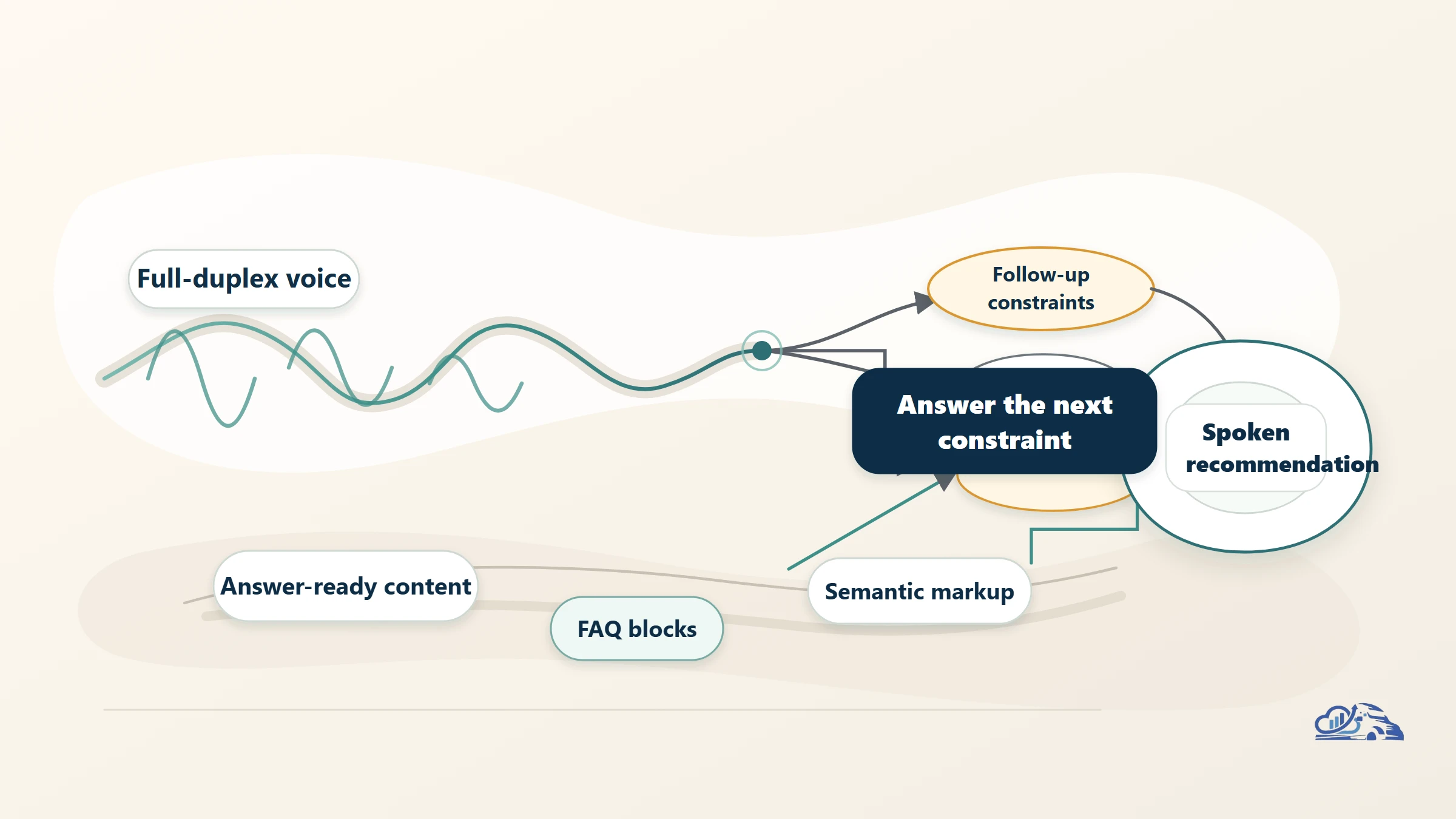
In Search, students can generate interactive visuals to understand a tricky concept, take a custom practice quiz for any subject including standardized tests, and learn step by step with Lens, which explains a problem and flags likely mistakes. In Gemini, a student hub adds study notebooks with diagnostic quizzes, and Gemini Live now works through Deep Research reports in conversation. Google is even giving eligible US college students a year of its AI Pro plan, which it values at $19.99 per month.
**Vanaxity analysis:** Notice the pattern under the education framing. Every one of these features is Search or Gemini building something, a visual, a quiz, a walkthrough, a synthesized report, from underlying knowledge. That's generative search. The student use case is just the friendliest place to ship it first, and TechCrunch frames it as exactly that kind of broad study-tool push.
Why Does Generative Search Change Content Strategy?
Generative search changes the goal. You're no longer only trying to rank a page a user clicks; you're trying to be the source the engine trusts enough to build its answer from, and to name.
**Vanaxity analysis:** When the answer is a generated visual, a quiz, or a synthesized summary, the user may never see your page at all. Your brand shows up, if at all, as a cited source inside the answer. So the old scorecard, position and click-through, is only half the story now. The other half is whether an AI engine can read your content, trust it, and reuse it safely.
That doesn't make SEO obsolete. Ranking still feeds the retrieval layer these engines search. But it adds a second job on top: making your content easy for a machine to digest and cite. This is the same discipline we describe in our GEO and AEO strategy work, now with a sharper edge, because the answer itself is being generated in front of the user.
There's a hard traffic reality behind this. When the engine answers in place, fewer users click through, even for queries where you rank first. That trend is already visible, and generative answers accelerate it.
The point isn't to fight it; you can't. The point is to make sure that when the click doesn't happen, your brand is still in the answer the user reads. A cited mention inside a generated answer is worth more than a first-place blue link that nobody ever taps, because the mention reaches the reader and the link does not.
What Content Wins in Generative Search?
Content wins in generative search when a machine can read it, trust it, and reuse it without guessing. That comes down to structure, clarity, and honesty, not keyword density.
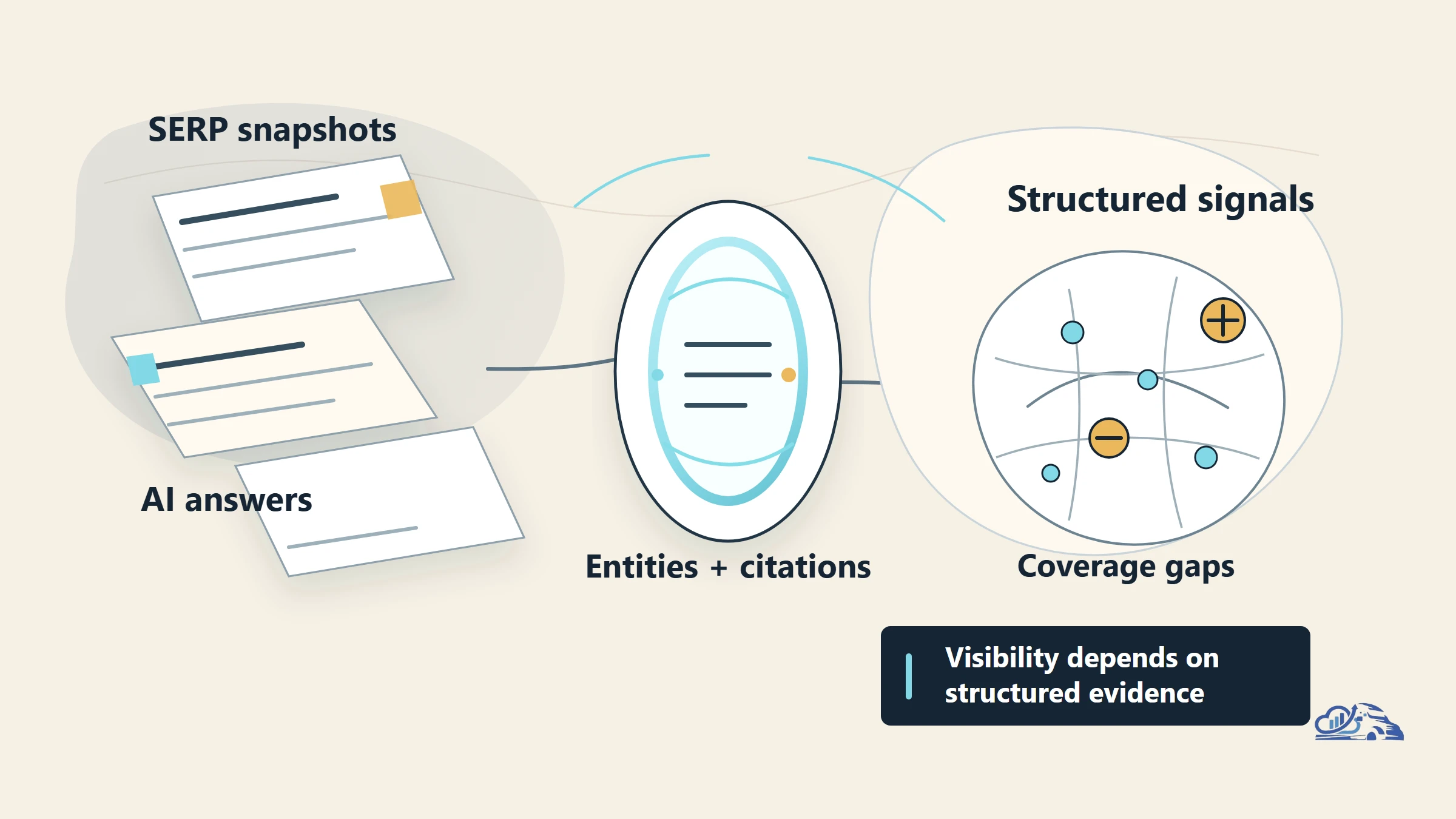
- Structured and machine-readable: real headings, entity markup, and schema, so an engine knows what your page is and who you are.
- Answer-shaped: a clear, quotable claim near the top of each page, then the evidence, instead of burying the point.
- Factual and current: clean, correct data an engine can safely lift into a generated answer without introducing an error.
- Well-sourced: transparent citations, so your content is safe for an engine to attribute and reuse.
- Explainer-first: content that teaches the concept clearly is exactly what a generated visual, quiz, or summary is built from.
There's a nice symmetry in Google's launch here. The content that helps a student learn a concept, clear, structured, and correct, is the same content an engine can turn into a visual or a quiz. Write to teach, and you write to be reused.
Traditional SEO Versus Generative Search
The shift is easiest to see side by side. The table contrasts the old goal with what generative search rewards.
| Dimension | Traditional SEO | Generative search |
|---|---|---|
| Goal | Rank a page for a keyword | Be the source the engine builds its answer from |
| What the user sees | A list of links | A generated answer, visual, or quiz |
| Winning signal | Keyword match and backlinks | Machine-readable structure and trust |
| Your metric | Position and click-through | Citation rate inside AI answers |
| Content shape | Long-form for the crawler | Answer-shaped for reuse and attribution |
**Vanaxity analysis:** Read the last two rows carefully. The metric moves from clicks to citations, and the content shape moves from writing for a crawler to writing to be reused. Neither replaces classic SEO outright; they sit on top of it.
What Do Generated Answers Look Like in Google Search?
Generated answers already show up in more places than most brands track. Once you look for them, the pattern is everywhere.
- AI Overviews: Google Search opens many queries with an AI-written summary that cites a handful of sources, often the only thing above the fold.
- Interactive visuals: for a tricky concept, Search can build a diagram or simulation on the spot, assembled from underlying knowledge rather than pulled from one page.
- Generated quizzes: ask to practice a topic, and Search creates questions and checks your answers from explainer-shaped knowledge.
- Step-by-step walkthroughs: Lens looks at a problem and talks you through it, flagging mistakes as it goes.
- Deep Research synthesis: in Gemini, a report reads across many sources and synthesizes one answer, now discussed live in conversation.
None of these hand the user 10 blue links. Each one is the engine doing the reading and the assembling, then surfacing a finished answer. For a brand, the question stops being "do I rank for this" and becomes "when the engine builds this answer, is my content one of the sources it trusts?"
**Vanaxity analysis:** The uncomfortable part is that you don't control the format. You can't make Google Search render your page as the interactive visual. What you can control is whether your content is clean, structured, and correct enough that the engine reaches for it when it builds one. That's the whole game.
Where Should Marketing Teams Start?
Start by seeing how AI engines already answer the questions that matter to you, because you can't optimize for an answer you've never looked at.
- List the 10 questions that matter most to your business, and ask them in Google's AI answers, SearchGPT, and Perplexity.
- Note what the engine generates and who it cites, so you know where you stand today.
- For the gaps, publish a clear, structured, answer-shaped page for each question, with real sourcing.
- Add entity markup and clean structured data so engines can parse your brand and claims.
- Re-check the same questions on a schedule, and track whether your citation rate moves.
- Keep classic SEO healthy, because it still feeds the index these engines search.
This is a small, bounded experiment that teaches you more than an audit. You learn exactly what the generated answers look like for your topics, and you get fast feedback on what moves the number. From there, the rest of your content becomes a menu to work through, not a platform to overhaul at once. Each page you fix compounds, too, as the engines re-crawl and re-answer.
How Vanaxity Makes Generative Search Work
Vanaxity treats generative search as a measurable program, not a rebrand of SEO. We start by checking how AI engines answer your key questions today, and who they cite, so improvement is something you can prove.
Then we make your content structured, answer-shaped, and citable, add the markup engines need, and stand up monitoring so your AI citation rate becomes a tracked metric. If you want help, our services can produce a baseline, a content and markup plan, and a monitoring setup for your key questions. You can also browse more field notes in our insights library. The goal of generative search work is simple: when Google or Gemini builds the answer, your brand is the source it builds from.
Frequently asked questions
What is generative search?
Generative search is when a search engine builds an answer for you, an interactive visual, a quiz, a step-by-step walkthrough, or a synthesized summary, instead of only returning a list of links. Google's Back to School 2026 release, with generated visuals and quizzes in Search and Deep Research in Gemini Live, is a clear public example.
How is generative search different from traditional SEO?
Traditional SEO optimizes to rank a page for keywords so a user clicks it. Generative search optimizes to be the trustworthy source an engine builds and cites its answer from. The signals shift from keyword match and backlinks toward machine-readable structure, clear claims, and honest sourcing an engine can safely reuse.
Does generative search make SEO obsolete?
No. Classic ranking still feeds the retrieval layer that AI engines search, so it stays valuable. Generative search adds a second goal on top: making your content easy for a machine to digest, trust, and cite inside a generated answer. The good work, clean structure and real authority, serves both at once.
What content works best for generative search?
Content that a machine can read, trust, and reuse: real headings and entity markup, a clear quotable claim near the top, correct and current data, and transparent sourcing. Explainer-first content that teaches a concept clearly is exactly what an engine turns into a generated visual, quiz, or summary.
How do I measure success in generative search?
Track how often AI engines cite you when they answer your key questions, and your share of citations versus competitors. Ask your most important questions in Google's AI answers, SearchGPT, and Perplexity, note what gets generated and who is cited, and re-check on a schedule so you can see the number move.
Where should a team start with generative search?
Start by asking your 10 most important questions in the major AI answers and recording what gets generated and who is cited. Then publish structured, answer-shaped pages for the gaps, add entity markup, and re-check on a schedule. Keep classic SEO healthy, since it still feeds the index these engines rely on.