AI Bubble or Boom? What TSMC's Record Quarter Means
TSMC just posted record AI-driven profits, while Gartner warns $3.5 trillion of AI spending is at risk. What both mean for marketing budgets and AI search.
Overview
Is AI a bubble? This week gave two very different answers, one from the company that builds the chips and one from the analysts who track the money behind them. On October 15, 2026, TSMC, which makes most of the world's advanced AI chips, reported record profits. A day earlier, Gartner warned that more than $3.5 trillion of planned AI infrastructure spending could lose value by 2030 if AI revenue doesn't catch up.
Both can be true. And the gap between them matters for anyone who buys AI tools. This guide explains what the numbers say, where the AI bubble risk really sits and what it means for marketing budgets and AI search.
A note on our position: Vanaxity sells AI search and brand visibility services, so we gain when brands keep investing in AI. This article was researched with Claude, made by Anthropic. We've linked each figure to its source and labeled our own views. Nothing here is investment advice.
Key Takeaways
- TSMC's third-quarter revenue rose 50.9% from a year earlier to NT$1.49 trillion, or $46.72 billion, and net income rose 68.7%.
- High-performance computing, the segment that includes AI chips, made up 68% of revenue.
- TSMC says AI chip demand still exceeds supply, and it expects about 44% revenue growth for 2026 in US dollars.
- Gartner warns over $3.5 trillion of AI infrastructure spending could face write-downs by 2030, and that over 80% of smaller GPU cloud providers may not survive on their own.
- Our view: the boom is real for chip sellers now, while the bubble risk sits with the data center owners who must earn it back.
- For marketers, that means better AI tools, but also a coming shakeout among AI vendors.
Map your SEO, GEO and AEO workflow before you build.

TSMC's Record Quarter at a Glance
Here are the main numbers from TSMC's filing with the US SEC, for the quarter ended September 30, 2026:
| Measure | Q3 2026 | Change from a year earlier |
|---|---|---|
| Revenue (NT$) | 1,494.24 billion | Up 50.9% |
| Revenue (US$) | $46.72 billion | Up 41.2% |
| Net income (NT$) | 763.06 billion | Up 68.7% |
| Gross margin | 66.4% | Not given |
| Net profit margin | 51.1% | Not given |
| 2-nanometer share of wafer revenue | 8% | New node, first full year |
| Q4 2026 revenue guidance | $52.3 billion to $54.3 billion | About 58% at the midpoint |
The gap between the two revenue growth rates comes from the exchange rate. In Taiwan dollars, revenue grew faster than in US dollars because the Taiwan dollar was weaker against the dollar than a year earlier.
Why TSMC Is the AI Boom's Scoreboard
TSMC doesn't design chips. It manufactures them for other companies, including the makers of the AI accelerators that power chatbots and AI search. When AI companies order more chips, TSMC sees it first.
That's why its results are watched so closely. On its earnings call, TSMC said high-performance computing made up 68% of revenue and grew 22% from the previous quarter. Its newest 2-nanometer chips already account for 8% of wafer revenue, and the 3-nanometer and 5-nanometer nodes another 61%.
In plain terms: a large and growing share of the world's most advanced chips is going into AI, and buyers are paying well for them.
What TSMC Said About AI Demand
Management was upbeat. According to the call transcript:
- Demand still exceeds supply: the company said the gap remains large.
- Faster AI growth: chief executive C.C. Wei said growth in AI accelerators would probably be higher than the mid-to-high 50s percent a year TSMC had forecast for 2024 to 2029.
- A strong full year: TSMC now expects about 44% revenue growth in 2026 in US dollars.
- Heavy investment: it reiterated a 2026 capital budget of $60 billion to $64 billion, raised in July from $52 billion to $56 billion, and said spending from 2026 to 2028 will be significantly higher than the prior three years.
Analysts expect more. TrendForce reports that some brokers now forecast TSMC capital spending of $75 billion to $80 billion in 2027 and as much as $105 billion in 2028. Those are outside estimates, not company guidance.
The Other Side: Gartner's AI Bubble Warning
Gartner's October 14 report looks at the same boom from the buyer's side. Its math, as reported by AI Weekly, goes like this:
- AI providers are expected to spend nearly $1 trillion on AI infrastructure in 2026, and about $6 trillion more from 2027 to 2030.
- To cover that spending, financing costs and a 12% return, data center owners would need about $8.5 trillion in revenue through 2030.
- Gartner forecasts no more than $3.6 trillion in AI revenue tied to those data centers over the same period.
- As a result, more than $3.5 trillion of spending could be exposed to impairment, meaning a write-down in value, by the end of 2030.
- More than 80% of neoclouds, the smaller companies that rent out GPUs, are projected to stop operating independently by 2030.
One driver is how fast chips age. Gartner analyst Will Sommer said many AI compute providers won't earn back their investment before today's chips are replaced by newer ones. Large cloud providers are in a better position, Gartner says, because their other businesses can carry the cost for years.
Is AI a Bubble? Why Both Can Be True
TSMC's record quarter and Gartner's warning look like opposites, but they describe different parts of the same chain.
| Who | Where they stand today | Main risk |
|---|---|---|
| Chipmakers like TSMC | Paid now, at record margins | A sudden drop in orders if buyers pull back |
| Large cloud providers | Spending heavily, cushioned by other businesses | Lower returns than planned |
| Smaller GPU clouds | Spending heavily, often with debt | Not earning back costs before chips age |
| AI app and model companies | Growing revenue fast, often still losing money | Prices falling faster than costs |
| Businesses buying AI tools | Benefiting from cheap, improving tools | Vendors failing or raising prices later |
Our read is that this looks less like a single bubble and more like a classic build-out. The suppliers get paid first. The builders take the risk.
Some builders will do very well and others will fail. Railways and the early internet followed a similar pattern, which helped users and hurt some investors.
How the AI Bubble Compares With the Dot-Com Era
People often compare today's AI spending to the late 1990s. Back then, telecom companies laid huge amounts of fiber-optic cable, expecting internet traffic to grow faster than it did. Many of those companies went bust. But the cable stayed in the ground, and later internet firms used it cheaply.
The AI build-out has some of the same features: heavy spending ahead of proven revenue, lots of debt among smaller players, and fast-changing technology. It also has one big difference. Chips age fast. The chips inside data centers wear out or fall behind far faster than fiber did, so a write-down could come sooner.
Our view is that the lesson for businesses is the same as in 2000. Crashes hurt builders. A shakeout among builders can be painful for investors and still leave users with cheap, useful tools. The companies that kept building on the internet after the crash did well.
AI Bubble Signs to Watch
If you want to track whether the risk is growing, these are the signals we'd watch. None needs a finance degree:
- Chip orders: a cut to TSMC's guidance or capital budget would be an early warning, because chipmakers see changes in demand months before the products reach users.
- GPU rental prices: falling prices and spare capacity at smaller GPU clouds would suggest supply is running ahead of demand.
- Neocloud failures: mergers or shutdowns among GPU rental firms would match Gartner's forecast.
- AI revenue: watch whether AI companies' revenue keeps growing faster than their spending.
- Tool pricing: sudden price rises or new usage limits on AI tools can signal vendors under pressure.
What the AI Bubble Debate Means for Marketing Budgets
You don't need to predict the market to plan well. Here's how we'd adjust a marketing team's AI spending. These are our views:
- Keep using AI where it pays off. A shakeout among infrastructure owners doesn't change whether a tool saves your team time or lifts results.
- Favor vendors that can last. Large platforms and well-funded tools are more likely to survive consolidation than small apps built on rented GPUs.
- Avoid long lock-ins with small vendors. Prefer monthly or annual terms, data export and a clear exit plan.
- Keep your prompts, content and data portable, so you can switch tools without starting over.
- Measure value per task. Track time saved, cost per piece of content and impact on results, not just seats bought.
A useful test is to ask what would happen if each AI tool doubled in price tomorrow. If you'd still pay, the tool is core. If you'd drop it, it's a nice-to-have, and that's where short contracts matter most.
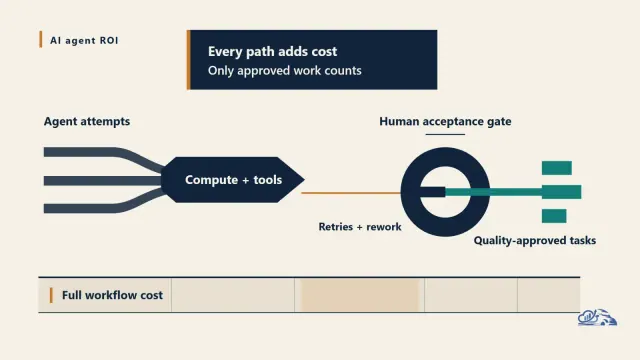
If you need a way to show AI returns to your leadership, our guide to the AI marketing ROI gap walks through it, and our piece on AI agent ROI covers cost per successful task.
What the AI Bubble Debate Means for AI Tool Prices
Right now, competition and new capacity are pushing many AI prices down. Model makers keep launching cheaper versions, and introductory deals are common.
That may not last for every tool. If data center owners need to earn back their spending, some will raise prices or tighten usage limits once the market settles. Google's Gemini 4 Argon is a small example: its API price is set to double after an introductory period, as we covered in our Gemini 4 Argon guide.
Plan your budget with a buffer. Assume some tool costs could rise in 2027, and keep enough flexibility to move work between tools if they do.
Questions to Ask Your AI Vendors
A shakeout hits small vendors hardest, especially those that rent their computing power from the GPU clouds Gartner expects to struggle, so before you renew or sign a new AI contract, ask:
- Where does your AI run? A tool built on a large cloud provider is usually on firmer ground than one renting GPUs from a small provider.
- Can we export our data, prompts and outputs at any time, in a format we can use elsewhere?
- How much notice do you give before price or usage-limit changes?
- What happens to our data and account if your company is sold or shuts down?
- Which AI models do you use, and can you switch if one becomes too expensive?
Good vendors will answer these easily. Vague answers are a reason to keep the contract short.
What It Means for AI Search Visibility
The chip boom has a direct effect on how people find brands. More compute means AI assistants can answer more questions, search more sources and do more work for users. TSMC's growth suggests that capacity will keep rising for now.
Gartner's warning points to a second effect. If weaker players drop out, AI search could concentrate around a few large assistants backed by companies that can afford the build-out.
There's a timing point too. Building strong, trusted sources about your brand takes months, while a shakeout could happen quickly. Starting now means you're ready whichever assistants come out on top.
Our view is that brands should focus their AI search work on the assistants their customers actually use, and on clear, consistent facts any model can find. That holds whether the market grows smoothly or goes through a shakeout.
A Simple Plan for Marketing Leaders
- This month: list every AI tool your team pays for, what it costs and what it delivers.
- Next month: check contract terms, data export and what happens if each vendor fails or raises prices.
- This quarter: move one key workflow to a setup you could switch between two tools.
- Every quarter: check how the major AI assistants describe your brand, and fix gaps in the sources they use.
- Every quarter: review the bubble signs above, and adjust commitments if the risk rises.
AI Bubble or Boom: Our Take
TSMC's numbers show that the AI boom is real money for the companies making chips, at record margins and with demand still ahead of supply. Gartner's warning shows that the people buying those chips still have to prove they can earn it back.
For marketers, the practical answer is the same either way. Use AI where it clearly helps, keep contracts and data flexible, and invest in being visible in the AI assistants that are most likely to last.
We'll revisit this when TSMC reports its fourth quarter and Gartner updates its forecast. The next few quarters should show which way the gap is closing.
How Vanaxity Helps Brands Through the AI Shakeout
We track how the major AI assistants describe brands, which sources they rely on and how often a brand comes up when buyers ask for options. That gives marketing teams a clear view of where AI visibility is worth investing, whatever happens to the wider market.
If you want to know how AI assistants describe your brand today, see our services or browse more insights.
Frequently asked questions
Is AI a bubble?
It depends on where you look. TSMC reported record profits on AI chip demand in October 2026, while Gartner warned that over $3.5 trillion of AI infrastructure spending could lose value by 2030 if AI revenue doesn't catch up. Suppliers profit now. The risk sits mainly with the companies building data centers.
How much did TSMC earn in the third quarter of 2026?
TSMC reported revenue of NT$1,494.24 billion, about $46.72 billion, and net income of NT$763.06 billion. Revenue rose 50.9% and net income 68.7% from a year earlier in Taiwan dollars. Gross margin was 66.4% and net margin 51.1%.
What did Gartner say about AI infrastructure spending?
Gartner said in October 2026 that AI data center owners would need about $8.5 trillion in revenue through 2030 to cover their spending, financing and a 12% return, but forecast no more than $3.6 trillion. That leaves more than $3.5 trillion exposed to write-downs, and over 80% of smaller GPU cloud providers may not survive independently.
Should marketing teams cut AI spending?
Not because of the bubble debate alone. Keep AI tools that show clear results, but avoid long lock-ins with small vendors, keep your data and prompts portable, and measure value per task. A shakeout among infrastructure owners doesn't change whether a tool helps your team.
What does the AI boom mean for AI search?
More chips mean AI assistants can answer more questions and do more work, so AI search will keep growing for now. If weaker players fail, search may concentrate in a few large assistants, so brands should focus on the ones their customers use and on clear facts any model can find.