

Governance & ROI
Enterprise AI governance, brand safety guardrails, FinOps measurement, data privacy, and marketing ROI.
B2B Marketing Board Credibility: What Boards Want to See
At Marketing Week's Festival of Marketing on October 14, 2026, three B2B marketing leaders said marketers earn board credibility by understanding business economics, measuring what matters and showing how brand investment drives growth. The gap is real: McKinsey found 70% of CEOs judge marketing on revenue growth and margin, while only 35% of CMOs track that as a top metric. This guide turns the panel's advice into steps: learn the profit and loss, swap activity metrics for business ones, make the case for brand as future demand, apply deal rigour to spend, and add AI search visibility as an early signal of demand.

Small Agencies: What Wins When Independence Isn't Enough
Small agencies can no longer win on independence alone, Ad Age reported in July 2026, as holding companies consolidate and clients ask for proof, not positioning. Ad Age's first Small Agency Network benchmark survey found 71% of AI-mature agencies grew revenue last year against 33% of lighter AI users, a link rather than proof that AI caused the growth. Publicis is winning big accounts without pitches, more than half of independent owners say they'd consider selling, and business buyers now start much of their research in AI tools. The small agencies that win pick a clear focus, build AI into delivery, price on outcomes and make sure buyers can find them, including in AI answers.

Meta Ad Costs Are Up 12%: How Media Buyers Are Adapting
Meta's average price per ad rose 12% year over year in both the first and second quarters of 2026, according to its earnings reports, and media buyers told Marketing Brew that CPMs have climbed across ad formats. Meta says results have improved too, citing an internal study that found $4.13 in revenue per ad dollar, while Metricool's independent data shows Meta Sales campaign ROAS falling from 5.48x to 4.57x. Some advertisers are moving budget from the holidays to the cheaper 'Q5' window after Christmas, leaning on Advantage+ and testing more creative. Higher paid costs also make owned visibility, including how AI tools describe your brand, worth more.

White House AI Safety Pledge: What It Means for Marketers
On September 29, 2026, President Trump and leaders of Anthropic, OpenAI, Google, Meta, xAI and Nvidia signed a voluntary accord, the Joint Commitment on Frontier Responsibilities. The companies promised robust internal controls, internal teams to check those controls, independent external auditors, board oversight and regular meetings on safety standards. The accord isn't legally binding, names no auditors and sets no public reporting rules, and critics called it vague. For marketers, the direct impact is small, but it raises the bar for vendor due diligence, makes safety claims riskier, and adds a new term, super intelligence, that federal agencies must now use.

Global Brands Going Desi: What Cultural Marketing Pays
Global luxury and sportswear brands are drawing on Indian cultural codes, from Louis Vuitton's auto-rickshaw bag to Prada's Kolhapuri-style sandals, Fendi's embroidered Baguette and an Adidas Samba mule inspired by the jutti. Experts quoted by exchange4media say the payoff is mostly conversation and differentiation, not direct sales. The cases also show the risk: Prada's uncredited design drew a backlash that ended in a partnership with Indian artisans, and Fendi faced criticism over credit. Because AI answers draw heavily on news and social coverage, how a brand credits the culture it borrows from now shapes its reputation in AI search too.

Marketing Agency Acquisition: What Clients Should Protect
Marketing M&A is accelerating, with LUMA Partners counting 469 ad tech and marketing deals in 2025, up 13%, alongside giant moves like Omnicom's $13 billion purchase of Interpublic and Adobe's $1.9 billion deal for Semrush, and while a new owner can bring better tools and specialists, clients feel an acquisition through changed teams, reporting, and priorities, so the practical response is to protect account knowledge, keep your own copies of data and history, compare results before and after, and write change-of-control protections into agency contracts.

Are AI Doom Warnings Marketing? What Brands Can Learn
The latest AI doom warnings came from inside the industry, when researcher Jacob Coxon resigned from Anthropic saying AI companies are gambling with our lives and Anthropic alignment lead Evan Hubinger put the chance of AI killing all humans within a decade above 10%, and while skeptics call that a pre-IPO flex and supporters point to the personal costs involved, the debate is a live case study for marketers in how audiences decode high-stakes risk claims when they can't verify the speaker's intent.

The AI Marketing ROI Gap: Adoption Up, Proof Missing
The AI marketing ROI gap is the distance between near-universal AI adoption and the small share of marketing leaders who can prove it returns anything, with surveys showing 90% of organizations raised AI marketing investment while only 16% feel confident defending it to the board and 12% can isolate AI's real revenue impact, so the problem isn't efficiency but proof, and closing it takes measurement discipline, controlled tests, and cost-per-outcome accounting rather than a more powerful tool.

Why AI Speeds Marketing Production but Not Time to Launch
AI has made marketing production faster to start but not faster to finish, because the real bottleneck was never writing copy, it is approvals, coordination, editing, and the extra decisions that more AI content creates, so despite heavy adoption Knak's 2026 survey found 85% of teams still missed a launch date and 82% still spend most of their time on production rather than strategy, and reclaiming time means applying AI to the actual workflow bottleneck and measuring cost per launched campaign, not per draft.

Humanizing AI Content: The Honest Way to Sound Human
An open-source skill called Humanizer rewrites AI-sounding text to read like a person wrote it using Wikipedia's Signs of AI writing, and crucially without inventing facts; the real lesson for marketers is that humanizing AI content is about quality and trust, not fooling detectors, and it works only when you change the style while keeping every fact, number, and source intact.

Privacy-First Marketing: Reading Android's Network Locks
Google added four network-security protections to Android, and while most are about encryption and cellular safety rather than ad-tech, one closes a real app data-collection vector and all four signal the same direction: the ambient, third-party data marketers once relied on keeps getting locked down, which is why privacy-first marketing built on first-party and consented data is the durable strategy.

Agentic Marketing Governance: Lessons From AI Futures
OpenAI's AI Futures blog, launched August 20, 2026 by its Strategic Futures team, warns that transformative AI can concentrate power and erode human agency; agentic marketing governance turns that warning into concrete guardrails, keeping a human accountable for every autonomous content and audience agent your brand deploys.

AI Marketing Security and OpenAI's Defender's Window
Marketing stacks are now full of AI agents touching customer data across connected SaaS tools and CDPs; OpenAI's Defender's Window warns that autonomous attacks outpace manual defense, making AI marketing security and governance a brand-safety problem, not just an IT one.
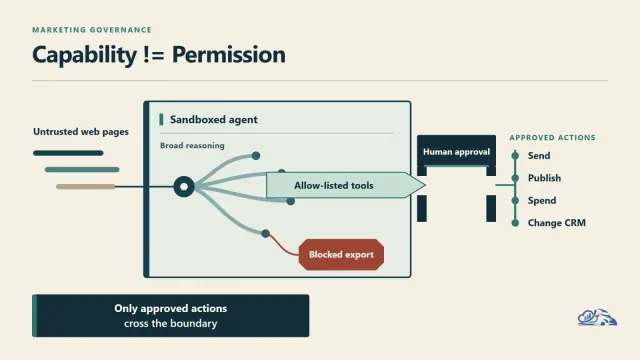
AI Marketing Governance: Lessons From the UK AISI Test
AI marketing governance is the operating system marketing, growth, and RevOps leaders need before deploying AI agents in customer-facing and automated marketing.
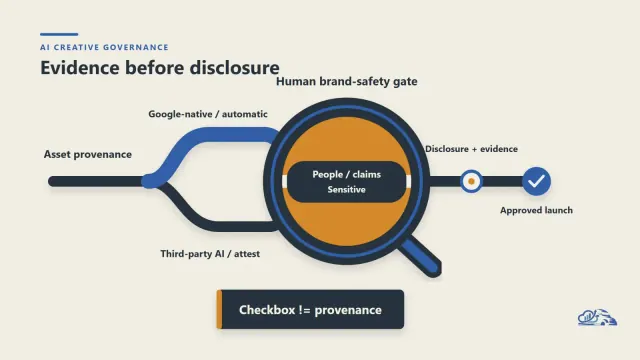
Google Ads AI Labeling: The Brand-Safety Playbook
Marketing, brand, and RevOps teams running paid media with AI-made creative now face a specific Google Ads AI labeling risk: an honor-system disclosure checkbox for third-party tools, paired with a ban on deepfake-style depictions of real people, means one unlabeled or prohibited asset can trigger ad disapproval or potential account suspension.
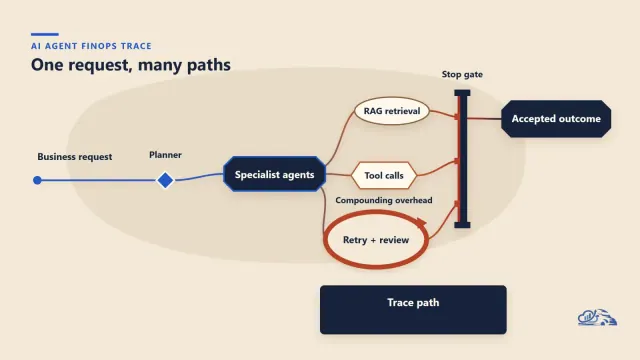
FinOps for AI Agents: Microsoft's Path to Production
Summary Snippet FinOps for AI agents is the practice of measuring and optimizing the full cost of agent workflows—including inference, retrieval, tools, retries, evaluation, human review, and rejected work—against accepted business outcomes.
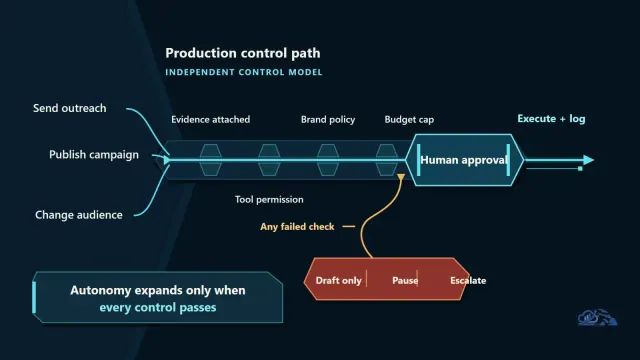
Microsoft Path to Production for Agents: Governance Playbook
A checklist for moving agents from prototype to production, with permissions, logs, evaluation, and incident handling.
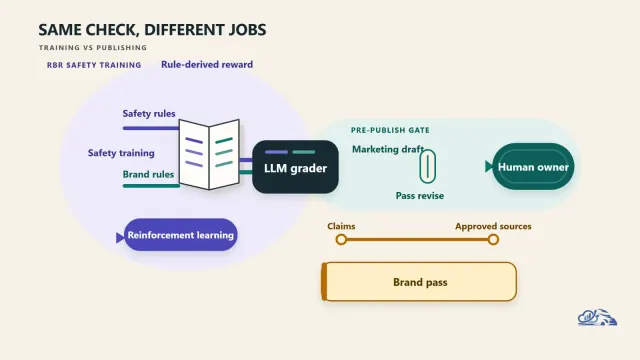
OpenAI Rule-Based Rewards for Brand-Safety Governance
Marketing teams adopting OpenAI Rule-Based Rewards as a governance model risk confusing a 2024 model-training technique for safety behavior with a tool that checks brand compliance or factual accuracy.
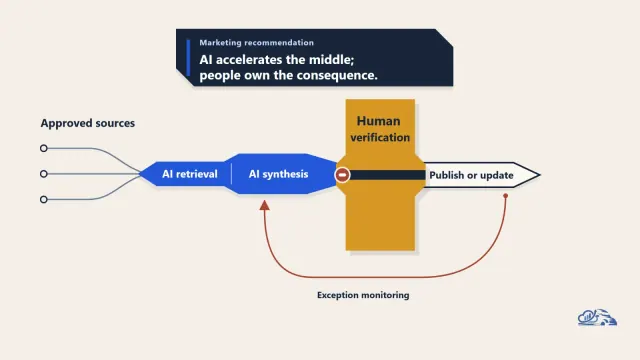
Google ATLAS AI Study: Collaborator, Not Automator
B2B marketing, RevOps, and content teams evaluating autonomous agents face a specific decision: whether to redesign work for hands-off automation when Google’s ATLAS data shows workplace AI is used mainly as a collaborator.
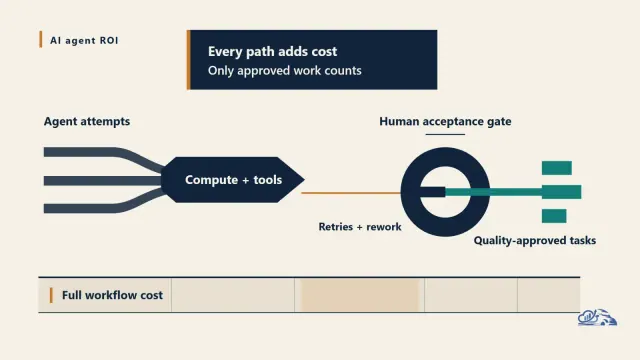
AI Agent ROI: How to Measure Cost per Successful Task
Your automated SDR can send messages, AI copywriter produce drafts, and media-buying agent run continuously—yet token bills and seat licenses miss how much quality-approved work actually succeeded, leaving real value invisible.
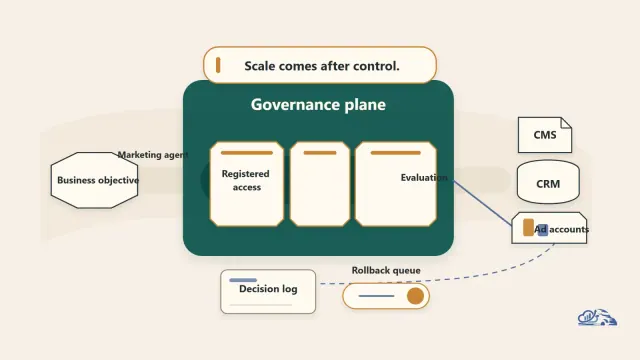
The Scaling and Institutionalization of Autonomous Marketing Agents: Governance as the Enterprise Unlock
The scaling and institutionalization of autonomous marketing agents is the shift from one-off prompt experiments to agentic AI that runs marketing work as a permanent operating function - and governance, not raw model capability, is now the enterprise unlock.