Google Ads Demand Gen Drop: AI Bidding Meets Direct Checkout
See how Google's Demand Gen update connects AI bidding, creator video, direct checkout, measurement, and governed campaign automation for RevOps teams.
Overview
Your real challenge with the Google Ads Demand Gen Drop is deciding whether its faster Target ROAS ramp and direct-checkout path will turn creator video into trusted revenue—or automate spend against bad conversion values and stale product feeds. This article explains the verified changes, market limits, and a practical framework for measurement, access controls, holdouts, and spend caps, using Van Data Team’s approach of mapping data, decisions, permissions, and proof before expanding agent autonomy.
The Google Ads Demand Gen Drop turns multi-modal video ads into a tighter conversion loop. Google's July Demand Gen release pairs a less-conservative Target ROAS ramp with direct checkout links, product-feed integration, and creator amplification across YouTube, Discover, and Gmail. For B2B marketing and RevOps teams, the upside is faster movement from attention to purchase. The cost is greater dependence on clean data and firm controls.
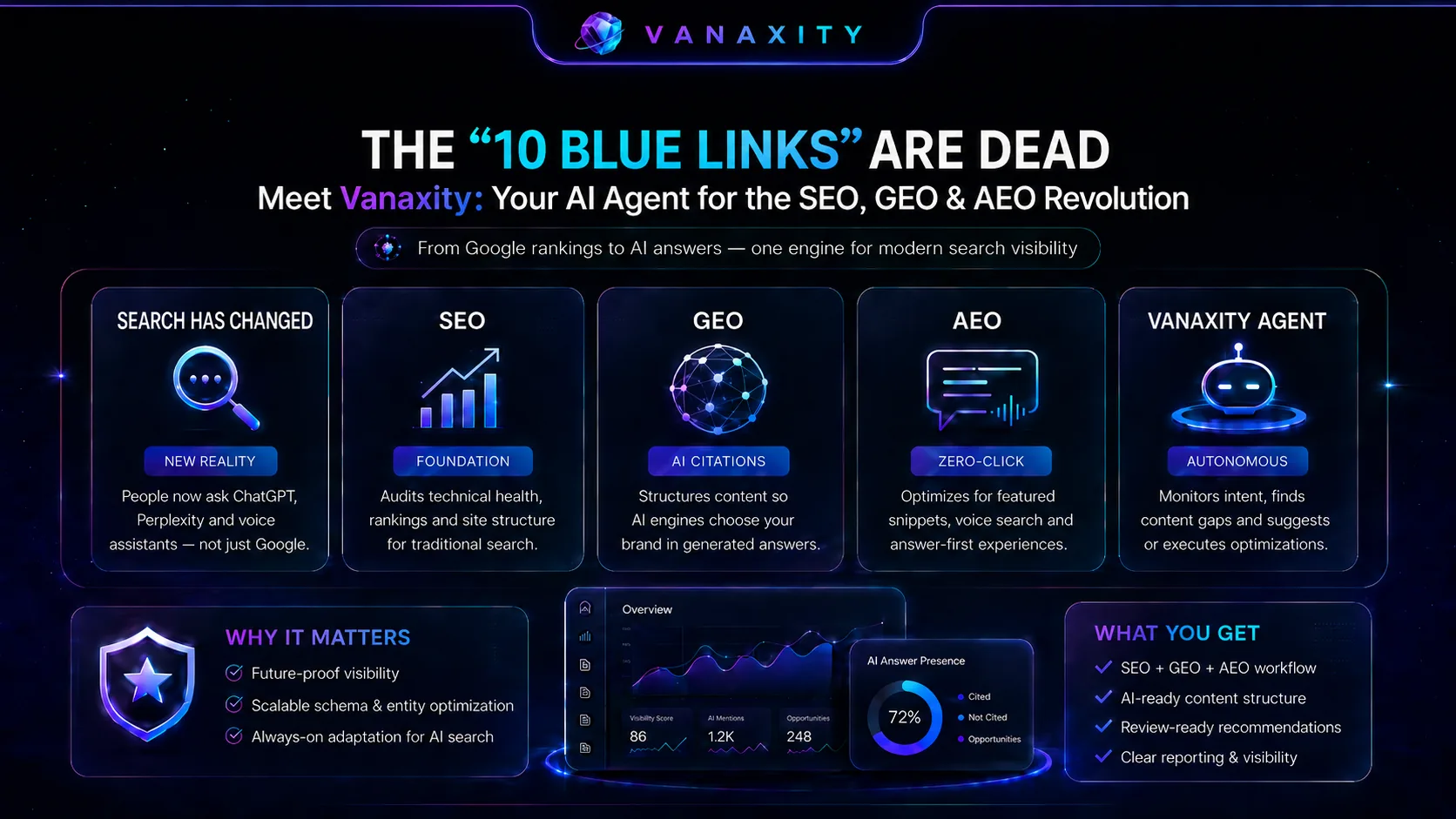
That challenge is familiar to Vanaxity, Van Data Team's AI content agent for SEO, GEO, and AEO. Vanaxity researches, writes, illustrates, publishes, and syndicates content while review gates protect quality. At Van Data Team, we map data, access, decisions, and proof before we give an agent more freedom.
The same method can make this ad stack safer, even though Vanaxity isn't a Google Ads bidding product. See how Vanaxity works.
This guide separates Google's reported changes from Vanaxity's analysis. You'll get a release map, a measurement model, and a governance checklist for autonomous campaign systems.
Key Takeaways
The release makes Demand Gen more ready to convert, but it also raises the need for sound measurement and control.
- Google's upgraded Target ROAS bidding starts less cautiously so campaigns can reach targets faster.
- Checkout Links can bypass a product page and expanded beyond the US to nine new markets: Switzerland, Australia, South Korea, Indonesia, Mexico, France, Poland, Israel, and Argentina.
- Product feeds, creator content, affiliate boosts, and checkout now form a more connected workflow.
- UCP and purchases driven directly from YouTube ads remain US-only.
- RevOps should optimize for accepted business outcomes, not platform activity alone.
Map your SEO, GEO and AEO workflow before you build.

What the Google Ads Demand Gen Drop changes
Reported fact: Google changed Demand Gen's early bidding behavior, checkout path, and creative-commerce workflow.
| Change | Reported scope | Operator decision |
|---|---|---|
| Target ROAS. | Starts less cautiously so campaigns can reach targets faster. | Is conversion value sound enough to steer bids? |
| Checkout Links. | Can send a shopper from an ad to a cart or checkout page. | Does the landing page educate, qualify, or merely add friction? |
| Multi-modal workflow. | Connects product feeds, creator content, and affiliate-partnership boosts. | Who owns each asset, field, approval, and failure response? |
| Geographic boundary. | Checkout Links reached the listed markets, while UCP remains US-only. | Which path is supported in each active market? |
Target ROAS starts less cautiously
The Target ROAS upgrade should make the system less hesitant at the start. According to Google's official Demand Gen announcement, campaigns should reach their targets faster before holiday demand.
"Prevent the system from being overly cautious early on so your campaigns hit their targets faster," according to Google's official release.
Faster target attainment isn't a promised lift in return, revenue, or incrementality. It means the bidding system can explore less cautiously at the start. Teams still need sound conversion values, budget controls, and clean feedback to judge the result.
Checkout Links remove a page from the path
Checkout Links can route a ready shopper from a Demand Gen ad to the merchant's cart or checkout page. Google's Checkout Links announcement describes the feature as a way to bypass the product landing page and shorten the purchase journey.
The standard route is ad -> landing page -> cart -> checkout. The shorter option is ad -> cart or checkout. That can cut friction for a clear offer. Yet a landing page may still explain a complex product, answer doubts, or qualify a B2B buyer.
According to Google and YouTube internal US data from September 2025, advertisers that supplied checkout URLs saw an average 6% conversion uplift on Demand Gen. Earlier Search Engine Land coverage reported an average 11% increase in conversion value at a similar CPA, citing Google data. These are early internal averages, not forecasts or promised results.
Product feeds and creator content join the conversion path
Google says brands can connect product feeds and boost creator content through affiliate partnerships. In the US, advertisers can also drive purchases directly from YouTube ads through Checkout Links or UCP. Google limits this direct-purchase capability and UCP to the US.
Checkout Links also expanded to YouTube Shorts and in-feed Demand Gen ads. The market expansion applies to Checkout Links. It does not extend UCP beyond its US-only scope.
From multi-modal video to accepted revenue
The following illustration summarizes from creator video to accepted revenue:
Figure 1. The workflow connects creator video and product data to direct checkout, then verifies the purchase against accepted revenue.
The new funnel joins creative, product data, bidding, checkout, and revenue measurement into a single operating chain.
The flow now looks like this: creator asset -> approved product feed -> Demand Gen placement -> AI bidding -> checkout -> purchase event -> revenue match. Video can do more than create passive awareness when a buyer is ready to act. Still, not every impression is shoppable, and not every buyer should skip education.
Vanaxity analysis: Creative and commerce data can no longer sit in separate systems. Agent orchestration controls who may act. Product feeds and UCP-style tools supply commercial facts.
Evals judge output quality and business impact. Data pipelines keep identity, price, stock, approval, and events fresh.
The mistake we see is giving agents freedom before those layers agree on IDs and outcomes. Google's tROAS is platform automation. A separate agent that changes budgets, feeds, creative, and links has a wider blast radius. It needs stricter controls.
Vanaxity analysis: govern autonomous bidding as production
Teams should give campaign agents more freedom only after they define accepted outcomes, access limits, data rules, and recovery paths.
Optimize for accepted outcomes
Clicks and impressions help diagnose a campaign. They aren't the business result. For commerce, an accepted outcome could be a real, unique purchase with an approved value that matches the order system. For B2B, it could be a sales-accepted opportunity tied to a valid account.
Treat the ad platform's event as unconfirmed until RevOps matches it. Then watch cost per accepted outcome and accepted conversion value. Rejected, refunded, repeated, or unmatched events must not guide the system.
Use least-privilege access
Separate read access, suggestion rights, and write access. An agent may inspect results and suggest a tROAS change without gaining permission to publish it.
Require human approval for sensitive changes to budgets, targets, checkout links, and feed rules. Give the agent only the ad-platform, feed, and creator-affiliate access its task needs. Use distinct credentials where possible. Log every input, suggestion, approval, action, and rollback.
Treat feeds and review capacity as production resources
Assign owners for product identity, price, stock, checkout URLs, and creator-affiliate approval. Check freshness, trace each field to its source, set service-level rules, and keep a fallback path. A stale feed can make fast AI bidding confidently wrong.
If an LLM agent sits above the ad platform, track API cost, token budget, decision latency, review load, and rejected actions. Set spend caps and tool limits. Keep rollback fast. Continuous monitoring is why an agent can beat a static checklist, but only when its access is narrower than its knowledge.
Measure incremental outcomes, not platform activity
RevOps should test whether direct checkout creates added accepted value, not merely more attributed conversions.
Name the main business outcome and its source of truth before the test. Preserve a stable treatment and holdout where feasible. Keep the same audience split, conversion rules, and bidding rules during the test. Then match platform events with checkout and revenue records.
Attribution shows which touchpoints received credit. It doesn't prove the ads caused the outcome. A holdout shows what may have happened without the treatment. If records can't be matched, pause the test instead of filling the gap with platform estimates.
Hypothetical operator scenario: A RevOps team connects approved creator video, a valid product feed, and a tested checkout URL. Its agent can suggest a tROAS change, but a human must approve target or budget changes. RevOps compares a stable treatment with a holdout and matches purchases against the revenue system.
Unmatched purchases stay outside the accepted outcome set. The team can now judge the shorter path by added accepted value, not clicks alone.
Autonomous Demand Gen governance checklist
An autonomous Demand Gen workflow is ready only when outcomes, access, feeds, spend, and rollback have named owners.
| Control area | Readiness requirement | Failure response |
|---|---|---|
| Outcome contract. | Define the accepted conversion and source of truth for value. | Exclude unverified outcomes from bidding input. |
| Attribution. | Map the event flow from ad interaction through the revenue match. | Pause the test when records can't be matched. |
| Holdout. | Preserve stable assignment and name the main outcome in advance. | Restart after material contamination. |
| Product feed. | Check identity, price, stock, freshness, and lineage. | Suppress affected items or pause the feed. |
| Checkout path. | Test every link and confirm purchase-event capture. | Revert to the approved landing-page path. |
| Agent access. | Separate read, suggestion, and write rights. | Revoke write access after a policy breach. |
| Bidding controls. | Set approved targets and change limits. | Require human review outside those limits. |
| Spend controls. | Apply approved caps and alert rules. | Pause spend and alert the accountable owner. |
| Creator and affiliate data. | Record approval, ownership, and partner records. | Block unverified assets from going live. |
| Observability. | Log inputs, suggestions, actions, and outcomes. | Roll back to the last approved setup. |
Don't grant broad write access because the workflow passed a launch review once. Recheck controls when feeds, links, attribution rules, or owners change.
Van Data Team can turn this checklist into a scoped workflow review. The output includes a signal map, access matrix, dashboard gap review, review-gate design, and delivery plan. You can also watch the observable agent workflow and review our proof and case outcomes without treating them as Demand Gen benchmarks.
Common mistakes and the separate August change
The main failure is treating a shorter funnel as proof of incrementality or as permission to remove controls.
Avoid these mistakes:
- Presenting Google's internal averages as promised results.
- Assuming faster tROAS target attainment guarantees better returns.
- Confusing Checkout Links expansion with UCP availability.
- Sending every buyer to checkout when the landing page adds needed context.
- Letting a broad credential change bids, budgets, feeds, and links.
- Optimizing platform conversions before matching them to revenue.
- Changing the holdout, outcome definition, and bidding rules during the same test.
Keep July and August separate
The July release changes early tROAS ramp behavior inside Demand Gen. The separate target-based bidding change scheduled for August 17, 2026 concerns budget-limited campaigns using tCPA or tROAS and how they work toward stated targets.
That later change is useful planning context. It is not the mechanism Google announced in the July Demand Gen Drop. Teams shouldn't combine their rollout logic or expected effects.
How Van Data Team Makes This Operational
At Van Data Team, we treat the Google Ads Demand Gen Drop as an operating workflow, not a feature summary. We trace the full handoff from creator asset and product feed to bid decision, checkout, accepted outcome, and revenue.
We map each source system, owner, approval, and recovery path. That includes feed freshness and lineage, conversion-value rules, creator permissions, spend caps, attribution, and holdout design. We also identify where a person must approve, pause, or reverse automation.
The output is a scoped delivery plan:
- Signals: Feed health, creative rights, checkout events, accepted conversion value, and revenue status.
- Gaps: Stale data, missing identifiers, weak reconciliation, or unsupported market routes.
- Gates: Human approval for value changes, budget expansion, access changes, and wider rollout.
- Action layer: A dashboard for exceptions and a runbook for pausing bids, repairing data, and restoring service.
This structure lets teams give bidding agents only the access they need. It also keeps Target ROAS tied to verified business value. Faster automation is useful only when RevOps can see what changed, judge the result, and recover safely.
Operational Budget
Vanaxity analysis: Before launch, score each bid-and-agent setup by cost per approved workflow result, not its token price. A low token price can still hide costly reruns, slow handoffs, and long review. For the Google Ads Demand Gen Drop, automation pays off only when RevOps trusts each conversion and its assigned value. Use one scorecard for every candidate.
- Accepted-output cost: Add media spend, model and API fees, data fees, reviewer labor, reruns, and repair work. Divide the sum by approved results.
- Speed and load: Track latency, token use against budget, retry rate, and reviewer minutes for each result.
- Failure recovery: Time the fix and test the rollback, then name who acts when a feed or sales signal fails.
- Evaluation results: Compare holdout tests, attribution checks, conversion-value accuracy, policy checks, and approval rate.
Set spend and token caps before each test, then log all retries and human fixes. Give each candidate the same test window and acceptance rules.
Vendor token pricing isn't the full decision metric; it's only a starting point. Choose the setup that yields approved results at a total cost the business can support. Make sure your team can fix it when it fails.
Tooling And Landscape Fit
Reported fact: The Google Ads Demand Gen Drop makes Demand Gen a tighter execution layer. Google’s bidding directs spend toward conversion value, while product feeds, creator assets, and checkout paths supply the offer. It doesn’t replace campaign orchestration, data engineering, or independent measurement.
Vanaxity analysis: Use each layer for what it does best. Google’s native Target ROAS system fits fast, auction-level bid decisions. Rule-based workflows fit approvals, market eligibility, feed validation, and spend caps. General-purpose agent frameworks fit cross-system tasks, such as checking creator rights, routing failed feed records, or flagging unusual value signals for RevOps. Keep agents outside the bid loop unless access is narrow, logged, and reversible.
UCP-style commerce interfaces and checkout links shorten the transaction path where supported. They don’t fix stale prices, broken product IDs, weak value rules, or disputed attribution. Those belong to the data and evaluation stack.
- Execution: Demand Gen bidding and delivery.
- Orchestration: approvals, exceptions, budgets, and rollback.
- Data: feed freshness, lineage, ownership, and SLAs.
- Proof: holdouts, accepted-outcome value, and incrementality checks.
This split lets platform automation move quickly while RevOps controls what counts as success.
Frequently asked questions
Should we use Checkout Links if our landing page educates or qualifies buyers?
Test both paths before you commit. Keep the landing page when it gives buyers context they need, such as specs, comparisons, or qualification steps. Use direct checkout for clear, low-consideration offers with strong purchase intent, where an extra page mostly adds friction and loses shoppers on the way to the cart.
Is UCP available in the newly added Checkout Links markets?
No. Google limits the Universal Commerce Protocol and direct in-YouTube purchases to the US. The nine new markets, from Switzerland and Australia to Mexico and Argentina, gain Checkout Links, which is a separate capability. Treat UCP as US-only for planning until Google says otherwise.
Does the new tROAS behavior guarantee better returns?
No. Google says the upgrade reduces the system's early caution so campaigns reach targets faster, not that returns automatically improve. Less initial conservatism can also spend faster, so set clear targets, watch the first two weeks closely, and confirm results against your own conversion and revenue data before you scale.
What access should an autonomous bidding agent receive?
Start with read and suggestion-only access, so the agent proposes changes that a human approves. Add narrow write rights later, one scope at a time, and only after spend caps, approval steps, action logging, and rollback all work. Least privilege first keeps a fast, non-deterministic system from making expensive, unreviewable changes.
How should RevOps prove direct checkout adds incremental value?
Define the accepted outcome before launch, then keep a valid holdout group that never sees direct checkout. Compare the two groups on conversion value rather than clicks, and reconcile platform-reported events against your own checkout and revenue records. Incrementality, not raw conversion counts, tells you whether the feature actually added sales.
Is the July tROAS upgrade the same as the later target-based bidding change?
No. The July Demand Gen Drop's tROAS upgrade only reduces early-campaign conservatism. The separate August 17, 2026 target-based bidding change has a different scope and mechanism and needs its own review. Test and govern the two changes separately rather than assuming they behave the same way.