AI Agent Optimization: From Asking to Doing
See what OpenAI's Asking-to-Doing data means for marketing. Use a practical framework to turn GEO/AEO visibility into agent-ready tools and safer execution.
Overview
For marketing, growth, SEO, and RevOps leaders, optimizing only to appear in AI answers creates a new gap: your brand gets cited when users ask, then skipped when they delegate the task and the agent selects another tool. This guide explains AI agent optimization through a practical framework and checklist for becoming discoverable, callable, measurable, and safe to use—using the same answer-to-action discipline Van Data Team applies to its own AI content agents.
Key Takeaways
The shift toward delegated work adds an execution layer to search visibility; it doesn't replace the answer layer.
OpenAI reports that workplace users are more than twice as likely to use ChatGPT for completion or creation than people using it outside work.
Asking remains about 49% of queries, so GEO and AEO remain necessary.
Action-oriented intent rewards clear capabilities, structured inputs, reliable outputs, narrow permissions, and safe failure behavior.
Marketing measurement must expand from mentions and citations to tool eligibility, selection, completion, fallback, and downstream outcomes.
AI agent optimization helps marketing, growth, search engine optimization (SEO), and revenue operations (RevOps) leaders make a brand usable, not merely quotable, by AI systems. Optimize only for AI answers and an agent may cite you, then choose another tool when the user asks it to act. This guide gives you a framework and checklist for moving from answer visibility to tool selection, reliable execution, measurement, and governance.
According to OpenAI's August 7, 2026 report, people at work are more than twice as likely to use ChatGPT to complete a task or create something as people outside work. Yet about 49% of queries are still classified as Asking. The remaining mix skews toward Doing, so execution joins discovery as a marketing battleground.
Vanaxity is Van Data Team's AI content agent for SEO, Generative Engine Optimization (GEO), and Answer Engine Optimization (AEO). It turns research, writing, illustration, publishing, and syndication into one operating workflow. OpenAI reports the usage behavior. The recommendation to optimize for agent selection is Vanaxity's analysis. At Van Data Team, we start by mapping what people want to know and what they want an agent to do next.
Map your SEO, GEO and AEO workflow before you build.

What OpenAI's Shift Means for AI Agent Optimization
OpenAI's data shows that ChatGPT intent is splitting between requests for answers and requests for completed work.
"Asking" covers general knowledge, advice, explanations, and clarification. "Doing" covers producing an output or performing a task, such as writing, coding, editing, or analysis. The workplace skew matters because professional prompts often carry a desired deliverable, not just a question.
| Dimension | Asking intent | Doing intent |
|---|---|---|
| User goal | Learn, compare, understand, or get advice | Create, analyze, update, calculate, or execute |
| Marketing objective | Be included in the answer | Be selected as the execution mechanism |
| Primary asset | Citable guide, definition, FAQ, evidence, or structured answer | API, integration, scoped tool, calculator, runnable template, or workflow |
| Agent-facing signal | Clear entities, claims, context, and extractable passages | Precise description, schema, inputs, outputs, permissions, and failure behavior |
| Measurement | Citations, mentions, qualified referrals, and assisted discovery | Tool selection, call attempts, successful completion, fallbacks, and downstream outcomes |
| Strategic posture | Be the answer | Be the capability that performs the action |
OpenAI summarizes the change:
"AI is moving from something people ask to something they put to work."
The same report tracks multimedia message share across roughly 126 countries in Q2 2026 and calls multimedia its fastest-growing use case. It also says the share of messages from users over 35 rose by about five percentage points from a year earlier in many countries. These findings show broader use patterns. They don't, by themselves, prove that any brand will be selected as a tool.
That step is Vanaxity's forward-looking marketing interpretation: as users delegate more work, visibility must lead to an executable capability. Teams still need citable answers. They also need a clear path from the answer to action.
Want to pressure-test that path? Compare Vanaxity with a manual SEO workflow and identify where research, answer visibility, execution, and reporting disconnect.
Asking and Doing Create Two Optimization Jobs
Marketers now need an answer layer for discovery and an action layer for execution.
The answer layer is familiar. GEO helps content appear in generated responses, while AEO shapes concise answers for answer engines, snippets, and structured retrieval. Search Engine Land's overview of GEO and AEO explains this visibility goal. Clear definitions, evidence, entities, schema, and extractable passages remain valuable.
The action layer asks a different question: can an agent use the brand to finish the task? That may require an API, supported integration, calculator, workflow, runnable template, or tightly scoped prompt. The mechanism must say what it does, what it needs, what it returns, and where it stops.
Consider a hypothetical marketing lead named Maya. She publishes the strongest guide to landing-page audits in her category. An agent cites it when asked what makes a page effective. When asked to audit a live page, however, the agent calls another provider's analyzer because Maya's brand exposes no executable path. Her content won the answer. Her product lost the action.
The lesson isn't to turn every article into software. It is to pair priority informational topics with the smallest useful action. Strong content establishes relevance and trust. A callable capability converts that trust into completed work.
How Agents Choose a Brand's Tool
The following illustration summarizes from intent to tool call:
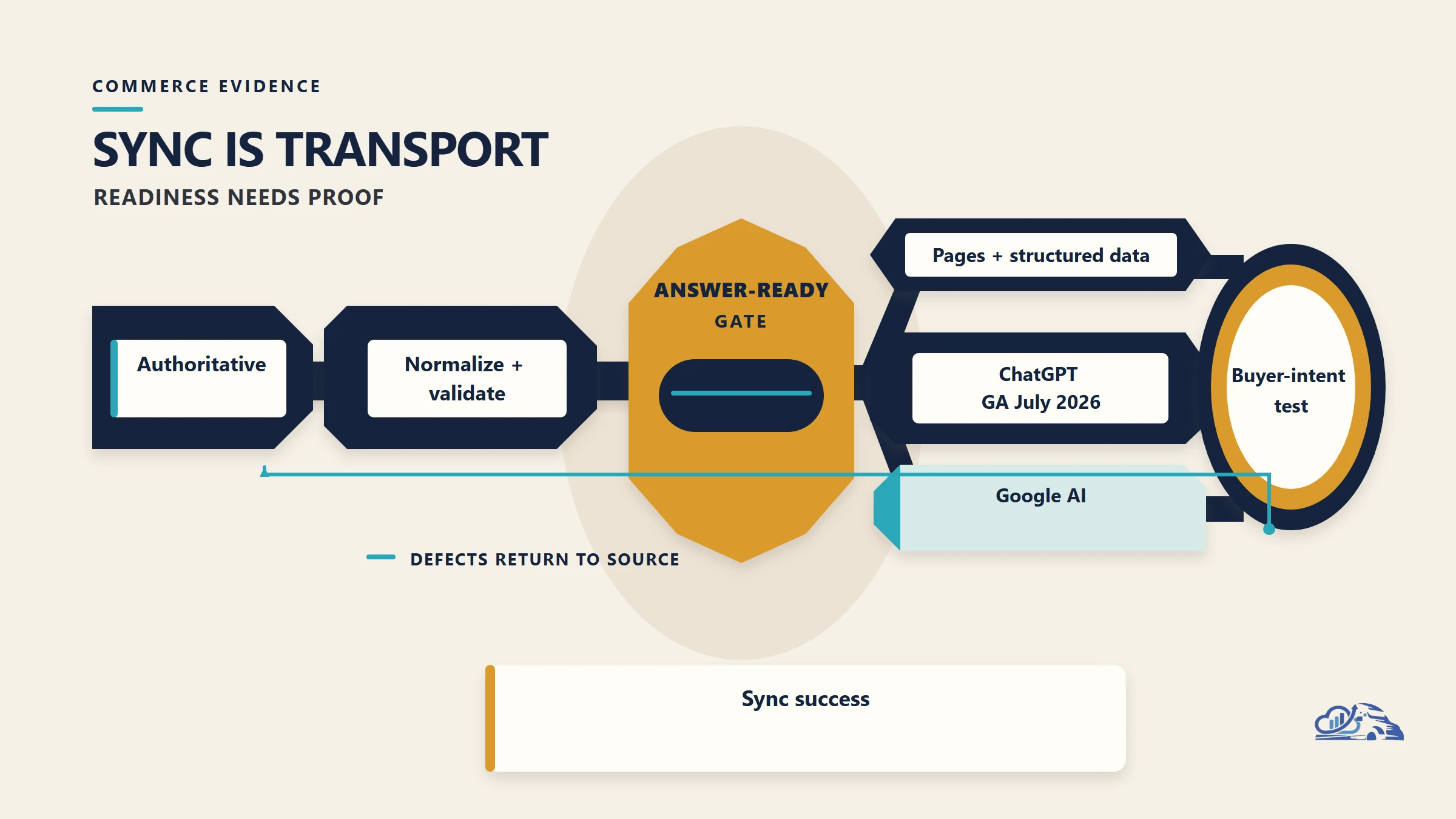
Figure 1. An agent selects a capability by matching task intent to a clear schema, checking scope and permissions, then validating execution or falling back safely.
An AI agent can choose your capability only if it can understand what it does, what it needs, and when it should not be used.
Agents may receive tools through native function calling, a platform registry, or Model Context Protocol (MCP). The MCP documentation defines MCP as an open standard that connects AI applications to data sources, tools, and workflows. A registry gives the model structured options. The model or orchestration logic matches the request to an available capability.
A typical loop interprets the outcome, reads the available descriptions and schemas, checks permissions, constructs a call, inspects the result, and either completes or falls back safely.
In a hypothetical RevOps evaluation, Jon's agent sees "Improve sales performance" beside "Score an uploaded lead file and prepare customer relationship management updates for approval. Do not write changes." It selects the scoped tool for lead scoring and leaves it unused for an unrelated analytics request. The description makes the action, input, output, boundary, and safety rule clear.
Tool readiness also requires stable schemas, predictable outputs, explicit authorization, known limits, and useful errors. If an evaluator can't identify the action, input, output, and boundary, the capability isn't ready.
For example, a developer could copy this tool definition for the hypothetical landing-page audit and connect it to a read-only handler:
json { "name": "audit_landing_page", "description": "Audit one publicly accessible landing page and return prioritized fixes for its stated conversion goal. This tool is read-only: do not publish, edit the page, submit forms, or write to external systems. If a required input is missing, request it. If the page cannot be accessed, return a structured error and stop.", "inputSchema": { "type": "object", "properties": { "url": { "type": "string", "format": "uri", "description": "The public landing-page URL to audit." }, "conversion_goal": { "type": "string", "description": "The action the page should persuade a visitor to take." } }, "required": [ "url", "conversion_goal" ], "additionalProperties": false }, "outputSchema": { "type": "object", "properties": { "status": { "type": "string", "enum": [ "completed", "needs_input", "failed" ] }, "summary": { "type": "string" }, "fixes": { "type": "array", "items": { "type": "object", "properties": { "priority": { "type": "string", "enum": [ "high", "medium", "low" ] }, "issue": { "type": "string" }, "recommended_fix": { "type": "string" } }, "required": [ "priority", "issue", "recommended_fix" ], "additionalProperties": false } }, "error": { "type": [ "string", "null" ] } }, "required": [ "status", "summary", "fixes", "error" ], "additionalProperties": false } }
LangGraph, LangChain, CrewAI, and Plan-and-Execute can orchestrate agent work, but none guarantees correct selection. Test the complete native function calling or MCP loop with realistic tasks.
Evaluate cost, latency, token budget, observability, and output quality together. A fast tool can still fail the task, while a reliable tool without traces is hard to diagnose.
See the Vanaxity agent in action to examine how a multi-step content workflow connects planning, production, review, and delivery.
Build Content for Action-Oriented Intent
Action-oriented content connects an explainable problem to an executable next step.
Start with the query pair, not the format. For each priority topic, write the Asking version and the Doing version. Then design content and product surfaces that serve both.
- Marketing: "What makes a strong landing page?" becomes "Audit this landing page and return prioritized fixes."
- SEO: "What is search intent?" becomes "Classify these queries and produce a content map."
- RevOps: "How does lead scoring work?" becomes "Score this lead file and prepare approved customer relationship management updates."
- Content operations: "How should an article be structured?" becomes "Research, draft, illustrate, review, and prepare this article for publication."
The action asset might be a calculator, checklist, template, integration, prompt workflow, or callable tool. Give it prerequisites, clear input instructions, output expectations, limitations, and a named mechanism. A disconnected prompt collection isn't enough when users need reliable completion.
Not every brand needs an API or MCP server. A template can guide human work, while a calculator can turn education into a decision. Use an integration or agent-facing tool when structured data must move reliably.
The mistake we see is separating content planning from capability design. The article ranks for the problem, while the product interface uses different language and exposes no next step. At Van Data Team, we connect the topic, answer, action, and measurement before scaling production. That is the same discipline behind Vanaxity's autonomous content workflow.
Publish the evidence behind each asset, including its method, assumptions, data boundaries, and failure cases. This gives answer engines citable context and operators a reason to trust the execution path.
Measure Selection, Completion, and Business Outcomes
Agentic marketing measurement must show whether a capability was discovered, chosen, executed, and useful.
Keep citations, brand mentions, qualified visits, and assisted discovery. Then add action signals: tool discovery, eligibility, selection, call attempts, argument validation, successful execution, fallback, human intervention, and downstream outcomes. A tool call is not a successful user result.
Build held-out evaluations from representative Asking and Doing requests. Include positive cases where the agent should choose your capability. Add boundary cases where it should ask for missing input. Add negative cases where it should reject the tool because the request falls outside scope. Test descriptions and schemas as carefully as landing-page copy.
Observability should capture the request class, tools offered, selection, arguments, result, error, fallback, and approval state. Protect sensitive data, and connect agent actions to analytics where consent allows.
Review the operating dimensions together:
- Cost: Measure spend against completed, accepted tasks, not isolated calls.
- Latency: Track the whole loop, including planning, tool execution, retries, and review.
- Token budget: Watch the context used by tool descriptions, instructions, evidence, and recovery.
- Observability: Preserve traces that explain why selection and execution succeeded or failed.
- Evaluation: Score task fit, completion quality, safe rejection, and final user outcome.
Benchmarks remain unknown until your team has first-party traces. Establish a baseline and improve the weakest stage without hiding tool context or reducing selection precision.
A free Vanaxity content and action-readiness scan can return a scoped workflow review, Asking-to-Doing task map, measurement signal map, dashboard gaps, evaluation plan, risk-review workflow, and delivery scope.
Govern Agent-Executed Work Before It Reaches Customers
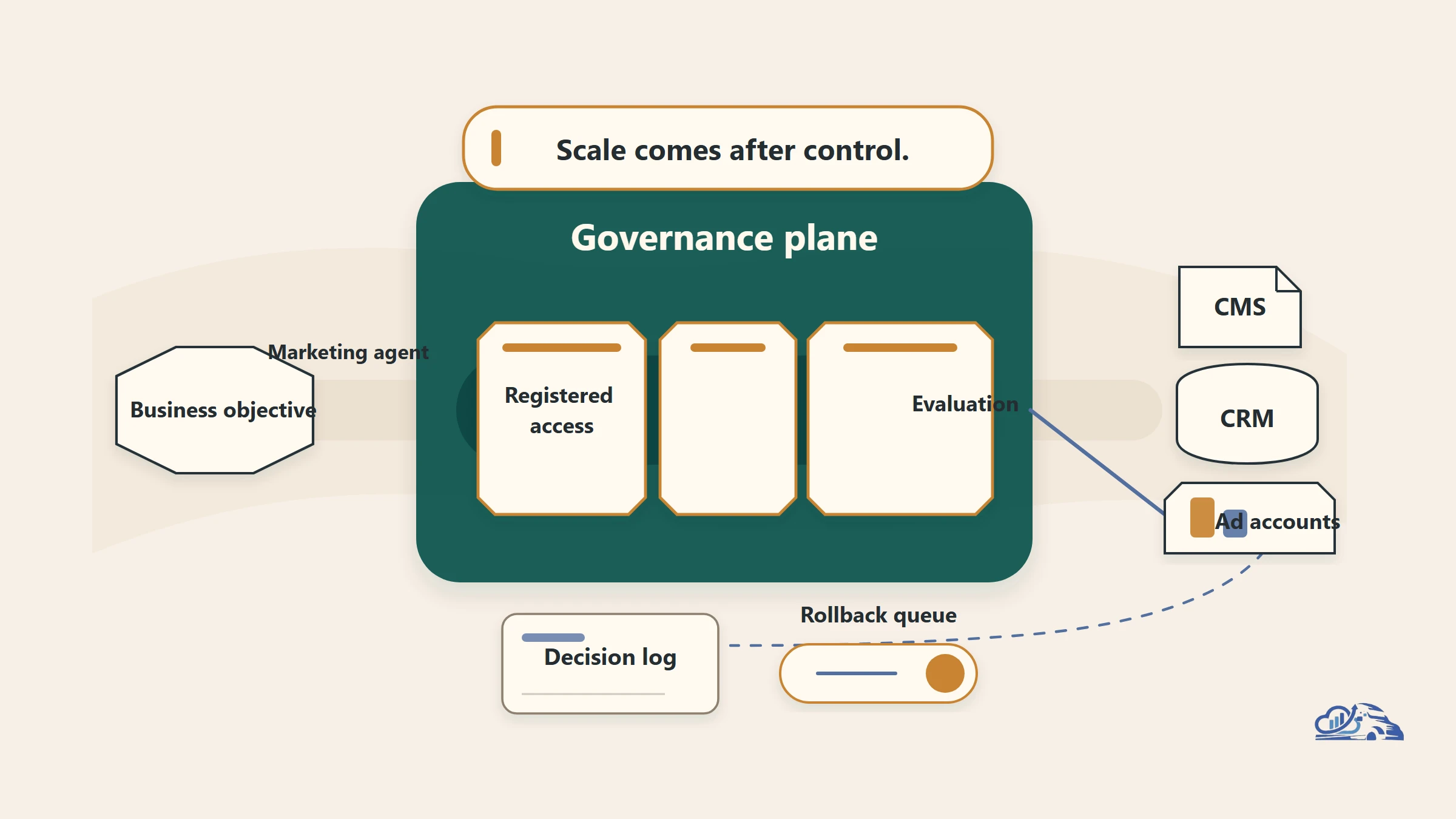
Agent-executed work needs provenance, narrow permissions, review gates, and recoverable failure paths before it can safely represent a brand.
Separate low-risk assistance from consequential action. An agent may draft metadata in a review queue. Publishing customer-facing claims, changing campaign spend, updating customer records, or sending messages needs stronger approval and audit controls.
For each capability, define:
- Which data sources and evidence it may use.
- Which inputs it must reject or sanitize.
- Which systems and records it may access.
- Which actions require explicit human confirmation.
- What gets logged, redacted, retained, and reviewed.
- How the workflow fails safely and escalates.
Provenance should travel with the output. An operator should be able to see what the agent attempted, which tool it selected, what evidence supported the result, and whether a person approved it. Permissions should match the smallest necessary action. Failure messages should tell the agent whether to retry, request input, use a fallback, or stop.
Brand safety is part of the capability, not a policy pasted on later. If the tool can't explain its boundary or recover safely, it isn't ready for delegated work.
The Asking-to-Doing Optimization Checklist
A useful implementation starts by aligning intent, content, capability, evaluation, measurement, and governance around the same task.
- [ ] Map each priority topic to an Asking request and a Doing request.
- [ ] Preserve a citable GEO/AEO asset for the Asking side.
- [ ] Define the smallest useful action the brand can perform.
- [ ] Choose an executable format: tool, API, integration, calculator, template, or workflow.
- [ ] Write an action-led description with inputs, outputs, scope, permissions, and failure behavior.
- [ ] Publish action-oriented content that connects the user problem to the named capability.
- [ ] Test relevant, ambiguous, and out-of-scope requests with held-out evaluations.
- [ ] Instrument discovery, eligibility, selection, execution, completion, fallback, and downstream outcomes.
- [ ] Review cost, latency, token budget, observability, provenance, permissions, and human approval.
- [ ] Keep the answer and action layers aligned as the content, product, and tool schema change.
Use the checklist on a priority task before expanding the program. The output should be a citable explanation, a scoped execution path, an evaluation set, a signal map, and an approval model. If any part is missing, you know where the journey breaks.
How Van Data Team Makes This Operational
At Van Data Team, AI agent optimization starts with the workflow already in place. We map how requests enter, which source systems provide context, who makes each decision, where reviews happen, what dashboards show, and how work recovers after failure.
That map exposes the real gap. A brand may be easy for an agent to describe yet hard to use safely. We turn that gap into a scoped delivery plan that defines:
- Signals to capture, including tool selection, completion, fallback, cost, latency, and downstream outcomes
- Workflow gaps to close, from unclear tool descriptions to missing permissions or provenance
- Actions that can run automatically and those that need a human review gate
- The dashboard, alert, or runbook that tells an owner what to do next
For Vanaxity and our own AI content agents, we test the full path from research and recommendation through production and reporting. Each stage has named inputs, expected outputs, evaluation checks, and a recovery path. The result isn’t another strategy deck. It’s an operating workflow the team can run, inspect, and improve.
Frequently asked questions
What is AI agent optimization?
AI agent optimization is the practice of making a brand's capability easy for an AI system to understand, select, call, and assess. It covers clear tool scope, structured inputs and outputs, reliable execution, measurement, and safeguards. GEO and AEO support discovery; action readiness supports execution.
Are GEO and AEO still worth doing if intent is shifting to action?
Yes. OpenAI says Asking still represents about 49% of queries, so citable and extractable answers remain important. Vanaxity's view is that GEO and AEO are necessary but not sufficient because task-oriented requests add a tool-selection layer.
What is the difference between being cited and being selected?
A citation gives the user information from or about a brand. Selection means an agent chooses the brand's capability to perform work. A company can earn visibility without being callable, so teams should optimize content discovery and execution readiness as connected but distinct jobs.
How do AI agents select marketing tools?
Agents can use tool names, descriptions, and schemas exposed through native function calling or systems such as MCP tool registries. Clear scope, inputs, outputs, permissions, and failure behavior improve the decision context. Teams must verify appropriate selection and rejection through held-out evaluations.
Does a brand need an API or MCP server?
Not always. A calculator, structured template, prompt workflow, or supported integration can address action-oriented intent. An API or MCP-exposed tool becomes more relevant when an agent must authenticate, exchange structured data, execute reliably, or return machine-readable results.
How should teams measure agent selection?
Keep measuring citations and qualified referrals. Add tool discovery, eligibility, selection, call attempts, successful completion, fallbacks, human review, and downstream outcomes. Evaluate representative tasks while logging cost, latency, token budget, and traces. The target is observable task success, not tool calls in isolation.