AppLovin Earnings: What the 31% Jump Means for Ad Buyers
AppLovin earnings for Q3 2026: revenue up 55% to $2.18 billion and the stock up 31% in a day. What its AI ad engine means for your next performance test.


In short: Treat AppLovin Ads as a new performance channel worth a measured test, not a replacement for Meta or Google. Start with one product that sells well on mobile, give it a fixed budget for four to six weeks, build three-screen creative made for in-game placements and judge it on incremental sales, not the platform's own report.
On this page19
Overview
AppLovin earnings for the third quarter of 2026 set a record. Revenue rose 55% to $2.18 billion, and the results beat Wall Street's estimates. The next day, November 5, the stock jumped 31% in one session.
Most coverage read this as a stock story. This guide reads it as an ad story. AppLovin sells ads placed by an AI model called Axon, and that model is now open to brands far beyond mobile games.
Below we cover the numbers, why the market reacted so hard, how fast AppLovin grew next to the biggest ad platforms and what a sensible test of AppLovin Ads looks like for a marketing team.
Disclosure: Vanaxity builds AI agents for marketing teams, including tools that plan and check paid campaigns. This article was drafted with help from Claude. We cite the filing, the earnings call and market data, and we label our own math. Nothing here is investment advice.
Key takeaways
- AppLovin's Q3 2026 revenue was $2.18 billion, up 55%, with net income of $1.44 billion and an 84% adjusted EBITDA margin.
- It guided Q4 revenue to $2.365 billion to $2.395 billion. Analysts had expected about $2.25 billion.
- The stock closed up 31.04% at $356.10 on November 5, adding about $28 billion in market value by our math.
- The CFO said the largest ad platforms grew from roughly 10% to the mid-20s percent. AppLovin grew 55%.
- Its ad platform, AppLovin Ads, has been open to all advertisers since June, and spend from consumer brands grew by triple digits.
- For ad buyers: test it as a new performance channel with a fixed budget and measure incremental sales.
Book a free fit checkMap your SEO, GEO and AEO workflow before you build.
Book a consultationAppLovin earnings at a glance
| Item | Q3 2026 | Source |
|---|---|---|
| Revenue | $2.18 billion, up 55% from $1.41 billion | AppLovin 8-K |
| Net income | $1.44 billion, up 72% | AppLovin 8-K |
| Adjusted EBITDA | $1.84 billion, an 84% margin | AppLovin 8-K |
| Free cash flow | $1.42 billion | AppLovin 8-K |
| Q4 revenue guide | $2.365 billion to $2.395 billion | AppLovin 8-K |
| Stock on November 5 | Closed at $356.10, up 31.04% | StockAnalysis daily prices |
What AppLovin earnings showed in Q3 2026
AppLovin reported on November 4. Revenue was $2.185 billion, against $1.405 billion a year earlier. Net income was $1.439 billion, so the company kept about 66 cents of every revenue dollar as profit.
Adjusted EBITDA, a profit measure that leaves out items such as stock pay, reached $1.84 billion. It's the number AppLovin itself steers by. That's an 84% margin, up from 82% a year earlier. Free cash flow was $1.42 billion.
Put simply, AppLovin Q3 2026 was a quarter of more money, more profit and more cash, all at once. Few ad companies of any size manage all three in the same quarter, and fewer still do it while growing by half.
The company also spent $1.4 billion buying back 4.1 million of its own shares in the quarter. Its board also added $3.2 billion to the buyback plan, for $3.6 billion in total at the end of October.
Analysts had expected about $2.07 billion in revenue, according to Bloomberg estimates. AppLovin beat that by more than $100 million.
The forecast that moved the stock
The forecast mattered more than the quarter. AppLovin guided fourth-quarter revenue to between $2.365 billion and $2.395 billion. That's 43% to 44% growth from a year earlier, or 8% to 10% more than the third quarter.
Analysts had pencilled in about $2.25 billion. So the low end of the range sat well above what the market expected.
It guided adjusted EBITDA to between $1.995 billion and $2.025 billion. The CFO, Matt Stumpf, said that at the midpoint the full year would show revenue and adjusted EBITDA growth of more than 50%.
How the stock reacted to AppLovin earnings
Daily prices from StockAnalysis show how fast the mood turned. The stock closed at $245.51 on November 3 and $271.75 on November 4, the day of the report. On November 5 it opened at $349.83 and closed at $356.10, up 31.04%.
About 22.2 million shares traded that day. That's roughly four and a half times the 4.8 million shares that traded on November 3.
AppLovin had 331 million shares at the end of the quarter. By our math, a gain of $84.35 a share added about $28 billion in market value in one session, for a total near $118 billion.
AppLovin's closing price around the Q3 2026 report
Closing price
Why AppLovin stock fell before this report
The jump came after a hard year. One 24/7 Wall St. report noted that the stock had fallen from $483.10 at the first-quarter report to about $245 just before this one. It put the year-to-date loss near 60% before the jump.
By our math from those figures, the stock still closed November 5 about 47% below where it started 2026. One good day didn't undo the year.
Two things weighed on it. Second-quarter revenue of about $1.92 billion missed estimates, which ended a long run of beats. Investors also worried about slower growth in mobile games and more competition.
That backdrop explains the size of the move. When a stock is priced for trouble, a clean beat and a strong forecast can reset it fast.
AppLovin earnings vs the largest ad platforms
On the earnings call, Stumpf said the largest platforms in digital advertising grew third-quarter revenue between roughly 10% and the mid-20s percent. AppLovin grew 55%.
By our math, that makes AppLovin about two to five times faster than that group. Meta, the biggest name in the range, grew 26% in the same quarter, as we covered in our look at Meta's Q3 2026 earnings.
The margins stand out even more. An 84% adjusted EBITDA margin is far above what large ad platforms report, partly because AppLovin doesn't run a social network, a search engine or a video library that needs paying for.
Q3 2026 revenue growth from a year earlier
Growth
What Axon is and why the model matters
Axon is AppLovin's AI ad model. It decides which ad to show to which person inside apps, mostly mobile games, and how much to bid. Advertisers set a goal, such as a return on ad spend, and Axon chases it.
AppLovin sees a lot of data to learn from. It runs MAX, a tool many app makers use to sell their ad space, so its model sees a very large number of in-app ad auctions.
Chief executive Adam Foroughi said gaming grew "nearly 50% year-over-year" this quarter. He tied that to a new generation of the model, and he said the rollout was only partial so far.
Axon AI is the real product here. Advertisers don't pick audiences or placements by hand. They hand the model a goal and a budget, and it decides the rest, auction by auction, millions of times a day.
He also said the new version gives the company "meaningfully more room to optimize" than the one it replaces. He wouldn't commit to a date for the full rollout.
From games to e-commerce: AppLovin Ads opens up
For most of its history, AppLovin sold ads to game makers. That's changing. In late June, the company opened its self-serve platform, AppLovin Ads, to all advertisers. Before that, brands needed a referral.
Axon stayed as the name of the AI model behind it. In an interview with tipsheet.ai, AppLovin said any business can set a target such as a return on ad spend, a cost per purchase or a cost per lead.
The early results look strong, though they come from AppLovin itself. Stumpf said spend from consumer advertisers grew by triple digits from a year earlier and by double digits from the second quarter.
Foroughi was careful about the pace. He said the product is "still early" and that brands that work with the sales team are much more likely to succeed than those who start alone.
What AppLovin earnings mean for ad buyers
The big lesson isn't about one company. It's that AI-run performance channels can now win spend away from the two giants, Meta and Google, when they find buyers that convert.
For years most brands put the bulk of their paid budget into those two. A third channel with real scale gives you a new place to find customers and a stronger hand when prices rise. Meta's average price per ad rose 14% in the third quarter, as covered in our piece on rising Meta ad costs.
This is what performance advertising AI looks like when it works at scale. You set the goal, the model finds the buyers and you pay for results you can check. Meta's Advantage+ and Google's Performance Max work the same way, and now a third player can compete on those terms.
The catch is the audience. AppLovin's ads run mostly inside mobile games and apps. People there are playing, not searching, so the product and the creative must win attention in a few seconds.
Who should test AppLovin Ads first
Not every brand fits. Use this table as a starting point, then trust your own test data.
| Brand type | Fit | Why |
|---|---|---|
| Mobile games and apps | Strong | The core of the network for years |
| E-commerce with impulse-friendly products | Good | Short video plus a product ad can sell in seconds |
| Subscription apps | Good | Clear install and trial goals for the model to chase |
| Lead generation | Test carefully | Lead quality needs checking after the click |
| High-priced B2B services | Weak | Long sales cycles and few buyers inside games |
| Brands with strict placement rules | Check first | Ads run inside many third-party apps |
How to run a first test
- Pick one product or offer that already sells well on mobile, so the test isolates the channel.
- Set a fixed budget for four to six weeks. Give the model room to learn before you judge it.
- Choose one goal, such as return on ad spend or cost per purchase, and keep it steady.
- Install the tracking AppLovin asks for and check that purchases arrive with the right values.
- Hold out a region or a time window, so you can see sales that happen only because of the ads.
- Write down your break-even cost per sale before you start, and stop if you can't get near it.
Budget size depends on your prices. A rough rule: plan enough spend for at least 50 purchases over the test, so the model has data to learn from and you have enough sales to judge. If that number feels too big, test a cheaper product first.
Keep the first test boring. One product, one goal and one clear yes-or-no answer beat a sprawling launch that nobody can read.
Creative for in-game ads
AppLovin says every ad is three screens: a full-screen video, an interactive end card and, for e-commerce brands, a dynamic product ad. Videos can run up to 60 seconds.
That format rewards a different kind of creative. The first two seconds must show the product doing something. Sound may be off, so the story has to work in pictures and short captions.
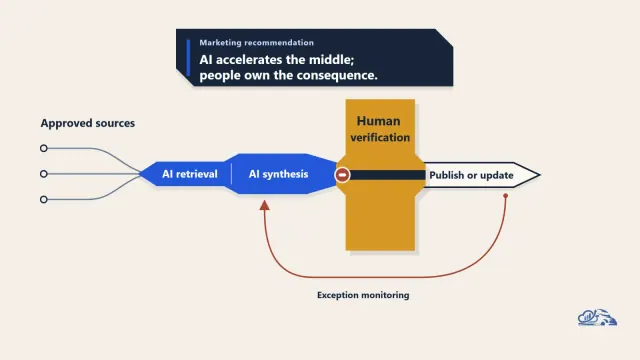
AppLovin says it can generate the interactive end card for you, and about 80% of its top advertisers use these. Treat the output as a draft. Check every claim, price and product name before it runs.
Measure it like a new channel
Every ad platform reports its own results generously. AppLovin is no different. Judge the test on what your own systems show.
- Compare sales in test and holdout groups, not just the dashboard's return on ad spend.
- Watch new customer share. A channel that only finds people who would have bought anyway adds little.
- Track refunds and repeat purchases for 30 to 60 days, since impulse buyers can churn fast.
- Check whether spend elsewhere got cheaper or pricier while the test ran.
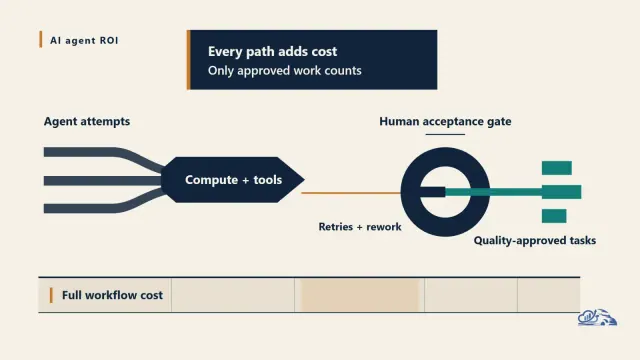
If you already track cost per result across tools, add AppLovin to the same sheet. Our guide to AI agent ROI shows a simple way to keep that comparison honest.
Risks and open questions after AppLovin earnings
The AppLovin earnings beat was strong, but some questions remain open. Read them before you move real budget.
- Most revenue still comes from games. The consumer business is growing fast from a smaller base, and the company doesn't break the two out.
- Growth has been bumpy. The second quarter missed estimates, and the full model rollout has no date.
- Results for brands are mostly AppLovin's own claims so far, with few independent case studies.
- In 2025, short sellers published reports questioning how AppLovin gathers data. The company rejected them. Ask any vendor how it targets and tracks users.
- Placements sit inside many apps you don't control, so check where your ads ran.
Magnite, The Trade Desk and the ad tech read
AppLovin wasn't the only ad tech stock to jump on November 5. Magnite rose about 17%, according to 24/7 Wall St. That move had its own cause: Magnite reported its own third quarter on November 4 and raised its outlook.
The Trade Desk fell about 2% the same day. So the market wasn't lifting all of ad tech. It rewarded companies that showed growth and punished those that didn't.
For buyers, the split is a reminder to judge each platform on the results it delivers for you, not on the sector's mood.
What to watch next
- Fourth-quarter results, due early next year, against the $2.365 billion to $2.395 billion range.
- Whether the new Axon model rolls out to all ad spend, and what that does to gaming growth.
- Independent case studies from e-commerce brands, not only AppLovin's own examples.
- Whether Meta and Google respond with cheaper or more automated performance tools.
- AppLovin's early tool that lets advertisers manage campaigns from AI assistants such as Claude or ChatGPT.
The next AppLovin earnings report will show whether this quarter was a turn or a one-off. Until then, the safest move for ad buyers is a small, well-measured test that answers one question: does this channel find customers you wouldn't reach anyway?
If you want help planning a measured channel test or the agents that run it, see what we build or browse more Vanaxity insights. For how AI is changing ad buying, read our take on autonomous campaign management.
AppLovin earnings FAQ
What were AppLovin's Q3 2026 earnings?
AppLovin reported third-quarter 2026 revenue of $2.18 billion on November 4, up 55% from a year earlier. Net income rose 72% to $1.44 billion, adjusted EBITDA was $1.84 billion with an 84% margin and free cash flow was $1.42 billion.
Why did AppLovin stock jump 31%?
The quarter beat estimates and the fourth-quarter revenue forecast of $2.365 billion to $2.395 billion came in well above the roughly $2.25 billion analysts expected. The stock had also fallen hard earlier in 2026, so the good news moved it sharply. It closed at $356.10 on November 5, up 31.04%.
What is AppLovin Axon?
Axon is AppLovin's AI ad model. It picks which ads to show inside mobile games and apps and how much to bid, aiming at goals the advertiser sets, such as return on ad spend or cost per purchase. Its platform for advertisers is now called AppLovin Ads.
Can e-commerce brands advertise on AppLovin?
Yes. AppLovin opened its self-serve platform, AppLovin Ads, to all advertisers in late June 2026, ending the referral requirement. Ads run mostly inside mobile games and apps, using video, an interactive end card and a product ad.
Is AppLovin a replacement for Meta or Google ads?
Not for most brands. It's better treated as an extra performance channel. Test one product with a fixed budget for four to six weeks and judge it on incremental sales measured in your own systems.