

answer engine optimization
Vanaxity insights tagged answer engine optimization - notes on AI content, SEO, GEO and AEO from Van Data Team.
Experiential Marketing in the AI Era: Make Events Citable
Experiential marketing is growing again, with PQ Media putting global spend at $128.35 billion in 2024 and 84% of consumer event marketers in EventTrack 2026 planning to spend more. The case for it is getting stronger as AI floods feeds with similar content. But AI search engines mostly cite Reddit, YouTube, LinkedIn, review sites and editorial pages, while attendees mostly post to Facebook and Instagram or tell friends in private, so most event buzz never reaches the answer layer. This guide shows how to design experiences that leave a public, citable trace, where AI can help run them, how to measure them, and which popular statistics not to repeat.
Technical SEO Debt Is Now an AI Search Visibility Problem
Technical SEO debt used to cost you crawl budget and rankings, but it now costs AI search visibility too, because testing by Vercel and MERJ found that none of the major AI crawlers execute JavaScript, so anything rendered in the browser is invisible to ChatGPT, Claude, and Perplexity, and since those crawlers already fetch at roughly a quarter of Googlebot's volume, the practical answer is to reserve a fixed slice of every sprint for debt paydown, prioritize by revenue impact rather than audit severity, and check what bots actually see rather than what your browser shows.
HubSpot AEO at Unbound: What CRM-Native AI Search Means
At its Unbound conference on September 16, 2026, HubSpot tied answer engine optimization, ChatGPT Ads, and AI agents into its CRM through a shared layer it calls growth context, building on the HubSpot AEO product it launched in April, and while the company reports large gains from early customers, an independent analyst calls the release an evolution in better packaging, so the practical lesson for marketers is that CRM-native AEO is most valuable for linking AI search visibility to pipeline, and least reliable when a single visibility score is treated as proof of results.
Are AI Doom Warnings Marketing? What Brands Can Learn
The latest AI doom warnings came from inside the industry, when researcher Jacob Coxon resigned from Anthropic saying AI companies are gambling with our lives and Anthropic alignment lead Evan Hubinger put the chance of AI killing all humans within a decade above 10%, and while skeptics call that a pre-IPO flex and supporters point to the personal costs involved, the debate is a live case study for marketers in how audiences decode high-stakes risk claims when they can't verify the speaker's intent.
What KFC's Rebrand Teaches About Brand Consistency
KFC appointed its first global chief brand officer, Amy Ellis Durini, to bring consistency to a worldwide rebrand it launched in June 2026, and that move is a useful prompt for marketers because in the AI-search era brand consistency is what lets answer engines recognize you as a single, citable entity, so when a brand overhauls its name treatment, assets, and positioning it has to keep its entity signals coherent or AI systems will surface outdated or conflicting facts about it.
ChatGPT Ads Hit $1B in 200 Days: A Marketer's Read
OpenAI's ChatGPT Ads reached a $1 billion annualized revenue run rate in under 200 days, faster than Google AdWords reached the same mark, by placing labeled sponsored links beneath ChatGPT answers for free and ChatGPT Go users while paid tiers stay ad-free, and for marketers this opens a new contextual ad channel in the AI answer layer and signals that the answer surface GEO and AEO work targets is now monetized, so teams should weigh an early pilot while continuing to invest in being the cited organic answer.
Audio Content SEO: When Transcription Meets AI Search
Google's Gemini 3.5 Transcribe drives transcription cost and error rates low enough that audio content SEO finally makes sense: turning podcasts, webinars, and videos into accurate, structured text that AI search engines can read, index, and cite, unlocking spoken content that was previously invisible to answer engines.
Generative Search: When Google Builds the Answer Itself
Google's Back to School 2026 release shows Search generating interactive visuals, quizzes, and Deep Research answers instead of just listing links; for marketing teams, generative search means structuring content so AI can build a trustworthy answer from it and cite you as the source.
Citation Optimization: Getting Cited by AI Engines
As organic clicks shift to AI answers, being ranked isn't enough; you have to be cited. Citation optimization earns mentions from AI engines by making your brand machine-parseable, authoritative, and retrievable across both model training data and real-time retrieval indices.
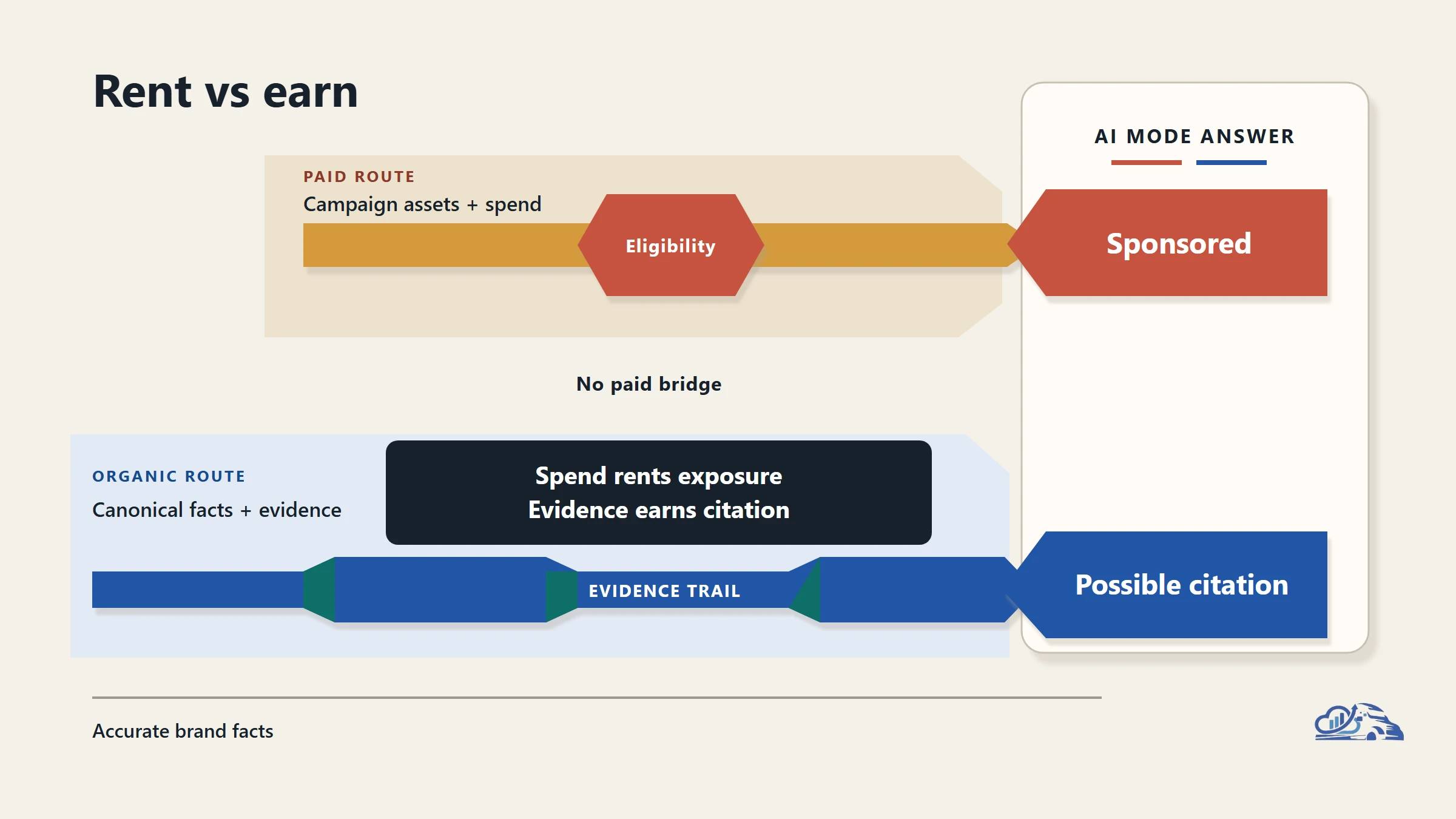
Answer Engine Optimization After Google AI Mode Ads
Google’s US tests of conversational ads in AI Mode split brand visibility into two jobs: renting a clearly labeled Sponsored placement and earning an organic citation through Answer Engine Optimization, with no payment path between them.
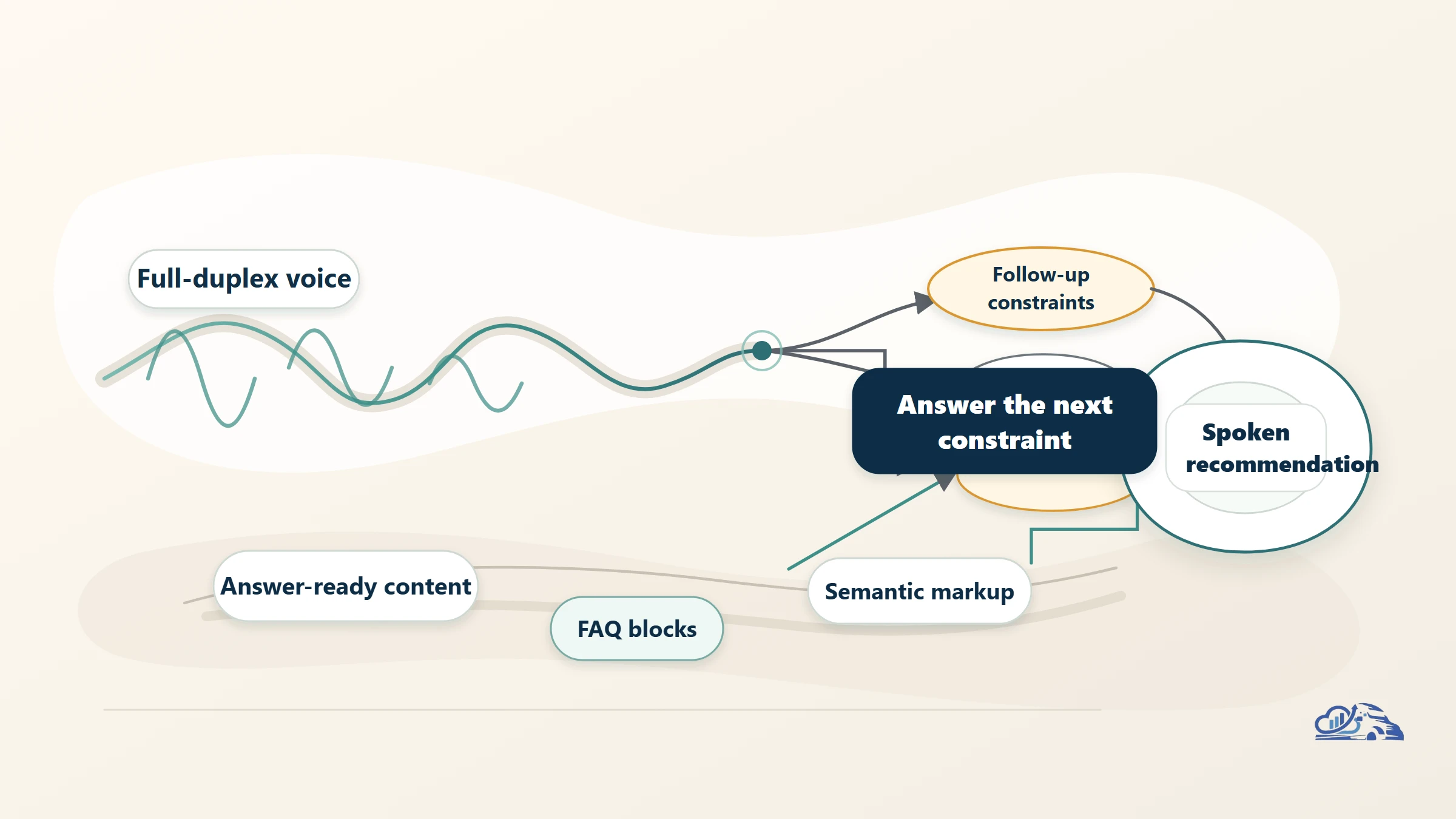
Conversational Search Optimization After GPT-Live
OpenAI's GPT-Live release — full-duplex voice models that listen and speak at the same time, replacing the turn-based Advanced Voice Mode — moves conversational search optimization from a nice-to-have to an operating requirement.
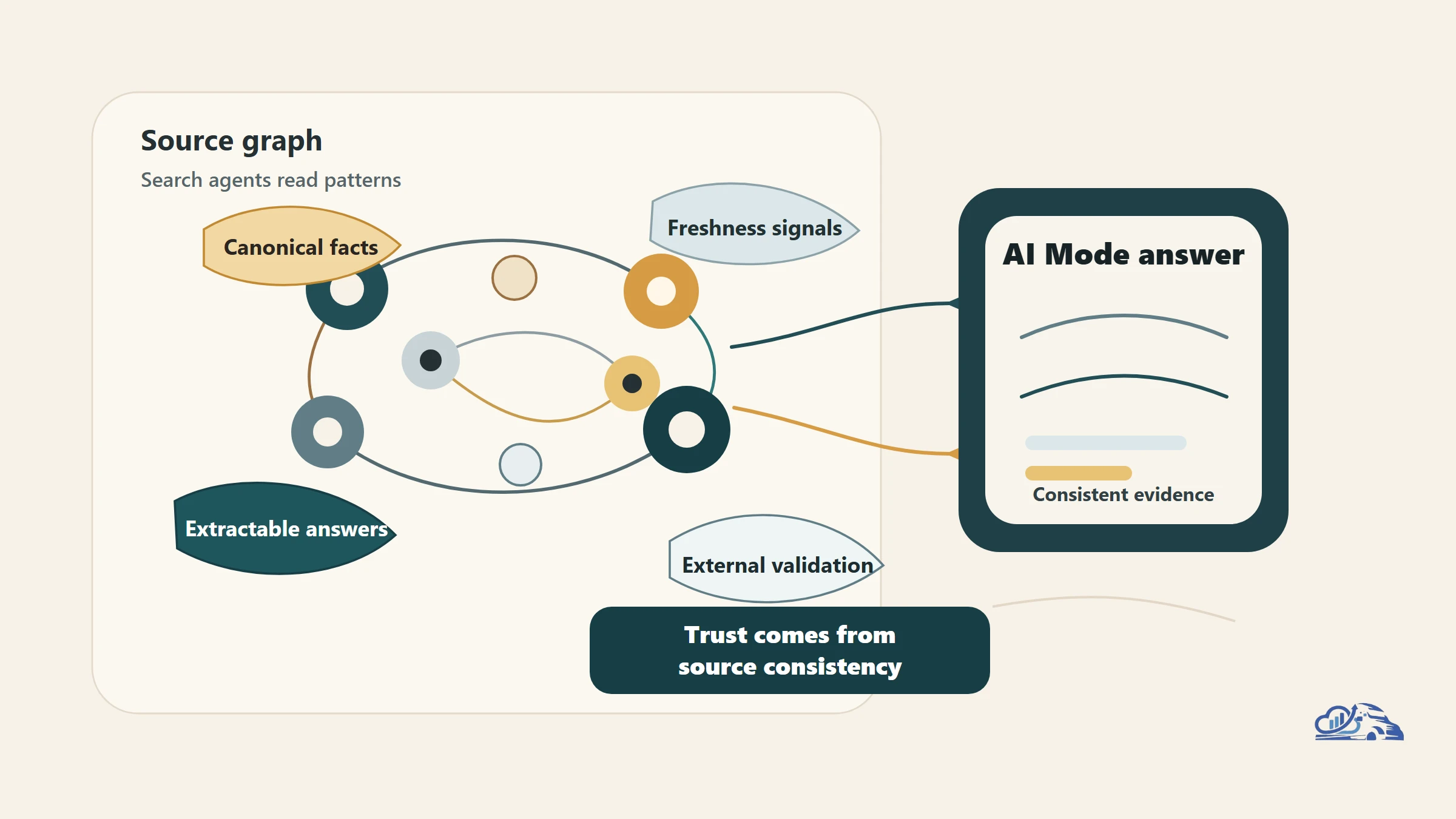
Google Search Agents: What AI Mode Changes for GEO and AEO
Google Search agents are AI systems inside Google Search that can reason across web information, monitor changing topics, and return synthesized updates or generated interfaces instead of only showing a static list of links. For founders, marketers, and operat
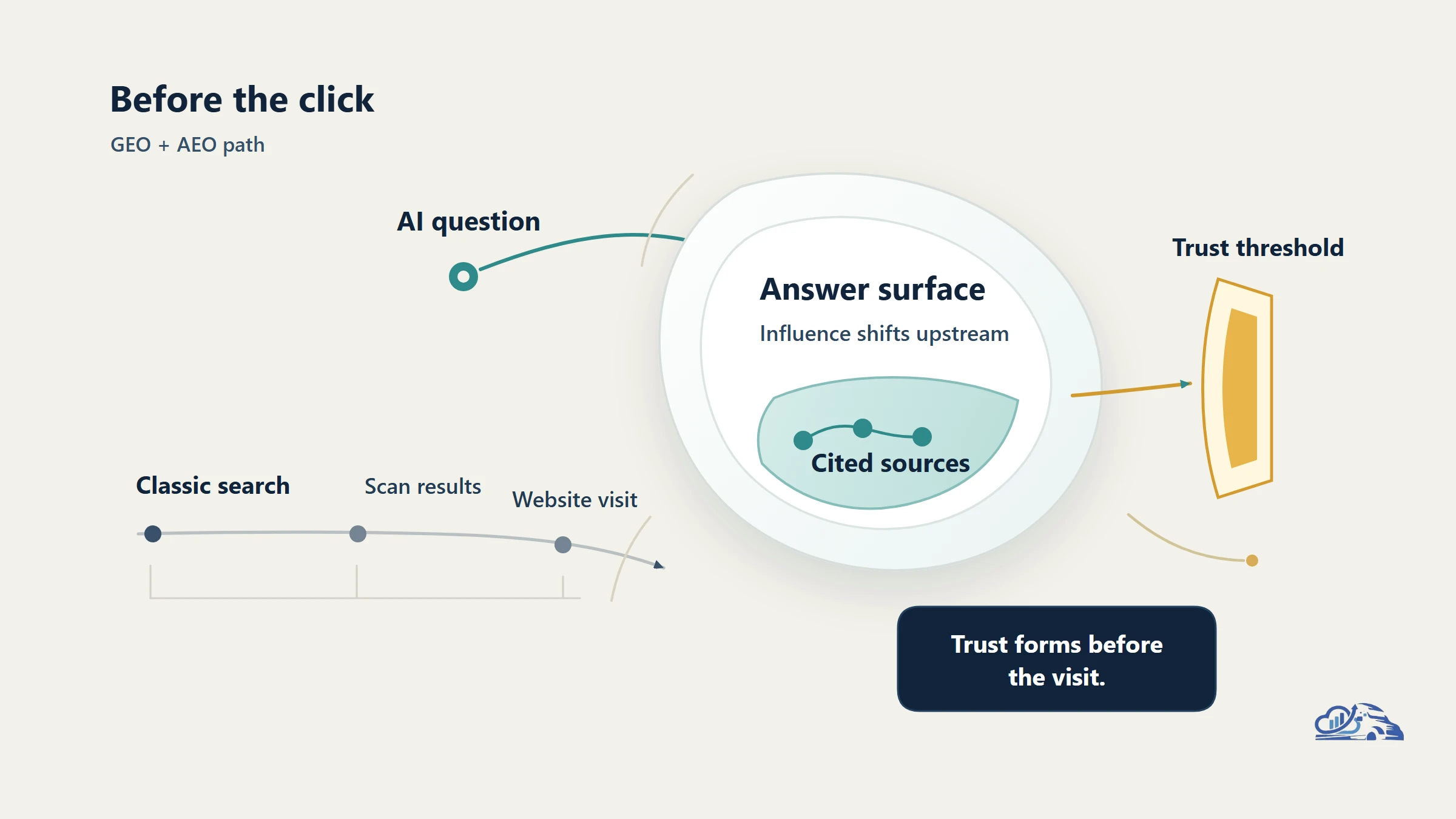
GEO and AEO Strategy: Win the Shift From Clicks to Conversations
GEO And AEO Strategy breaks down when source systems are scattered, reviews stay manual, handoffs are unclear, and risk is hard to prove. This guide is for operators who need a practical map, workflow, dashboard signal, review gate, and implementation plan. At