Muse Spark Open for Marketers: License, Cost and Uses
Meta released Muse Spark Open, an 816B open-weight model. What its license means for brands, what it costs to run and where it fits in marketing work today.
Overview
What is Muse Spark Open, and should marketing teams use it? Muse Spark Open is Meta's new open-weight AI model, released on October 15, 2026. Meta says it's the most capable US open-weight model so far, and the first model in its class that can run on a desktop setup of two Apple Mac Studios.
Most coverage focuses on coding scores. This guide looks at the parts that matter to marketers: what the license lets you do, what it costs to use or run, and where it fits in content, video and research work.
A note on our position: Vanaxity sells AI search and brand visibility services, so we gain when brands pay attention to how AI models describe them. This article was researched with Claude, made by Anthropic, whose Claude Sonnet 5.5 appears in one price comparison below. We've linked each figure to its source and labeled our own views and example math.
Key Takeaways
- Muse Spark Open has 816 billion parameters, 42 billion active per token, a 1 million token context window and native support for text, images, video and audio.
- In Meta's own table it leads on agent and tool-use tests, but trails Chinese open models such as Kimi K3 and GLM 5.3 on overall scores and coding.
- The license is free for most uses, but every product must show a Built with Muse Spark Open label.
- The usage policy bans fake engagement, impersonation and disinformation, which rules out some growth tactics.
- Hosted access starts at $1.25 and $4.25 per million input and output tokens, far cheaper for most teams than buying hardware.
- Our view: running it yourself mainly makes sense when customer data can't leave your control.
Map your SEO, GEO and AEO workflow before you build.

Muse Spark Open at a Glance
- Released: October 15, 2026.
- Size: 816 billion total parameters, 42 billion active per token.
- Context: up to 1 million tokens.
- Inputs: text, images, video and audio. Output: text.
- Languages: trained on data from more than 100 languages.
- Where to get it: weights on Hugging Face, AWS, Google Cloud and Microsoft, plus hosted APIs from seven providers.
- License: the Muse Model License, with limited commercial terms.
What Did Meta Release?
Muse Spark has been a closed model since it launched in April 2026. SiliconANGLE reports that the open version is built from Muse Spark 1.2, released in August, with extra safety training so it can run without Meta's own service guardrails.
It isn't Meta's first open model this year. Muse Glimmer, a 30 billion parameter open model, came out in August. But it is by far the largest, and Meta's most capable systems, such as Muse Wonder, remain closed.
The rollout was wide from day one. Meta listed hosted access through Baseten, Fireworks AI, Groq, Modal, Nebius, OpenRouter and Together AI, and weights on Amazon SageMaker AI, Google Cloud Model Garden, Hugging Face and Microsoft Foundry. It also runs on common tools like vLLM, SGLang, llama.cpp and Apple's MLX.
Meta also shipped custom GPU code for SGLang that it says speeds up key steps by 1.03 to 3.95 times on Nvidia and AMD chips, and the whole model by 3% on AMD's MI350. It's a small detail, but it shows Meta wants the model to run well outside its own data centers.
How Good Is Muse Spark Open?
Strong at agent work, middle of the pack elsewhere. Here are selected scores from Meta's own table on the Hugging Face model card:
| Test | Muse Spark Open | Kimi K3 | GLM 5.3 | Qwen3.8 | Inkling |
|---|---|---|---|---|---|
| AA Intelligence Index | 39 | 44 | 45 | 40 | 26 |
| JobBench (agent work) | 61.8 | 54.3 | 61.4 | 52.7 | 31.1 |
| MCP-Atlas (tool use) | 89.2 | 82.3 | 84.2 | 84.5 | 76.0 |
| Terminal-Bench 2.1 (coding) | 76.4 | 85.0 | 83.9 | 82.0 | 55.1 |
| VideoMMEv2 (video) | 61.5 | 65.4 | Not given | Not given | 36.9 |
MCP-Atlas is the most useful number for marketing tech. It tests whether a model can pick and order the right calls from 220 tools across 36 live servers without being told which to use. That's close to what an agent does when it pulls data from a CRM, an analytics tool and an ad platform in one job.
All of these scores were published by Meta. No independent lab had confirmed them for the released model at launch.
Is It Really the Most Capable US Open Model?
On Meta's own numbers, among US models, yes. It scores well above Inkling from Thinking Machines and Nvidia's Nemotron 3 Ultra, the other US models in the table. It more than doubles Inkling on JobBench, 61.8 to 31.1.
The word that matters is "US." On the overall Artificial Analysis Intelligence Index in Meta's table, Muse Spark Open scores 39, behind Kimi K3 at 44, GLM 5.3 at 45 and Qwen3.8 at 40. VentureBeat notes Chinese open models still lead on several measures, including coding.
For a marketing team, that gap may not matter much. The best model for you is the one that does your jobs well within your rules, and for some companies a US-made model is easier to approve.
What the Muse Spark Open License Means for Marketing Teams
Open weights don't mean anything goes. The Muse Model License has three parts every marketing team should read.
- The label: every product or service that uses the model, or a model built from it, must prominently show Built with Muse Spark Open, such as in the interface, documentation, website or settings.
- The revenue line: only companies that sell AI models as a service need a separate deal with Meta, and only once their revenue passes $20 million over 12 months. Internal use and building it into your own product are exempt.
- The usage policy: it bans fake engagement, impersonation, fraud, disinformation and unauthorized handling of private data, among other things.
The label is the part most brands will notice. A chatbot on your site or a content tool you sell would need to carry it. For internal work, such as drafting briefs or analyzing campaign data, the notice could live in internal documentation, but check with your lawyers first.
The usage rules matter too. Generating fake reviews, bot comments or posts that pose as real customers would breach the license, on top of the platform rules and laws it would already break.
What Does Muse Spark Open Cost to Use?
The cheapest route is a hosted API. OpenRouter lists $1.25 per million input tokens and $4.25 per million output tokens, the same as Together AI's rate, with cached input at $0.15.
Here's a rough example with our own math, using a job most content teams run every week. Say a content brief sends 20,000 tokens in and gets 4,000 tokens back. That's about $0.025 for input and $0.017 for output, or roughly $0.04 per brief. A thousand briefs a month would cost about $42.
Running it yourself is a different story. Meta's desktop setup uses two M5 Ultra Mac Studios with 512GB of memory each. Apple hasn't priced that configuration yet, but MacRumors expects it to start well above $10,000 per machine. On servers, the model card lists at least 700GB of GPU memory for the compressed NVFP4 version and 2TB for full precision.
Our math again: at $20,000 or more for two Macs, you'd need hundreds of thousands of briefs like the one above just to match the hosted bill, before power and staff time. For most teams, local hardware is a privacy decision, not a cost saving.
How Two Mac Studios Can Run an 816B Model
It sounds impossible, so it's worth explaining. Meta says each M5 Ultra Mac Studio lets its built-in GPU use up to 512GB of unified memory, so two machines linked with Apple's MLX software can hold the whole model in about a terabyte.
The trick is the model's design. Muse Spark Open is a mixture-of-experts model, so for each token only about 42 billion of its 816 billion parameters do any work. Meta says the chip's 1.2TB per second of memory bandwidth is fast enough to read that small slice each time.
Meta tested real jobs this way, using its Muse Code tool on the two Macs. It shipped bug fixes and new features to Ice Cubes, an open-source Mastodon app, and drove DaVinci Resolve to find and crop the best moments in a video.
What Meta didn't share is speed. Without tokens-per-second figures, it's hard to know whether the setup suits daily work or just shows what's possible.
Open Weights vs Closed Models on Price
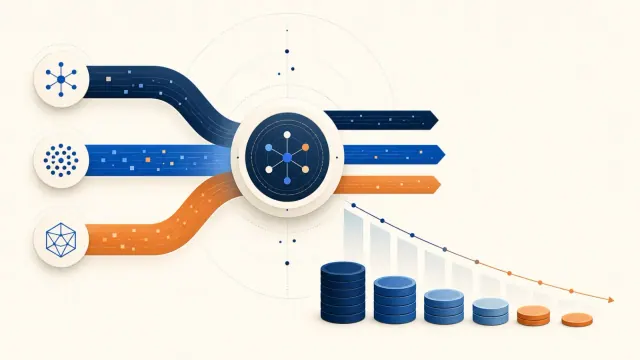
Price is where open models usually win. VentureBeat added up input and output prices per million tokens: about $5.50 for Muse Spark Open on Together AI, $5.80 for GLM 5.3 and $12.00 for Claude Sonnet 5.5.
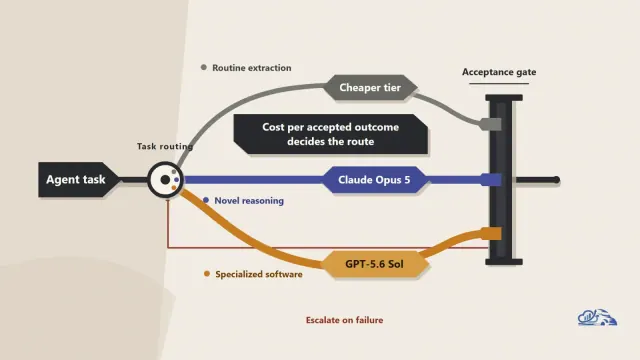
That isn't the whole story. A closed model may finish a job in fewer steps or with fewer mistakes, which can make it cheaper per finished task. And closed providers take care of hosting, updates and safety for you.
Our advice is to compare on your own work. Run the same ten jobs on both and add up the real cost, including the time people spend fixing the results.
Hosted API or Run It Yourself?
| Option | Best for | Watch out for |
|---|---|---|
| Hosted API | Most marketing teams testing or running everyday jobs | Data goes to the provider. Check its terms |
| Your own cloud | Firms with strict data rules and an engineering team | Hundreds of gigabytes of GPU memory and ongoing upkeep |
| Two Mac Studios | Small teams handling sensitive files, or offline demos | High upfront cost and no published speed figures |
| Closed model API | Teams that want the top scores and no setup | Less control over data, versions and price |
You can also mix them. Use the hosted API for drafts and research, and keep a private copy for anything that touches customer records.
Where Muse Spark Open Fits in Marketing Work
Based on Meta's demos and the model's strong points, here are the jobs we'd test first. These are our suggestions, not Meta's:
- Video editing support: Meta showed the model reviewing footage in DaVinci Resolve frame by frame and cropping the best moments into vertical clips.
- Long research briefs: one request can hold a year of reports.
- Martech agents: its MCP-Atlas score suggests it's good at choosing tools, which suits jobs that pull from analytics, CRM and ad platforms.
- Multilingual drafts: trained on more than 100 languages, though Meta hasn't tested every one, so review local copy with native speakers.
- Private analysis: running a copy yourself lets you analyze customer feedback or sales data without sending it to an outside provider.
Keep a person in the loop for anything that goes public, and log what agents do when they touch live systems.
What Muse Spark Open Means for AI Search Visibility
Strong open models spread fast. Because anyone can download and build on Muse Spark Open, it will end up inside many apps, assistants and agents, not just Meta's own products.
That changes the picture for brands. Your content isn't read by two or three AI systems anymore. It's read by many different models in many different tools, each answering questions about you in its own way.
Our view is that this makes clear, consistent facts on your own site and in trusted sources more valuable, not less. You can't tune your content for every model, so the safest strategy is content any model can find, read and confirm. Our earlier piece on open-weights AI for marketers covers the wider trend.
How to Test Muse Spark Open in 30 Days
You don't need hardware to start. Here's a simple plan using a hosted API:
- Week 1: pick five real jobs, such as a brief, a campaign report summary, a video review and a translation check.
- Week 2: run each job on Muse Spark Open and on the model you use now, with the same inputs.
- Week 3: score accuracy, tone and time saved, and log the token cost of each run.
- Week 4: decide where it wins, check the license label rules with legal, and plan any private deployment only for jobs that need it.
If you build agents on top of it, track cost per finished task, not just price per token. Our guide to FinOps for AI agents shows how.
Risks and Limits to Know
- Self-reported scores: every benchmark above comes from Meta, and independent results will take time.
- No speed figures yet.
- Safety is on you: Meta added extra safety training to the open version, but it still recommends that anyone who deploys the model add their own system-level guardrails, such as input filters, output checks and logging.
- Age limits: the model isn't intended for people under 18, so consumer tools need checks.
- Visible branding: the Built with Muse Spark Open label may not suit every customer-facing product.
How Vanaxity Helps Brands in an Open-Model World
We track how AI tools, from big closed assistants to apps built on open models, describe brands, which sources they rely on and how often a brand comes up when buyers ask for options. Then we help fix the pages and facts those answers draw on.
If you want to know how today's AI models describe your brand, see our services or browse more insights.
Frequently asked questions
What is Muse Spark Open?
Muse Spark Open is Meta's open-weight AI model, released on October 15, 2026. It has 816 billion parameters with 42 billion active per token, a 1 million token context window and native support for text, images, video and audio. Meta calls it the most capable US open-weight model to date.
Can businesses use Muse Spark Open for free?
Mostly, yes. The Muse Model License lets companies use it internally and build it into their own products without a fee. Companies that sell AI models as a service need a separate agreement once their revenue passes $20 million over 12 months. All products must display Built with Muse Spark Open.
How much does Muse Spark Open cost through an API?
OpenRouter and Together AI list $1.25 per million input tokens and $4.25 per million output tokens, with cached input at $0.15. Prices can vary by provider, so check the provider page before you build a budget.
What hardware do you need to run Muse Spark Open?
Meta's desktop setup uses two Apple M5 Ultra Mac Studios with 512GB of memory each, about 1TB in total. On servers, the model card lists at least 700GB of GPU memory for the compressed NVFP4 version and about 2TB for full precision.
Is Muse Spark Open better than Chinese open models?
Not across the board. In Meta's own table it leads on agent tests like JobBench and MCP-Atlas, but Kimi K3, GLM 5.3 and Qwen3.8 score higher on the Artificial Analysis Intelligence Index and on Terminal-Bench 2.1 coding.