Claude Opus 5 vs GPT-5.6 Sol for AI Agents
Compare Claude Opus 5 and GPT-5.6 Sol on benchmarks, pricing, context, routing, evaluation, and guardrails for autonomous B2B agents in production today.
Overview
For B2B marketing, RevOps, and engineering teams, the Claude Opus 5 vs GPT-5.6 Sol decision is not which model wins overall, but which should run novel-reasoning, agentic-coding, software-engineering, and health-adjacent workflows—and when output cost, context size, or deployment fit should outweigh a benchmark lead. This article compares their benchmarks, context windows, and pricing, then provides a routing table, evaluation plan, and cost-and-guardrail checklist; at Van Data Team, we map task classes, tool permissions, and acceptance criteria before choosing models.
Claude Opus 5 is the stronger choice for novel reasoning, agentic coding, and output-heavy autonomous loops, while GPT-5.6 Sol is the better fit for specialized software-engineering and health-adjacent work, a marginally larger context window, and OpenAI-centered deployments. The Claude Opus 5 vs GPT-5.6 Sol decision is a routing problem, not a winner-takes-all model ranking.
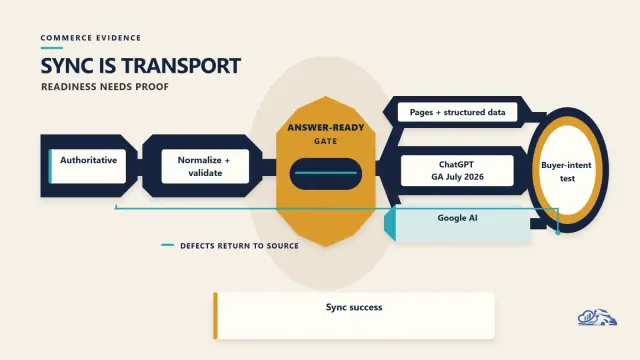
For B2B marketing, RevOps, and engineering teams, the costly mistake is standardizing on one model too early — a slow, manual switch later, and missed gains from routing each task to the model that actually wins it. Vanaxity, Van Data Team's AI SEO, GEO, and AEO content agent, shows the operating model: research, write, illustrate, publish, and syndicate through governed agent steps. At Van Data Team, we start by mapping task classes, data inputs, tool permissions, review gates, and acceptance criteria. Then we choose models.
Anthropic released Claude Opus 5 on July 24, 2026, and OpenAI released GPT-5.6 Sol on July 9, 2026; both are shipping frontier models. This guide reports the published head-to-head specs and benchmarks, then layers Vanaxity's production analysis on top: a routing matrix, evaluation plan, cost model, and guardrails. Treat the benchmark numbers as a starting prior and confirm each provider's current rate card and limits against its own documentation before you commit spend.
Key Takeaways
The practical answer is to default by task class, test on real work, and route down to cheaper models whenever frontier reasoning adds no business value.
- The llm-stats comparison reports Claude Opus 5 leading 6 of 8 shared benchmarks, with its clearest reported advantages in novel reasoning and agentic coding.
- The same page reports GPT-5.6 Sol leading 2 of 8 shared benchmarks, including specialized software engineering and health.
- The page lists equal input pricing and Claude Opus 5 as about 1.2x cheaper on output, which matters in long revision and planning loops.
- Benchmark winners are starting routes. Accepted-output rate, correction effort, tool success, latency, and risk controls determine the production winner.
- Routine extraction, classification, formatting, and other low-risk transformations should start on a cheaper tier and escalate only when validation fails.
Map your SEO, GEO and AEO workflow before you build.

Claude Opus 5 vs GPT-5.6 Sol at a Glance
The cited llm-stats page lists both models with large working contexts and equal input pricing, while assigning GPT-5.6 Sol the larger context window and Claude Opus 5 the lower generated-output price.
| Comparison area | Claude Opus 5 | GPT-5.6 Sol | Practical interpretation |
|---|---|---|---|
| Release | Listed as July 24, 2026 | Listed as July 9, 2026 | Both are released, shipping frontier models. |
| Context window | Listed as 1,000,000 tokens | Listed as 1,050,000 tokens | The listing gives Sol the marginally larger window. |
| Maximum output | Listed as 128,000 tokens | Listed as 128,000 tokens | The listing gives both the same maximum. |
| Input price | Listed as $5.00 per 1M tokens | Listed as $5.00 per 1M tokens | The listed input cost starts level. |
| Output price | Listed as $25.00 per 1M tokens | Listed as $30.00 per 1M tokens | The listing makes Opus 5 about 1.2x cheaper on output. |
| Shared benchmark leads | Reported as 6 of 8 | Reported as 2 of 8 | The page reports Opus leading the broader set and Sol winning targeted verticals. |
A maximum context figure measures capacity, not comprehension. A larger window does not repair stale retrieval, duplicated records, weak document ranking, or missing access controls. Feed either model the smallest relevant, current, authorized context that can support the task.
The output-price gap becomes important when an agent generates long drafts, critiques its own work, repairs code, or hands large artifacts between steps. Even then, token price is only the opening bid. A lower-priced output that needs repeated repair can cost more than a higher-priced output accepted on the first review.
Want to turn this comparison into an operating workflow? See how Vanaxity works across data pipelines, agent routing, workflow automation, reporting, and human review gates.
Source and spec freshness: The comparison figures above come from the third-party llm-stats page. Model specs and pricing change often, so confirm the current rate card, model IDs, and limits with each provider's documentation before procurement.
Reported Facts: What the Benchmarks Say
Within the cited third-party comparison, the reported evidence favors Claude Opus 5 across benchmark breadth, while GPT-5.6 Sol wins the listed specialized categories most relevant to repository engineering and health-adjacent work.
| Capability proxy | Claude Opus 5 | GPT-5.6 Sol | Reported leader |
|---|---|---|---|
| Novel reasoning | ARC-AGI-3: 30.2% | ARC-AGI-3: 7.8% | Claude Opus 5 |
| Agentic coding | Frontier-Bench v0.1: 43.3% | Frontier-Bench v0.1: 34.4% | Claude Opus 5 |
| Specialized software engineering | DeepSWE 1.1: 68.8% | DeepSWE 1.1: 72.7% | GPT-5.6 Sol |
The page reports Claude Opus 5 leading 6 of the 8 shared benchmarks: ARC-AGI-3, AutomationBench, BrowseComp, FrontierCode 1.1, GDPval-AA, and OSWorld 2.0. It reports GPT-5.6 Sol leading 2 of the 8: DeepSWE 1.1 and HealthBench Professional.
Among those reported figures, ARC-AGI-3 contains the widest gap, making Opus 5 a reasonable initial test for unfamiliar problems, ambiguous campaign planning, and research synthesis across conflicting constraints. The listed Frontier-Bench v0.1 result supports the same route when an agent must write code, use tools, debug failures, and continue toward an objective.
The cited page reports the DeepSWE 1.1 result cutting the other way: GPT-5.6 Sol records 72.7% versus Claude Opus 5 at 68.8%, while Claude Fable 5 records 69.7%. That reported result makes Sol a candidate for the first specialized-repository test, but the actual codebase and test suite still decide deployment.
The llm-stats head-to-head comparison characterizes Claude Opus 5 as performing better on most of the benchmarks it lists.
A benchmark estimates a capability under a controlled harness. It does not measure your CRM permissions, retrieval quality, brand review burden, deployment stack, or the cost of a failed publish action. Do not collapse these results into a universal composite score.
Strengths, Limitations, and When to Test Each
Test Claude Opus 5 first for ambiguous planning, agentic coding, and output-heavy loops; test GPT-5.6 Sol first for specialized engineering, health-adjacent tasks, context pressure, and OpenAI ecosystem fit.
When to choose or test Claude Opus 5
Reach for the claude-opus-5 model when the agent must reason through unfamiliar constraints, plan a multi-step campaign, write or repair automation, or sustain long critique-and-revision loops. Its reported benchmark pattern matches open-ended work where the path is not known in advance.
The page's listed lower output price would also make it attractive for content systems that generate substantial drafts, alternatives, code patches, or review notes. The limitation within the same third-party listing is equally clear: GPT-5.6 Sol leads the reported specialized engineering and health categories, and the page gives Sol the larger context window. Opus should not win those routes by brand preference alone.
When to choose or test GPT-5.6 Sol
Reach for GPT-5.6 Sol when repository-level engineering dominates the task, when the workflow is health-adjacent, or when compatibility with an established OpenAI deployment reduces integration and governance friction. Its listed context advantage also makes it a sensible candidate when relevant source material remains unusually large after retrieval and filtering.
Its listed limitations are the higher output price and weaker reported results on novel reasoning and agentic coding. Reported health-adjacent strength is not permission to automate consequential decisions. Require authoritative sources, qualified human review, and a hard approval gate before publication or action.
Vanaxity Analysis: Build a Routing Policy
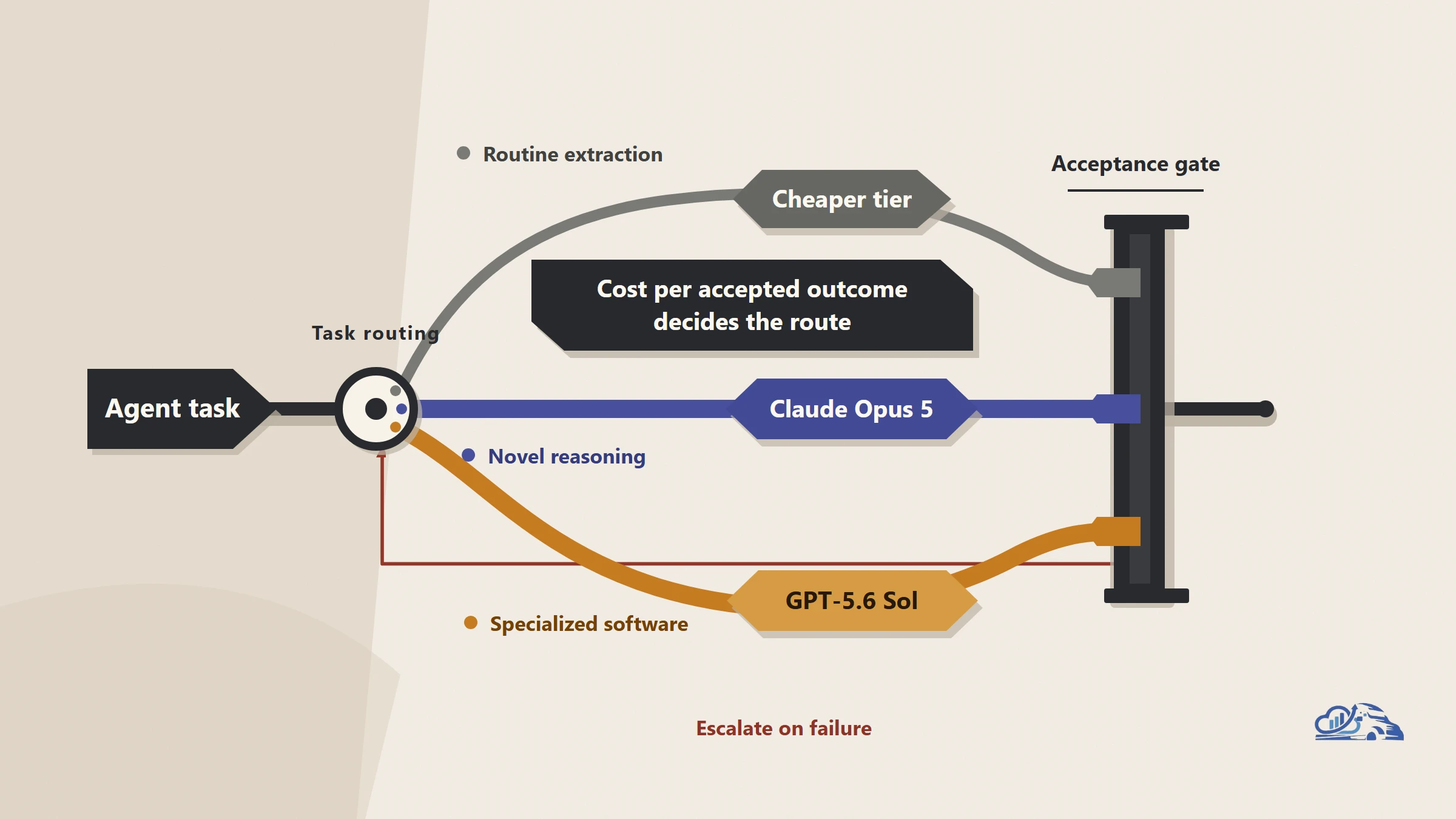
If official availability and the cited characteristics are confirmed, the right production policy sends each task to the lowest-cost model that passes its acceptance gates, then escalates only when difficulty, uncertainty, or risk requires it.
| Task class | Initial route | Why it starts there | Production checkpoint |
|---|---|---|---|
| Ambiguous campaign strategy | Claude Opus 5 candidate | Reported stronger novel-reasoning evidence | Review assumptions, claims, audience, and constraints |
| Agentic coding or automation repair | Claude Opus 5 candidate | Reported stronger agentic-coding evidence | Run tests and approve before deployment |
| Specialized repository engineering | GPT-5.6 Sol candidate | Reported stronger DeepSWE evidence | Compare both models on the real repository |
| Health-adjacent analysis or content | GPT-5.6 Sol candidate | Leads the page's reported health benchmark | Require source controls and qualified review |
| Output-heavy content loops | Claude Opus 5 candidate | Lower listed output price | Compare cost per accepted deliverable |
| Extreme context pressure | GPT-5.6 Sol candidate | Larger listed context window | Validate relevance, freshness, and authorization |
| Routine extraction or formatting | Cheaper model tier | Frontier reasoning is usually unnecessary | Escalate after validation failure |
| Consequential external action | Verified frontier route plus human approval | Capability does not remove operational risk | Block the action until an authorized reviewer approves |
Every initial route above is a testable policy, not a permanent vendor commitment. Add an escalation model, a provider fallback, and a manual path for each business-critical workflow. Keep the routing interface independent of LangGraph, LangChain, CrewAI, native function calling, or a Plan-and-Execute pattern so the model can change without rebuilding the operation.
Composite scenario: Maya, a RevOps lead, has an agent diagnosing a broken CRM lead-routing workflow. The agent must inspect logs, identify ambiguous business rules, patch transformation code, and prepare a reviewable change. Under this policy, Opus 5 is the starting route for diagnosis and repair; a cheaper tier normalizes logs; tests validate the patch; and a human approves the CRM write. If Sol wins on Maya's repository acceptance suite, the policy changes. Evidence outranks the initial benchmark prior.
Evaluate Both Models on Your Own Work
The benchmark results can narrow a candidate set, but a representative internal harness decides which route belongs in production.
Build the harness from real prompts, documents, tools, policies, and failure modes. Include campaign planning, research synthesis, CRM enrichment, content review, code repair, and publish preparation if those tasks exist in your operation.
For each task class:
- Define an accepted outcome before running either model.
- Hold prompts, context, tools, stopping rules, and review procedures constant.
- Measure factual accuracy, tool completion, schema validity, policy adherence, latency, retries, and human correction effort.
- Record full traces, including retrieval, tool arguments, failures, route changes, and reviewer decisions.
- Separate model failures from stale data, unclear instructions, broken tool schemas, missing permissions, and orchestration defects.
- Re-run the harness after a model, prompt, tool, policy, or data-pipeline change.
The economic unit is not cost per token. It is cost per accepted outcome:
Cost per accepted outcome = (model usage + retries + tool costs + infrastructure + human review + failure handling) / accepted outputs
Track rejected work as cost, not as invisible experimentation. Measure end-to-end latency rather than isolated model speed. Include the time reviewers spend correcting claims, recovering failed actions, and deciding whether an output can ship.
Composite scenario: Arun runs a long-form content operation. The listing gives Opus 5 the lower output price, but Arun does not route on that figure alone. His harness scores source use, factual accuracy, brand fit, schema readiness, edit time, and publish acceptance. Routine formatting moves to a cheaper tier, while the verified frontier route handles research conflicts and final synthesis. The winning policy is the one that produces accepted, answer-ready content with the least total waste.
Vanaxity applies the same discipline to omnichannel search, where content must rank in Google and remain clear enough for answer engines to cite. Teams can compare Vanaxity with manual SEO operations through the same lens: accepted output, review burden, speed to publication, and governance.
Need a concrete evaluation plan? Van Data Team's scoped workflow review delivers a task map, evaluation-harness outline, tool-permission matrix, dashboard gap review, guardrail plan, and implementation scope. You can see the agent workflow in action before deciding what to automate.
Production Architecture and Guardrails
Reliable autonomous agents need orchestration, constrained tools, trustworthy data, observability, and recovery paths around the chosen model.
Orchestration and model portability
Use native function calling for short, bounded workflows. Use Plan-and-Execute when explicit planning and execution stages improve control. LangChain and CrewAI can accelerate common agent patterns, while LangGraph's official overview positions it for long-running, stateful workflows with durable execution and human-in-the-loop control.
Whichever framework you choose, isolate the model router behind a stable interface. The orchestrator should pass a task class, risk level, context budget, allowed tools, and acceptance rules. The router should return a model choice, fallback, and review policy.
Tool and MCP boundaries
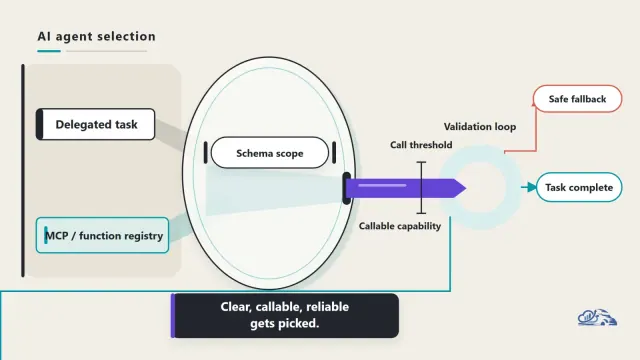
The Model Context Protocol documentation describes MCP as a standard for connecting AI applications to external data, tools, and workflows. Standardized access does not mean unrestricted access.
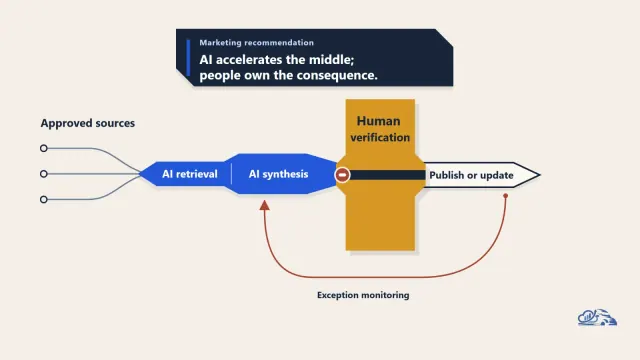
Use narrow tool schemas, least-privilege credentials, argument validation, and separate read operations from write or publish operations. Log requests, responses, errors, and approvals. Make external writes idempotent where possible, and require human approval for customer-facing, financial, health-adjacent, destructive, or irreversible actions.
Data pipelines are part of model quality
Agents inherit the quality of the systems they read and write. Airflow schedules, dbt transformations, Kafka streams, warehouses, and operational databases need visible lineage, freshness checks, ownership, access controls, and service-level commitments.
A larger context window cannot rescue stale revenue data or duplicate customer records. Context caching can reduce repeated work when the provider and workload support it, but cache only stable, authorized components. Remove stale, duplicated, and irrelevant context before paying a frontier model to process it.
Production guardrail checklist
- Validate source freshness, authorization, and task scope before execution.
- Enforce structured outputs and tool arguments before downstream use.
- Cap retries, token budgets, and circular critique loops.
- Gate consequential actions behind an authorized reviewer.
- Trace model, prompt, tool, data-source, and policy versions.
- Dashboard accepted-output rate, total cost, latency, review effort, and route overrides.
- Preserve provider fallback, checkpoint recovery, rollback procedures, and a manual operating path.
- Re-evaluate routes when failure patterns or business requirements change.
Composite scenario: Priya, an engineering manager, sees a publishing agent produce polished copy from an outdated warehouse table. The model did what the prompt asked; the pipeline supplied stale evidence. Her fix belongs in lineage, freshness checks, and the publish gate, not in a larger context window or a stronger model. That distinction prevents teams from paying frontier prices to mask data-engineering debt.
How Van Data Team Makes This Operational
The confirmed Claude Opus 5 vs GPT-5.6 Sol head-to-head becomes useful when translated into a routing policy. At Van Data Team, we treat the comparison as an operating workflow. We map the current handoff from campaign brief or RevOps trigger through source systems, agent decisions, tool calls, review gates, dashboards, and recovery paths.
The resulting delivery plan assigns:
- Claude Opus 5 to novel-reasoning, agentic-coding, and output-heavy loops when its strengths improve accepted outcomes.
- GPT-5.6 Sol to specialized software-engineering, health-adjacent, marginally larger-context, or OpenAI-aligned workloads.
- Cheaper tiers to extraction, classification, and formatting, with escalation when validation fails.
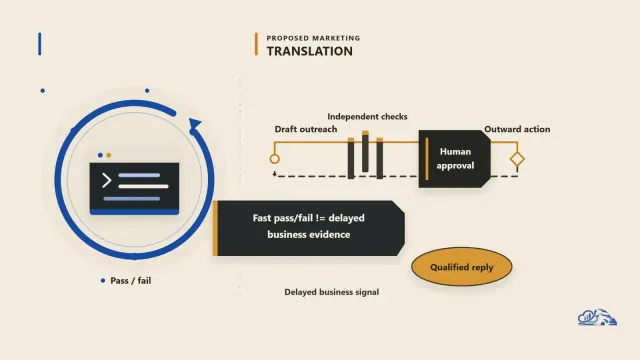
- Human approval before an agent publishes, changes CRM records or budgets, deploys code, or touches sensitive data.
This policy can run through LangGraph, LangChain, CrewAI, native function calling, or Plan-and-Execute, with tool and MCP permissions plus prompt or context caching configured per route.
Before production, we replay representative tasks through one evaluation harness. We track acceptance rate, tool success, correction effort, latency, and cost per accepted outcome—not token price alone. The dashboard also exposes data quality, lineage, freshness, and pipeline SLAs across Airflow, dbt, Kafka, and warehouse inputs. A runbook tells operators when to retry, reroute, roll back, or escalate.
Operational Budget
Reported fact: llm-stats lists identical input pricing of $5.00 per million tokens, with output at $25.00 for Claude Opus 5 and $30.00 for GPT-5.6 Sol. Opus 5 leads six of eight shared benchmarks, particularly in novel reasoning and agentic coding; Sol leads DeepSWE 1.1 and HealthBench Professional. These figures establish a routing prior—not the production budget.
Vanaxity analysis: the useful unit is cost per approved workflow result:
(model usage + retries + reviewer time + recovery cost) ÷ approved outputs
Before rollout, run representative marketing, RevOps, and engineering jobs through each candidate and record:
- Input, output, and cached-token spend against a hard token budget
- Median and tail latency for the complete tool-using workflow
- First-pass acceptance, retry, escalation, and unrecoverable-failure rates
- Reviewer minutes required to approve or repair each result
- Recovery behavior after tool, MCP, data, or validation failures
- Evaluation scores against task-specific quality and safety criteria
A cheaper token can become expensive after repeated revisions or manual correction. Conversely, Opus 5’s lower output price may compound across long autonomous loops, while Sol may deliver better economics where its specialized strengths improve first-pass acceptance. Route routine work to cheaper tiers and escalate only when evaluations justify frontier-model spend.
Frequently asked questions
Is Claude Opus 5 better than GPT-5.6 Sol?
On the cited llm-stats comparison, Claude Opus 5 appears to be the stronger general starting route across the reported shared benchmark set, especially for novel reasoning and agentic coding. The same page makes GPT-5.6 Sol the better first candidate for specialized software engineering, health-adjacent work, larger-context pressure, and, if compatibility is officially documented, some OpenAI-centered deployments.
Which model is better for autonomous marketing agents?
Claude Opus 5 is the better starting route when an agent must plan campaigns, reconcile uncertain evidence, repair automation, or generate substantial output. Use a cheaper tier for classification, formatting, metadata, and other routine transformations, then escalate on validation failure.
Which model is better for coding?
The cited page reports Claude Opus 5 leading the agentic-coding comparison at 43.3% versus GPT-5.6 Sol at 34.4% on Frontier-Bench v0.1. It reports GPT-5.6 Sol leading specialized software engineering at 72.7% versus 68.8% on DeepSWE 1.1. Test them on your repository, tools, and acceptance suite.
Which model has the larger context window?
The cited page lists GPT-5.6 Sol with 1,050,000 input tokens, compared with 1,000,000 for Claude Opus 5. Confirm those capacities with the providers, then use them only after retrieval, deduplication, freshness checks, and access filtering.
Which model is cheaper for long agent workflows?
The cited page lists input pricing at $5.00 per 1M tokens for both models. It lists Claude Opus 5 at $25.00 per 1M output tokens versus $30.00 for GPT-5.6 Sol, and even so, retries and review labor can reverse the nominal advantage.
Should a company deploy both models?
Potentially, after official availability, deployment terms, and task performance are verified, when task diversity, resilience, or provider continuity justifies the operational overhead. Keep one default, one escalation path, cheaper routine tiers, and a manual fallback instead of letting every agent choose freely.