GPT-5.6 Price Cuts: AI Agent Routing and FinOps Guide
OpenAI cut GPT-5.6 Luna and Terra API prices and added Sol Fast mode. Use this routing and FinOps guide to lower agent cost without losing quality or speed.
Overview
The GPT-5.6 price cuts lower Luna API pricing by 80% and Terra by 20%, while adding a paid Fast mode for Sol. For founders, RevOps leaders, and platform or agent teams, this eases runaway agent costs but doesn't automatically fix slow, expensive inference. This guide gives you a route-by-tier runbook and cost-per-accepted-outcome decision plan.
According to OpenAI's July 30, 2026 announcement, the savings came from improvements across its models, inference systems, production software, and agent harness. Only Luna and Terra became cheaper. Sol Fast is the separate option for teams willing to pay more for lower latency.
That operating problem is familiar to Vanaxity, Van Data Team's autonomous content agent for SEO, GEO, and AEO. It researches, writes, illustrates, publishes, and syndicates content while review gates protect quality. See how Vanaxity turns data pipelines, AI agents, workflow automation, and reporting into a publishing system.
Key Takeaways
The new economics reward selective routing, not defaulting every task to the cheapest or fastest model.
- Only GPT-5.6 Luna and Terra received price cuts. Sol standard pricing remains unchanged.
- Sol Fast delivers up to 2.5x faster processing at the reported 2x price.
- Luna fits high-volume bounded work, Terra fits mid-tier reasoning, and Sol fits the hardest steps.
- Teams should measure cost per accepted outcome across retries, tools, evaluations, and escalations.
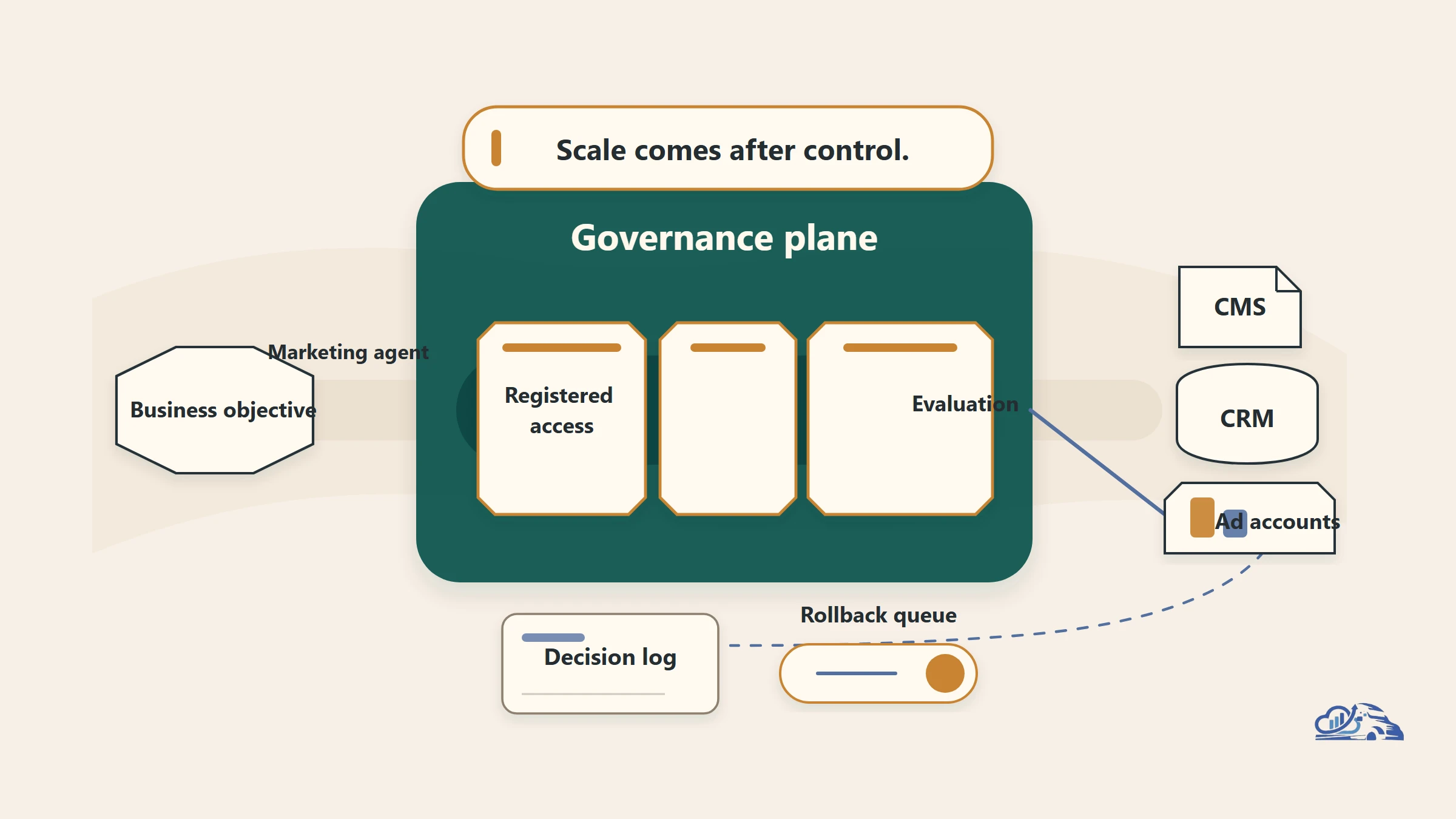
- Every routing change needs observability, regression tests, least-privilege access, and a rollback path.
Map your SEO, GEO and AEO workflow before you build.

What the GPT-5.6 price cuts changed
OpenAI made Luna and Terra cheaper, left Sol standard unchanged, and introduced a premium Sol-only speed option.
All rates below are in US dollars per million tokens. The before-and-after table separates reported pricing from Vanaxity's routing recommendations.
| Model or mode | Previous input | Previous output | Current input | Current output | Reported change |
|---|---|---|---|---|---|
| GPT-5.6 Luna | $1.00 | $6.00 | $0.20 | $1.20 | 80% lower |
| GPT-5.6 Terra | $2.50 | $15.00 | $2.00 | $12.00 | 20% lower |
| GPT-5.6 Sol standard | $5.00 | $30.00 | $5.00 | $30.00 | Unchanged |
| GPT-5.6 Sol Fast | Not offered | Not offered | $10.00 | $60.00 | Up to 2.5x faster at the reported 2x price |
Reported fact: Luna and Terra now cost less. That doesn't mean either model became faster. Sol standard retains its existing rates, while Sol Fast buys lower latency at a premium.
OpenAI states the operating principle plainly in its primary announcement:
"Using AI efficiently begins with the outcome."
OpenAI also says Sol autonomously rewrote and optimized production kernels, designed inference experiments, and monitored training. Those improvements increased GPU utilization and made production code more efficient. The resulting serving gains funded the Luna and Terra reductions.
Vanaxity analysis: Luna can now serve as a much wider base layer for continuous workloads. Terra becomes a more economical escalation path. Sol Fast should remain an exception for difficult work where waiting has measurable business cost.
Cheaper tokens do not guarantee cheaper outcomes
The useful financial metric is total cost per accepted outcome, not the price of an isolated model call.
Autonomous agents rarely make a single request and stop. They plan, retrieve context, call tools, validate responses, retry failures, and escalate uncertainty. A cheap call can become an expensive workflow when weak outputs trigger repeated loops or heavy human review.
Use this operating formula:
Cost per accepted outcome = total model API cost across all attempts / outputs that pass the acceptance gate
The definition of "accepted" changes by workflow:
- For marketing, it may mean an accurate, approved page that is published, indexed, and ready for search and AI citations.
- For RevOps, it may mean an enriched account that passes schema validation, source checks, and routing rules.
- For software agents, it may mean a patch that passes tests, review, security checks, and repository policy.
- For sales automation, it may mean a correctly researched account brief that an operator approves for use.
Consider Maya, a hypothetical RevOps lead. Her enrichment agent initially sends every record to Sol because the team values quality. Yet most records only need field extraction and schema normalization.
Maya moves bounded extraction to Luna, sends ambiguous records to Terra, and reserves Sol for consequential conflicts. She then compares accepted records, retries, latency, and review burden. The cheaper route ships only if the whole workflow improves.
The same principle applies to content. Comparing Vanaxity with manual SEO operations means examining approved, published, answer-ready coverage, not counting how many inexpensive drafts an agent generates.
Route each step by complexity, risk, and urgency
The following illustration summarizes escalate by evidence, not by default:
Figure 1. Route each step to the lowest-cost tier that passes its evaluation gate, and use Sol Fast only when lower latency improves the accepted business outcome.
The safest model-routing policy uses the lowest-cost tier that consistently passes the workflow's evaluation gate.
The following decision table is Vanaxity's recommended starting point. It isn't an OpenAI routing prescription.
| Route | Default work | Escalate when | Latency policy | Evidence to capture |
|---|---|---|---|---|
| GPT-5.6 Luna | Classification, extraction, schema normalization, intent tagging, and simple tool calls | Validation fails, ambiguity remains, or the action carries material risk | Optimize for economical volume | Cost, token budget, validation result, error type, and accepted outcome |
| GPT-5.6 Terra | Synthesis, ambiguity resolution, research comparison, and multi-step business logic | Conflicts remain, the decision is high risk, or evaluation fails | Use when Luna is insufficient but frontier reasoning is unnecessary | Cost, latency, escalation reason, tool results, and evaluation score |
| GPT-5.6 Sol standard | Difficult reasoning, complex coding, high-risk review, and final escalation | Latency itself prevents an accepted outcome | Default Sol route for difficult work | Cost per accepted outcome, latency, review burden, and regression result |
| GPT-5.6 Sol Fast | Urgent, difficult work on a measured critical path | Revert when speed doesn't improve the business outcome | Use only when latency value covers the reported 2x price | Premium paid, latency change, acceptance result, and user impact |
This policy can sit above LangGraph, LangChain, CrewAI, native function calling, MCP-connected tools, or a Plan-and-Execute pattern. The framework controls state and execution. The routing policy decides which model handles each step.
That separation matters. Teams should be able to change a route without rewriting the entire agent. They should also compare cost, latency, token budget, observability, and evaluation under the same workflow conditions.
A marketing agent might use Luna to classify search intent and normalize source data. Terra can synthesize competing evidence or adapt a brief across channels. Sol handles difficult positioning, technical contradictions, or final high-risk review.
For software work, Luna can process repository metadata and bounded maintenance tasks. Terra can analyze dependencies or investigate a failing workflow. Sol handles difficult debugging and architecture decisions. Sol Fast deserves a test only when response time blocks an operator or production recovery.
Make FinOps, observability, and governance one system
FinOps for AI agents works only when budgets, telemetry, evaluations, data quality, and permissions share the same control loop.
Start by setting a token budget for the complete workflow. Include system instructions, retrieved context, tool results, retries, evaluator calls, and escalation prompts. A prompt-level budget misses the costs generated by the agent loop around it.
Use cheaper processing modes where latency allows. The Batch API offers up to 50% off input and output for asynchronous work. Cached-input reads are 90% below the standard input rate, while cache writes cost 1.25x the uncached rate.
Batch processing fits background classification, content enrichment, evaluation suites, and scheduled reporting. Prompt caching fits stable instructions, schemas, policies, and repeated reference material. Confirm current eligibility and pricing terms before assuming separate discounts stack.
For observability, record the workflow, selected model, routing reason, prompt version, token use, cache behavior, tool calls, retries, latency, evaluation result, and final acceptance. Aggregate those fields into an outcome dashboard. A provider invoice alone can't show which agent behavior created the spend.
Evaluation must precede price-driven migration. Run the proposed route against a representative task set, including normal work, ambiguous inputs, tool failures, and safety-sensitive cases. Compare quality, latency, cost, escalation rate, and human review burden with the current baseline.
Governance belongs in the same design. Give each agent the narrowest API, data, and tool permissions needed for its role. Separate credentials by environment, restrict write actions, and require approval before consequential external changes.
Agent output also depends on what the model reads. Feed and index quality, freshness, lineage, ownership, and SLAs are production dependencies. A sophisticated route can't rescue stale product data, duplicated CRM records, or search indexes with unclear provenance.
At Van Data Team, we start with the acceptance gate, then work backward into the data pipeline, route, review controls, and dashboard. You can see that agent workflow in action before adapting the pattern to your own stack.
Use this routing and outcome checklist
A routing change is ready for production only when its acceptance rule, budget, evidence, permissions, and rollback conditions are explicit.
Use the decision table above with this implementation checklist:
Before changing the route
- [ ] Define the accepted business outcome in testable terms.
- [ ] Record baseline model cost, latency, retries, escalations, and review burden.
- [ ] Set a token budget for the complete workflow.
- [ ] Classify task complexity, uncertainty, urgency, and cost of error.
- [ ] Confirm source freshness, lineage, ownership, and service expectations.
- [ ] Select the lowest tier that currently passes the evaluation gate.
During validation
- [ ] Define promotion conditions from Luna to Terra and from Terra to Sol.
- [ ] Define fallback behavior for tool errors, malformed output, and timeouts.
- [ ] Test Sol Fast only on latency-sensitive Sol work.
- [ ] Log model selection, route reason, tool access, and final acceptance.
- [ ] Apply least-privilege credentials and tool permissions.
- [ ] Run regression checks against representative and difficult tasks.
Before production release
- [ ] Calculate total API cost divided by accepted outcomes.
- [ ] Compare cost, latency, quality, and review burden with the baseline.
- [ ] Confirm the observability dashboard can expose route-level failures.
- [ ] Roll back if savings require an unacceptable quality or governance regression.
Common failure modes include routing everything to Luna because it is cheap, or routing everything to Sol because it feels safer. Both ignore task structure. Ungated escalation can also turn an economical workflow into a hidden Sol workload.
Another mistake is enabling Sol Fast everywhere. Faster inference has value only when waiting affects the accepted outcome. Background research, enrichment, and evaluation often benefit more from Batch API processing.
Finally, don't let price changes bypass governance. A cheaper model still needs narrow data access, tool restrictions, evaluation gates, and failure recovery.
Want this artifact applied to your stack? Request a free workflow audit through Vanaxity pricing and implementation options. You'll receive a route map, token-budget plan, dashboard gap review, evaluation design, and scoped risk-review workflow.
Frequently asked questions
Did OpenAI cut prices for every GPT-5.6 model?
No. OpenAI reduced Luna pricing by 80% and Terra pricing by 20%. Sol standard remains $5 per million input tokens and $30 per million output tokens. Fast mode is a separate Sol processing option, not a Sol price cut.
Did GPT-5.6 Luna or Terra become faster?
No. Luna and Terra received price reductions, not speed upgrades. The new speed option is exclusive to Sol Fast, which delivers up to 2.5x faster processing at the reported 2x price.
Which GPT-5.6 tier should continuously active agents use?
Start bounded, high-volume work on Luna. Use Terra when tasks require synthesis, ambiguity resolution, or stronger multi-step reasoning. Reserve Sol for difficult coding, consequential decisions, and final escalation. Promote work based on validation failure and risk, not model prestige.
Is GPT-5.6 Sol Fast mode worth the higher price?
Sol Fast is worth testing when standard Sol latency blocks a user-facing or operational outcome. Measure whether faster processing improves completion, recovery, or operator throughput. Keep standard Sol when the latency gain doesn't justify the reported premium.
How should teams calculate savings from the new prices?
Add model spending across initial calls, retries, evaluator calls, and escalations. Divide that total by outputs that pass the workflow's acceptance gate. Compare the result with latency, quality, review burden, and failure recovery before declaring savings.
Can Batch API and prompt caching reduce agent costs further?
Yes. The Batch API provides up to 50% off asynchronous input and output. Cached reads are 90% below standard input pricing, while cache writes cost 1.25x the uncached rate. Check workload eligibility and current terms rather than assuming the discounts combine.