
Models & Infrastructure
Frontier LLMs, model comparisons, inference economics, cloud hosting, and production agent infrastructure.
20 articles
GPT-6.1 Terra vs Claude and OpenAI Models for Marketers
OpenAI released GPT-6.1 Terra on October 26, 2026, a mid-priced model at $1 per million input tokens and $5 per million output tokens, built for computer use, visual reasoning and everyday writing. On the independent Artificial Analysis Intelligence Index it scores 48 at maximum effort, below GPT-6.1 Sol (52), GPT-6 Astra (53), Claude Sonnet 5.5 (56) and Claude Opus 5.5 (58), but well above the budget models GPT-6 Luna (38) and Claude Haiku 5.5 (41). Its cost per index task is $0.40, against $0.72 for Sol and over $5 for Sonnet 5.5 and Opus 5.5. For marketing teams, that makes Terra a strong default for routine drafting, form filling and platform work, while the higher-scoring models remain the safer pick for brand-critical writing and strategy. At typical agency volumes, model costs are small next to review time, so quality should usually decide.

Self-Hosted AI for Marketing: What Nanbeige4.3-33B Changes
On October 25, 2026, the Chinese lab Nanbeige released Nanbeige4.3-33B on Hugging Face under the Apache 2.0 license, which allows free commercial use. The 33-billion-parameter model handles up to 524,288 tokens of context and is built for agent tasks like coding and office work. Its model card claims it beats Qwen3.8-27B on 18 of 20 tests, though no one has checked those numbers independently yet. Its size is the real story for marketers: by our math it needs about 66GB of memory at full precision and roughly 20GB at 4-bit, so it can run on a single workstation GPU. That makes self-hosted AI practical for teams that want to keep customer data and campaign plans in-house, cut per-use costs or avoid surprise model changes.

Nvidia China Chip Orders: What They Mean for Marketers
Reuters reported on October 20, 2026 that ByteDance, Alibaba and Tencent have ordered more than 3 million of Nvidia's new RTX PRO 5500 graphics cards, with a combined list price of over $35 billion. The card is a workstation chip that Chinese buyers are still allowed to buy under US export controls, and the companies mainly want it for AI inference, the work of running models for users. Nvidia has told partners it may fill only 5% to 10% of requests. For marketers, the story isn't about chips. It shows how fast AI assistants and AI features are growing inside China's biggest consumer platforms, and how tight computing power remains worldwide.

Meta Prometheus Supercluster: What It Means for Marketers
On October 19, 2026, Meta published a detailed look at Prometheus, its gigawatt-scale AI supercluster in New Albany, Ohio, which trained its Muse models. It runs hundreds of thousands of NVIDIA GPUs across several buildings as one machine, and Meta plans to scale it to about 1 million GPUs. Meta says it cut training interruptions by 99% from a mid-2025 peak and kept more than 85% of compute productive during pre-training of Muse Wonder. For marketers, the point isn't the hardware. It's that Meta is building the capacity to put larger AI models into its apps, its ad tools and Meta AI, which will shape how billions of people discover brands.

Muse Spark Open for Marketers: License, Cost and Uses
Meta released the weights for Muse Spark Open on October 15, 2026, the first open version of its Muse Spark line. It has 816 billion parameters, 42 billion active per token, a 1 million token context window and native support for text, images, video and audio. Meta calls it the most capable US open-weight model and says it can run on two Apple M5 Ultra Mac Studios. In Meta's own tests it leads on agent and tool-use benchmarks but trails Chinese open models on overall scores and coding. The license is free for most uses but requires a Built with Muse Spark Open label, and hosted access starts at $1.25 and $4.25 per million input and output tokens.
Gemini 4 Argon: What It Means for Marketers and AI Search
Google made Gemini 4 Argon, its new frontier model, broadly available on October 13, 2026, after two weeks of access limited to cybersecurity partners. It runs in the Gemini app and AI Mode in Search for Google AI Pro and Ultra subscribers and in the paid Gemini API at an introductory $2 and $10 per million input and output tokens, rising to $4 and $20 from December 1. Google says it leads 12 of 18 benchmarks it published. Artificial Analysis scores it 53, level with GPT-6 Astra, with a 15% hallucination rate against Astra's 51%, though it answers fewer questions correctly. For marketers, the bigger story is AI Mode, tasks mode and Gemini's 40-plus connected apps.

Claude Sonnet 5.5 vs Opus 5.5: Which Fits Marketing Work?
Anthropic released Claude Opus 5.5 on September 22, 2026 and Claude Sonnet 5.5 on September 28. Sonnet 5.5 costs half as much per token and runs faster. On independent Artificial Analysis tests at top settings, the two are nearly tied on documents, spreadsheets and automation, but Opus 5.5 is far more reliable on facts and costs less per task. At matched lower settings, Opus 5.5 wins every test for a little more money, while Sonnet 5.5 starts answering much sooner. For marketing teams, the right choice depends on the task: accuracy-critical content favors Opus, and fast, high-volume drafting favors Sonnet.

What 4-Bit Inference Means for Your AI Marketing Bill
NVFP4 4-bit inference on NVIDIA Blackwell GPUs shrinks a model's memory footprint about 3.5x versus 16-bit and 1.8x versus 8-bit, so a model that needed two H100s can run on one B200, which structurally lowers the per-token cost of AI, and for marketing and agent teams that cost is the budget, so the practical move is to route to providers that pass the savings on and to measure quality under 4-bit on your own tasks.

GPT-6 Astra vs GPT-5.6 Sol: Is the Upgrade Worth 2.5x?
GPT-6 Astra is OpenAI's new frontier model and GPT-5.6 Sol is the model it replaces, but on the independent Artificial Analysis Intelligence Index the two tie at 61 while Astra costs 2.5x more, so the upgrade only pays off for specialized work like agentic computer use, long-context retrieval, and hard math or coding, not everyday marketing content where Sol is the better value.
Fable 5.1 vs Gemini 3.7 Flash vs Kimi K3 vs Qwen 3.8 Max
Fable 5.1 is the most capable and priciest, Gemini 3.7 Flash is the cheap fast workhorse, Kimi K3 is the strongest independently verified open-weight model, and Qwen 3.8 Max is a capable but unproven enterprise API; for marketing and content teams the right pick turns on cost, openness, and how much of each model's claim is actually verified.

Open-Weights AI: What Tencent Hy4 Means for Marketers
Tencent released Hy4 preview, a 770B-parameter open-weights model under Apache 2.0, and the marketing story isn't the benchmarks; it's that a frontier-class model you can own, run privately, and fine-tune on your brand now exists, though the practical path for most teams is private or cheaper hosted access, not self-hosting a 770B model.
Multi-Agent Orchestration on a Shared S3 File Layer
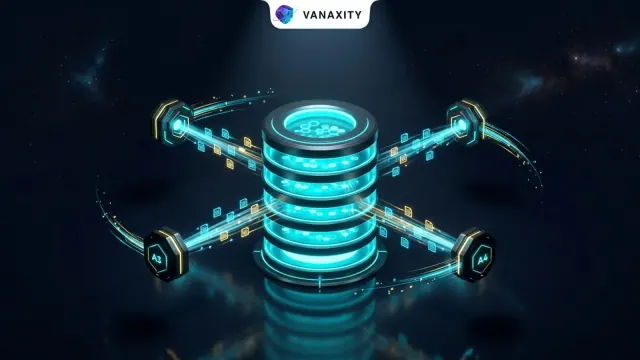
Multi-agent marketing and sales pipelines slow down and get costly when agents pass state through expanding API payloads and token-bloated context windows; AWS's Amazon S3 Files offers a POSIX shared file layer where agents hand off work through isolated directories instead.
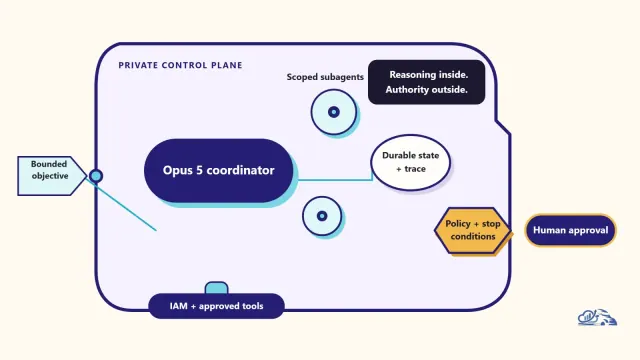
Claude Opus 5 on Google Cloud: Adoption Guide
Claude Opus 5 is now available on Google Cloud's Agent Platform for engineering, platform, and growth teams building production AI agents.
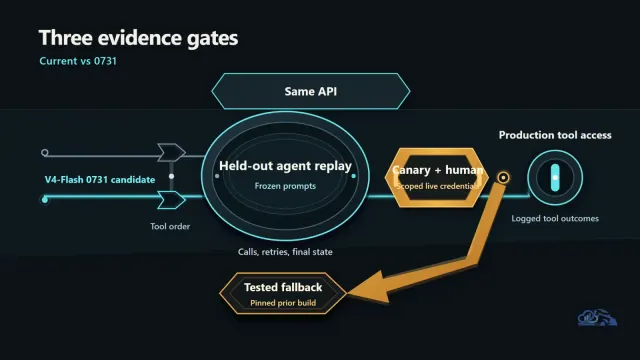
DeepSeek-V4-Flash: Evaluate a Silent Agent Upgrade
Bottom line DeepSeek-V4-Flash-0731 is a post-training update delivered in public beta through the existing API alias, retaining the preview architecture, size, and API surface.
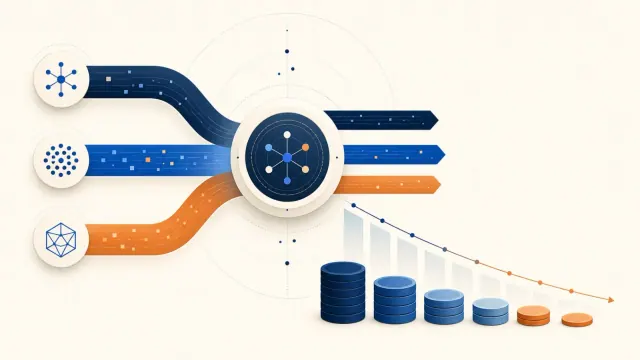
GPT-5.6 Price Cuts: AI Agent Routing and FinOps Guide
The GPT-5.6 price cuts lower Luna API pricing by 80% and Terra by 20%, while adding a paid Fast mode for Sol. For founders, RevOps leaders, and platform or agent teams, this eases runaway agent costs but doesn't automatically fix slow, expensive inference.

Kimi K3 on AWS: The Self-Hosting Blueprint for AI Agents
If you run AI agents on a hosted API, three pains compound quietly: unpredictable token cost, vendor lock-in, and prompts leaving your VPC.
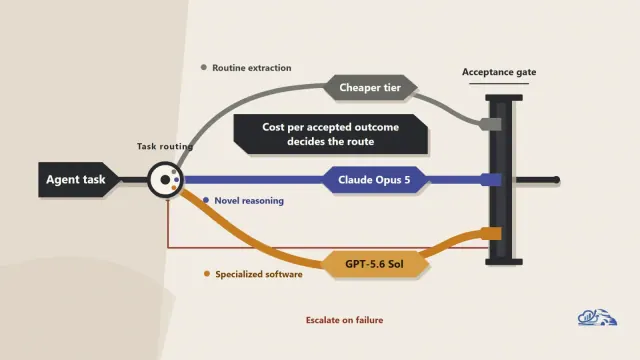
Claude Opus 5 vs GPT-5.6 Sol for AI Agents
How to choose between Claude Opus 5 and GPT-5.6 Sol by task type and the quality each task needs, instead of looking for one model that wins everywhere.
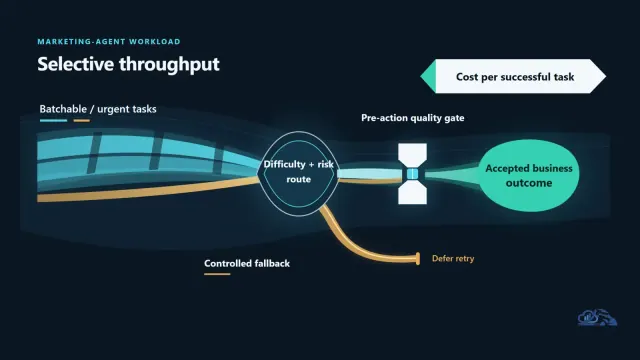
Meta Anthropic Compute Talks Reveal AI Agents' Real Cost
The infrastructure factors that shape the cost, speed, and scalability of AI workflows for marketing and revenue operations.
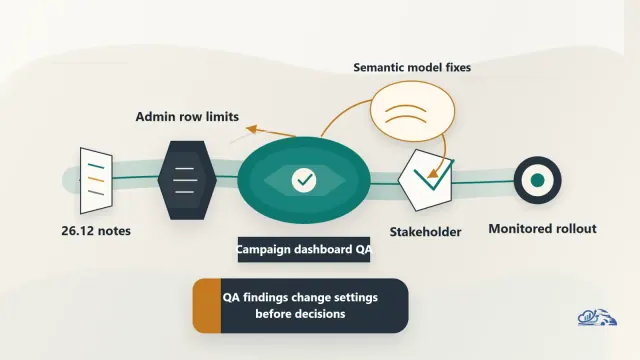
Looker 26.12: What the release changes for marketing analytics teams
What to check before the Looker 26.12 update so marketing reports stay accurate, readable, and in line with your review process.
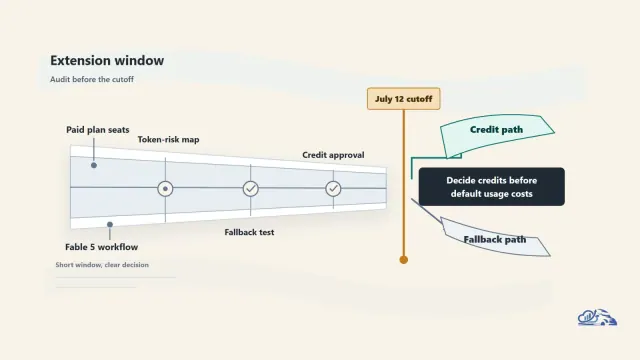
Reported Claude Fable 5 Access Extension: What Paid Users Need to Know
A briefing for teams assessing how the change in Claude Fable 5 access affects their content plans and operations.