What KFC's Rebrand Teaches About Brand Consistency
KFC named its first global chief brand officer to unify a worldwide rebrand. In the AI-search era, that same brand consistency decides how answer engines describe you.
Overview
KFC just created a new job to solve an old problem: brand consistency across the whole world. The company named its first global chief brand officer to unify a rebrand it began rolling out in 2026. That's a brand-marketing story on its surface, but underneath it's about something every marketer now has to care about, because AI answer engines reward the same brand consistency KFC is chasing: a brand that says the same thing everywhere.
This article uses the KFC news as a lens on brand consistency in the age of AI search. The reported facts about KFC are from trade press; the AI-search implications are Vanaxity analysis, framed as recommendation rather than certainty. It builds on our work on answer engine optimization and GEO and AEO strategy.
Key Takeaways
- KFC named Amy Ellis Durini its first global chief brand officer, effective November 1, 2026, reporting to global CEO Scott Mezvinsky, to bring consistency to a worldwide rebrand.
- The rebrand, launched June 15, 2026, includes a new logo, redesigned stores, refreshed assets like Colonel Sanders and the bucket, and a revamped menu.
- In AI search, brand consistency is what lets answer engines recognize you as one clear entity and cite accurate facts about you.
- A rebrand is a high-risk moment for those entity signals, because changing names, assets, and positioning can leave AI systems citing outdated information.
- Vanaxity's recommendation: treat brand consistency as an answer-engine discipline, with a single source of truth for brand facts and active monitoring of how AI describes you.
Map your SEO, GEO and AEO workflow before you build.

What Happened at KFC?
KFC centralized brand control at exactly the moment it's changing everything about how it looks. The appointment and the rebrand are two halves of one move toward global consistency.
**Reported fact:** KFC named Amy Ellis Durini as its first global chief brand officer, effective November 1, 2026. Durini is a Yum Brands veteran who most recently led marketing and strategy for Taco Bell's international unit and spent over eight years earlier in KFC's international business. She reports to global CEO Scott Mezvinsky, with a remit spanning brand strategy, loyalty, retail, and new concept development, and will work with market-level CMOs to align positioning across regions.
**Reported fact:** The role supports a rebrand KFC launched on June 15, 2026 as part of a global transformation. It includes a new logo that frames Colonel Sanders inside a chicken-bucket shape, redesigned stores, refreshed iconic assets, and a menu revamp featuring more boneless chicken, beverages, and dipping sauces. Executives have described rolling it out as a coordinated global effort, with the international division a stronger demand driver than the US.
**Vanaxity analysis:** Notice the word that keeps recurring: consistency. KFC isn't just changing its look, it's building the organizational muscle to keep that look and message identical across dozens of markets. That instinct is right, and it matters far beyond store signage, because the machines now reading brands reward consistency even more strictly than customers do.
The rebrand itself was a serious undertaking, not a logo tweak. KFC worked with the agency JKR on the global identity overhaul, touching everything from the wordmark to store formats and packaging. That scope is the point: the more of your identity you change at once, the more signals you have to keep aligned, both for customers standing in a store and for the systems answering questions about you online.
Why Does Brand Consistency Matter for AI Search?
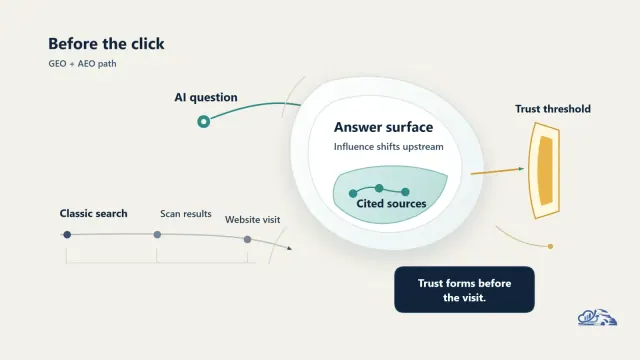
Because answer engines don't see your brand as a vibe; they see it as an entity, a specific thing with facts attached. Brand consistency is what keeps those facts singular and correct, so the AI cites you accurately instead of guessing.
**Vanaxity analysis:** When someone asks an AI assistant about your company, product, or category, the model assembles an answer from whatever it has learned and retrieved about you. If your name, positioning, and facts are consistent everywhere, the model resolves you to one clean entity and speaks about you confidently. If they conflict across markets and pages, the model either hedges, blends you with a competitor, or repeats stale information. Inconsistency doesn't just look sloppy to a human; it actively degrades how machines represent you. And unlike a customer, a model won't ask you to clarify. It just answers with whatever it has, right or wrong, and then moves on to the next person asking the same question.
This is the AI-search version of what KFC is solving organizationally. A global chief brand officer enforcing one identity is, in answer-engine terms, protecting the entity signals that let AI systems recognize and cite the brand. The work we describe in citation optimization depends on exactly this coherence: you can't earn consistent citations for a brand that describes itself inconsistently.
The stakes rise as more discovery moves through AI. A customer used to visit your site, where you controlled the message. Now they often ask an assistant first, and the assistant answers from a mix of sources you don't fully control. If those sources disagree about you, the answer is muddy, and a muddy answer is a lost customer before they ever reach you. Consistency is how you keep authorship of your own story in a channel you no longer own end to end.
What Breaks Brand Consistency During a Rebrand?
The transition itself, which is the risky part nobody plans for. A rebrand deliberately changes the signals AI systems have already learned, and if you change them unevenly, you create exactly the conflicts that confuse answer engines.
- Stale training data: models trained before the rebrand still hold your old logo, name treatment, and positioning, and may repeat them for a while.
- Uneven rollout: if some markets and pages update while others lag, your brand describes itself two different ways at once, which reads as conflict.
- Orphaned assets: old brand pages, profiles, and directory listings that nobody updates keep feeding outdated facts into retrieval.
- Knowledge-graph lag: entries in knowledge panels, Wikidata, and similar sources can trail your rebrand, anchoring AI answers to the old you.
- Messaging drift: a new positioning stated slightly differently in each region gives the model no single description to settle on.
**Vanaxity analysis:** This is why KFC's coordinated, centrally owned rollout is smart, and why doing a rebrand piecemeal is dangerous for AI visibility. The goal isn't only that every market looks the same on day one; it's that every signal an answer engine reads, owned pages, structured data, third-party profiles, resolves to the same updated entity as quickly as possible. A slow or partial transition leaves the old brand alive inside AI answers long after you've moved on.
How Do You Protect Brand Consistency in AI Answers?
By treating your brand facts as a product with a single source of truth, then propagating them everywhere at once. You can't control what a model already learned, but you can flood the current record with a clean, consistent version of you.
- Define a canonical fact sheet: the exact name, tagline, positioning, and key facts, and make every property match it word for word.
- Mark up structured data: use schema.org Organization and Brand markup, with sameAs links to your official profiles, so machines can resolve your entity unambiguously.
- Update owned properties together: site, app, social profiles, and directory listings should change in one coordinated push, not over months.
- Refresh third-party entity sources: knowledge panels, Wikidata, and major directories carry outsized weight in what AI repeats about you.
- Monitor how AI describes you: ask the major assistants about your brand regularly and watch for stale facts, blended competitors, or wrong positioning.
| Signal AI reads | What consistency looks like |
|---|---|
| Brand name and tagline | Identical wording across every owned property |
| Structured data (schema.org) | Organization/Brand markup with sameAs links |
| Third-party entities | Knowledge panel and Wikidata match your current facts |
| Positioning and description | One core description reused, not re-written per market |
| Assets and imagery | Current logo and identity everywhere, old ones retired |
**Vanaxity analysis:** The through-line is ownership. KFC's answer to consistency was a person accountable for it globally; your answer should be a process accountable for it across every signal an answer engine reads. Whether or not you ever rebrand, keeping these signals coherent is ongoing AEO hygiene, the same discipline we bring to generative search and conversational search optimization. A rebrand just makes the cost of neglecting it suddenly visible.
How Vanaxity Keeps Your Brand Coherent for AI
Vanaxity helps marketing teams make sure AI answer engines describe their brand accurately and consistently. We start by auditing how the major assistants currently talk about you, then trace any wrong or stale answers back to the conflicting signals that caused them.
From there we build a canonical fact source, align your structured data and third-party entities to it, and set up monitoring so drift gets caught early, especially around launches and rebrands. Not every team needs a global chief brand officer, but every team needs someone who owns this. It can be a process rather than a title, as long as the accountability is real and the signals stay aligned. If you want help, our services can run a brand-entity audit for AI search, and you can browse more field notes in our insights library. The goal is simple: be one clear, citable entity, so the answer engine gets you right.
Frequently asked questions
What did KFC announce?
KFC named Amy Ellis Durini as its first global chief brand officer, effective November 1, 2026, reporting to global CEO Scott Mezvinsky. She joins from Taco Bell International, where she led marketing and strategy, and previously spent over eight years in KFC's international business. The role, spanning brand strategy, loyalty, retail, and new concepts, supports a global rebrand KFC launched on June 15, 2026, that includes a new logo, redesigned stores, refreshed assets, and a revamped menu.
Why does brand consistency matter for AI search?
Because AI answer engines treat your brand as an entity with specific facts attached, and consistency keeps those facts singular and correct. When your name, positioning, and details match everywhere, a model resolves you to one clean entity and cites you accurately. When they conflict across markets or pages, the model hedges, blends you with a competitor, or repeats stale information. In AI search, inconsistency directly degrades how machines represent you, not just how humans perceive you.
Why is a rebrand risky for AI visibility?
Because a rebrand deliberately changes the signals AI systems have already learned, and an uneven rollout creates conflicts. Models trained before the change still hold your old identity, some pages and markets update before others, orphaned profiles keep feeding old facts, and knowledge panels can lag. Until every signal resolves to the same updated entity, the old brand can keep appearing in AI answers. A coordinated, centrally owned rollout, like KFC's, reduces that risk.
How do I keep AI answers about my brand accurate?
Treat your brand facts as a product with a single source of truth. Define a canonical fact sheet, mark up schema.org Organization and Brand data with sameAs links, update all owned properties together, and refresh third-party entities like knowledge panels and Wikidata. Then monitor how the major AI assistants describe you and correct conflicting signals when stale facts appear. The aim is to make your current brand the clearest, most consistent version of you in the record AI reads.
Is this only relevant if I'm rebranding?
No. A rebrand makes the cost of inconsistency suddenly visible, but the underlying work is ongoing answer-engine hygiene. Any brand operating across multiple markets, sites, and profiles accumulates conflicting signals over time, which quietly degrade how AI describes it. Keeping your name, facts, and positioning coherent across every property is valuable whether or not you ever change your logo, and it compounds as more customers discover brands through AI answers.