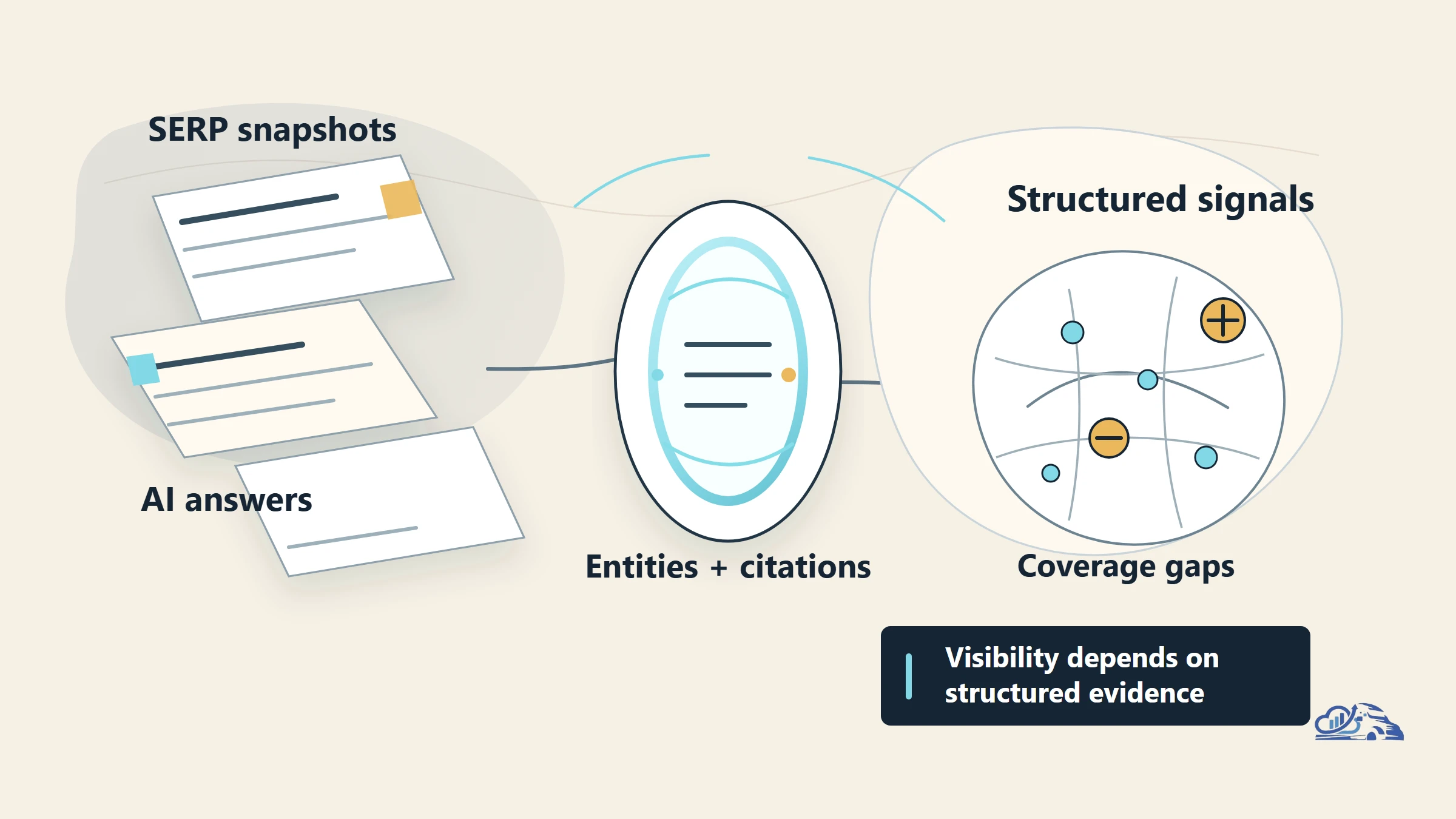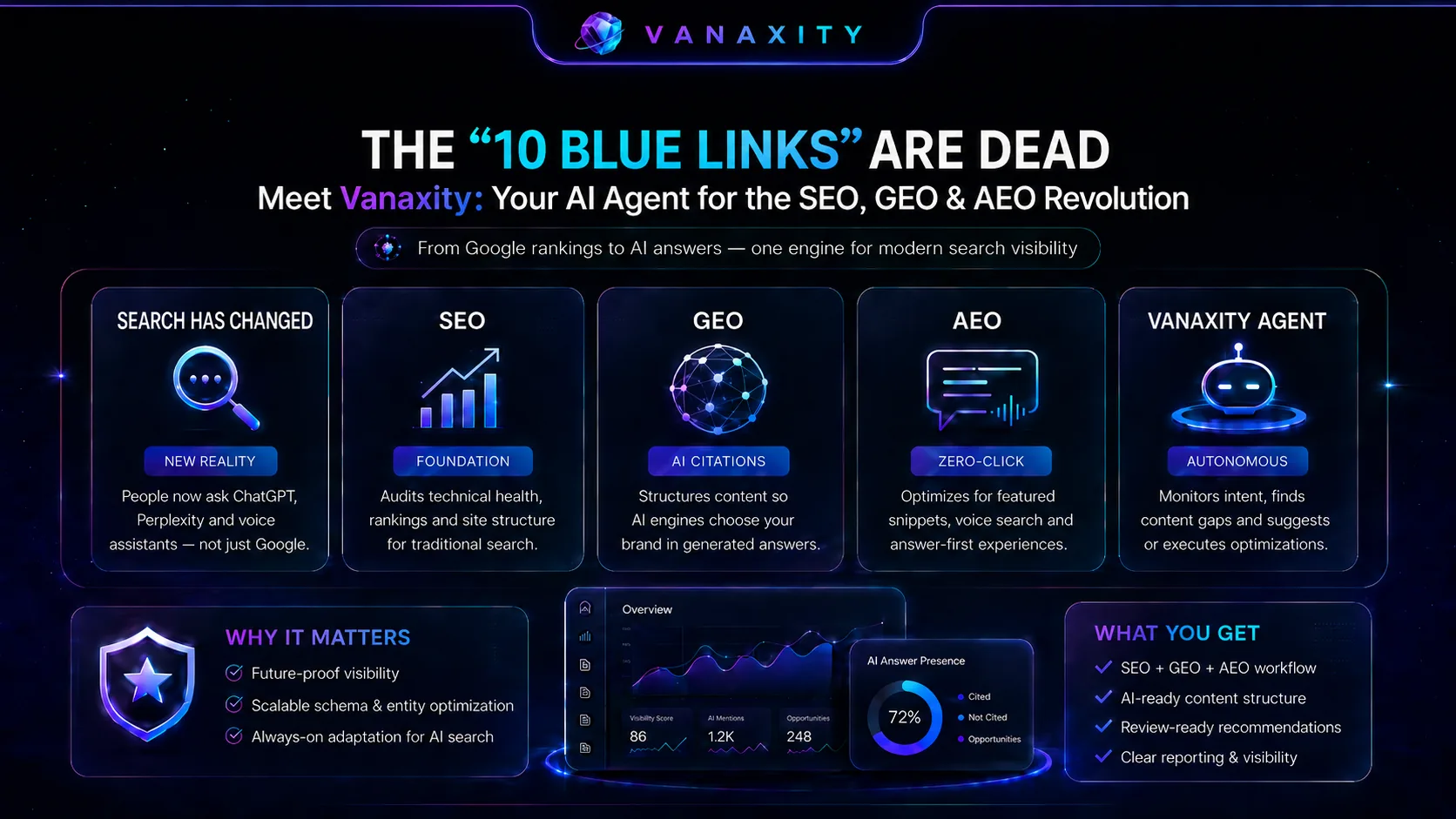
Brand RAG: Grounded Customer Experience, Honestly Done
AWS's new knowledge-management blueprint shows how brand RAG grounds conversational answers in your real content, and why it reduces, not eliminates, hallucination.
Overview
Brand RAG is retrieval-augmented generation pointed at your own verified content, so a customer-facing agent answers from your real documentation instead of guessing. AWS just published a concrete blueprint for it. On August 24, 2026, AWS described an AI-powered knowledge management system built on Amazon Bedrock Knowledge Bases and RAG, with a voice-first avatar that lets non-technical staff ask questions and get grounded, spoken answers.
This article reads that blueprint as a customer-experience pattern, and keeps one thing honest that vendors often blur. AWS itself says grounding reduces, but does not eliminate, the risk of wrong answers. The reported facts are AWS's; the marketing implications are Vanaxity analysis, framed as recommendation rather than certainty. It builds on our work on answer engine optimization and multi-modal brand experiences.
Key Takeaways
- On August 24, 2026, AWS published a blueprint for an AI knowledge-management system using Amazon Bedrock Knowledge Bases and RAG, with a voice-first avatar interface.
- The architecture grounds answers in your own content: documents in S3, vectors in OpenSearch Serverless, Titan embeddings, and voice via Amazon Transcribe and Polly.
- AWS is explicit that grounding reduces but does not eliminate hallucination, and recommends keeping a human in the loop for high-consequence answers.
- For customer experience, brand RAG turns static manuals and brand assets into an interactive support hub that answers from a single source of truth.
- Vanaxity's recommendation: build brand RAG on verified content, require citations, keep a human in the loop for high-stakes replies, and never market it as zero-hallucination.
Map your SEO, GEO and AEO workflow before you build.

What Did AWS Actually Show?
AWS showed a working reference architecture for turning a pile of internal documents into a conversational, grounded assistant, deployable in hours rather than months.
In its knowledge-management blueprint, AWS stores documents in Amazon S3, indexes them as vectors in Amazon OpenSearch Serverless using Titan Text Embeddings, and retrieves the relevant passages at query time through Amazon Bedrock Knowledge Bases. A voice layer, Amazon Transcribe for speech-to-text and Amazon Polly for text-to-speech, plus a DeepBrain AI avatar with real-time lip sync, lets a non-technical person simply ask a question out loud. Smart caching returns repeat answers in well under a second, while fresh queries take roughly 2 to 4 seconds.
**Vanaxity analysis:** Strip away the avatar, and the important part is the grounding loop. The model doesn't answer from memory; it answers from passages retrieved out of your verified content, with the source available. That is the whole value of RAG, and it's why brand RAG is trustworthy in a way a raw chatbot is not. The avatar is the friendly face; the retrieval is the substance.
What Is Brand RAG for Customer Experience?
Brand RAG is retrieval-augmented generation grounded specifically in your brand's verified knowledge, so customer-facing answers come from your real content, not the model's guesses. It turns your manuals, policies, and product data into a single source the agent must answer from.
**Vanaxity analysis:** The shift is subtle but large. A generic chatbot generates a plausible answer from everything it ever read, which is exactly how brand-damaging mistakes happen. A brand RAG agent retrieves the relevant passage from your approved content first, then answers from it, and can show you which document it used. That makes the answer checkable, and checkable is the difference between a support tool you can ship and a demo you can't.
For customer experience, this is the bridge between internal documentation and customer-facing support. The same grounded knowledge base that answers an employee's procedural question can answer a customer's, within brand rules, which is why AWS frames it as democratizing institutional knowledge. It also unifies scattered product data into one place the agent trusts, the same single-source-of-truth discipline we push in answer engine optimization.
Does Brand RAG Eliminate Hallucination?
No, and anyone who says otherwise is selling you something. Grounding sharply reduces hallucination, but it does not remove it, and AWS says so directly.
**Reported fact:** In its own write-up, AWS states that grounding reduces but does not eliminate the risk of incorrect answers, and recommends keeping a human in the loop for high-consequence decisions. That is a vendor being honest about its own product, and it's the single most important line in the blueprint.
**Vanaxity analysis:** Here's why a RAG agent can still be wrong. It might retrieve the wrong passage, retrieve nothing and answer anyway, or misread a correct passage. Grounding makes each of these rarer, not impossible. So the honest posture is not zero hallucination; it's low, measured, and caught. You require the agent to cite its source, you monitor its answers, and you route high-stakes questions to a person. That's a support hub you can trust, and it's a very different promise from a miracle.
Generic Chatbot Versus Brand RAG
The contrast is easiest to see side by side. The table shows why grounding changes what you can safely ship to customers.
| Dimension | Generic chatbot | Brand RAG |
|---|---|---|
| Answer source | The model's general training | Your verified content, retrieved at query time |
| Checkability | No source to point to | Cites the document it used |
| Hallucination | Frequent and unbounded | Reduced and monitored, not eliminated |
| Brand safety | Off-brand claims are easy | Answers stay within approved content |
| Best use | Casual, low-stakes chat | Grounded support and knowledge lookup |
**Vanaxity analysis:** Read the hallucination row honestly. Brand RAG moves you from 'frequent and unbounded' to 'reduced and monitored,' which is a genuine leap for customer-facing use. It does not move you to zero, and building your rollout, or your marketing, on the word zero is how you get burned.
Why Does Brand RAG Matter for Customer Experience?
It matters because it turns static, hard-to-search brand knowledge into answers customers and staff can actually get, fast, in their own words, through a conversational AI interface, and grounded in the truth.
- Faster resolution: a customer or agent asks in plain language and gets a grounded answer in seconds, instead of hunting through a PDF.
- Brand consistency: every answer comes from approved content, so the agent can't invent a policy or a price.
- One source of truth: scattered manuals, help articles, and product data unify into a single knowledge base the agent draws from.
- Accessibility: voice and avatar interfaces let non-technical people ask naturally, lowering the barrier to using the knowledge.
- Lower load: the grounded agent handles the repetitive, well-documented questions, freeing humans for the genuinely hard ones.
**Vanaxity analysis:** The quiet win is the single source of truth. Most brands don't have a knowledge problem so much as a scattering problem: the right answer exists, in some document, that nobody can find in the moment. Brand RAG makes that answer retrievable by conversation, which is often more valuable than any new content you could write.
How Do You Build Brand RAG Responsibly?
You build it by getting the content right first, then grounding tightly, then keeping humans on the high-stakes path. The order matters: garbage content grounds you in garbage.
- Curate the source content: put only verified, current documents in the knowledge base, because the agent can only be as right as what it retrieves.
- Require citations: make the agent show the source passage, so every answer is checkable by the customer and by you.
- Constrain to retrieval: instruct the agent to answer from retrieved content and to say it doesn't know when nothing relevant comes back, rather than improvising.
- Keep a human in the loop: route high-consequence questions, refunds, legal, safety, to a person, as AWS recommends.
- Monitor and measure: track wrong answers, unanswered questions, and escalations, so quality is something you watch, not assume.
**Vanaxity analysis:** Notice that three of these five controls exist to catch the failure AWS warned about. That's deliberate. Responsible brand RAG isn't about trusting the model more; it's about building a system that stays trustworthy even when the model is occasionally wrong. That governance mindset is the same one we describe in agentic marketing governance.
Where Should a Team Start?
Start with one well-documented topic where the answers already exist and the stakes are moderate. You prove the grounding loop before you widen it.
- Pick one high-volume, well-documented question area, like product setup or returns policy, where good source content exists.
- Assemble and clean that content first, removing outdated or conflicting documents before you index anything.
- Stand up a grounded agent over just that content, with citations on and a clear 'I don't know' fallback.
- Test it against real questions, and log every wrong or missed answer to find the gaps.
- Add a human handoff for the high-stakes cases, then expand to the next topic once the first is trustworthy.
This is a bounded pilot, not a platform migration. One grounded topic teaches you where your content is strong, where it's thin, and how often the agent needs a human, which is exactly what you need to know before scaling. From there, each new topic is a repeat of the same loop, the same incremental way we approach conversational search optimization.
How Vanaxity Builds Brand RAG
Vanaxity treats brand RAG as a content-and-trust problem before it's a model problem. We start by curating the verified content the agent will answer from, because grounding is only as good as the source you ground in.
Then we stand up the grounded agent with citations, a strict 'answer from retrieval' rule, and a human handoff for high-stakes questions, and we instrument its answers so quality is measured, not assumed. If you want help, our services can produce a first grounded knowledge hub, its citation and escalation rules, and a monitoring setup. You can also browse more field notes in our insights library. The goal of brand RAG is simple: customers get fast, grounded answers from your real knowledge, and a human still owns the ones that matter most.
Frequently asked questions
What is brand RAG?
Brand RAG is retrieval-augmented generation grounded in your brand's verified content, so a customer-facing agent answers from your real documentation instead of guessing. It retrieves the relevant passage from your approved knowledge first, then answers from it, and can cite the source. AWS's August 2026 knowledge-management blueprint, built on Amazon Bedrock Knowledge Bases, is a concrete example of this pattern applied to institutional knowledge.
Does brand RAG eliminate hallucination?
No. Grounding sharply reduces hallucination but does not eliminate it, and AWS says so directly, recommending a human in the loop for high-consequence decisions. A RAG agent can still retrieve the wrong passage, retrieve nothing and answer anyway, or misread a correct one. The honest posture is low, monitored, and caught hallucination, achieved with citations, monitoring, and human handoff, not a zero-hallucination promise.
What did AWS actually announce?
On August 24, 2026, AWS published a reference architecture for an AI-powered knowledge management system using Amazon Bedrock Knowledge Bases and RAG. It stores documents in S3, indexes them as vectors in OpenSearch Serverless with Titan embeddings, and adds a voice-first avatar via Amazon Transcribe and Polly. Cached answers return in under a second and fresh queries in about 2 to 4 seconds, and AWS is explicit that grounding reduces but does not remove wrong answers.
How is brand RAG different from a normal chatbot?
A normal chatbot answers from its general training, with no source to check and unbounded room to invent. Brand RAG retrieves the relevant passage from your verified content first and answers from that, so responses stay within approved material and can cite where they came from. That checkability is what makes brand RAG safe enough for customer-facing support, where a generic chatbot is not.
How does brand RAG improve customer experience?
It turns static, hard-to-search brand knowledge into fast, grounded answers customers and agents can get in plain language. Resolution speeds up because people ask in natural language instead of hunting through documents, answers stay brand-consistent because they come from approved content, and scattered product data unifies into one source of truth. The grounded agent handles the well-documented questions and frees humans for the hard ones.
Where should a team start with brand RAG?
Start with one high-volume, well-documented topic where good source content already exists and the stakes are moderate. Clean that content, stand up a grounded agent over it with citations and an 'I don't know' fallback, test against real questions, and log every wrong or missed answer. Add a human handoff for high-stakes cases, then expand to the next topic once the first is trustworthy.